|
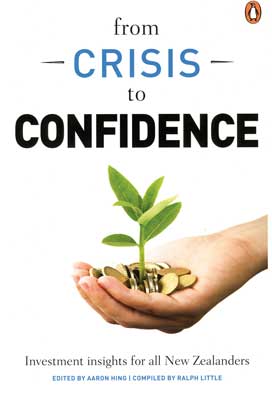
Research indicates we are prepared to spend more time and effort planning our annual holidays and other lifestyle activities than attending to matters relating to our personal financial requirements, says financial-planning practitioner, Graham Baker.
One of 12 New Zealand economists, investment professionals and financial planners contributing to From Crisis to Confidence, Baker outlines the ‘seven step process’ of financial planning and gives ‘ten key financial planning golden rules’ for successful wealth management.
Divided into three parts, each chapter by a different author takes us from what caused the global financial crisis to investment guidance for the future.
It’s aimed at the average investor and uses graphs, tables, bold highlights and today’s trend of amusing cartoon characters, but requires full concentration.
First up, investment strategist Peter Verhaart says, to understand how the global financial crisis happened, we need to go to where it all started and probably where it will end, namely to the US housing market, and he describes its complexities in the 2000s.
The rest of Part One explores how the crisis will affect New Zealand as it reshapes the world economy and the way people invest in the future.
Financial advisor Jeff Matthews examines the huge growth of finance companies over the past ten years and their collapse, as receiverships began mid-2006.
Following on, Ralph Stewart, AXA NZ’s CEO compares the market pre-1980 to the options and changes of the last 30 years and looks at how we have been let down in the domestic market by successive governments.
Bevan Graham, chief economist and head of client relations at AXA Global Investors, shows how the crisis has exposed the world’s imbalances for what they were: fragile and unsustainable.
‘Investing: where to from here?’ is the title of Part Two with Aaron Hing, the book’s editor, describing how demographics are changing the world. The statistics are scary. For example, over the next 30 years, with more baby boomers moving into retirement than people entering the workforce, Hing analyses how this will impact on investing in relation to residential property, interest rates, the sharemarket and currency.
Kevin Poore, a financial services industry expert, considers investment strategies for the next ten years from lessons learned and the influence emerging market economies will have over the next five years.
Gordon Noble-Campbell, CEO of Spicers Portfolio Management, writes about rebuilding trust and confidence and what makes a financial advisor trustworthy.
With a background in financial market business development, Murray Harris, responds to, ‘How do I invest to get the return I want and still sleep at night?’ He considers two concepts – risks and diversification.
Part Three moves on to ‘Financial planning: What you do today will benefit you tomorrow?’ Arun Abey, chairman of ipac securities and head of strategy for AXA Asia and Pacific, recommends having a financial strategy for you, not just your money, and outlines how we need to think today to make the most of opportunities in the future.
Chartered accountant Leah Watson deals with the importance of estate planning, which he says needs to be practical and simple, and discusses asset-protection strategies that have stood the test of time
Looking ahead, Derek Grantham, head of advice for Spicers Portfolio Management Limited, applauds the emergence of regulation to better protect investors and explores going ‘back to basics’.
Generally, the contributors say, if it sounds too good to be true, it probably is. All agree we have been slow to learn from the past and they make financial suggestions for governments, the industry and individuals for the future.
Linda Donald is an Auckland-based freelance writer and book reviewer. Email [email protected]
|