
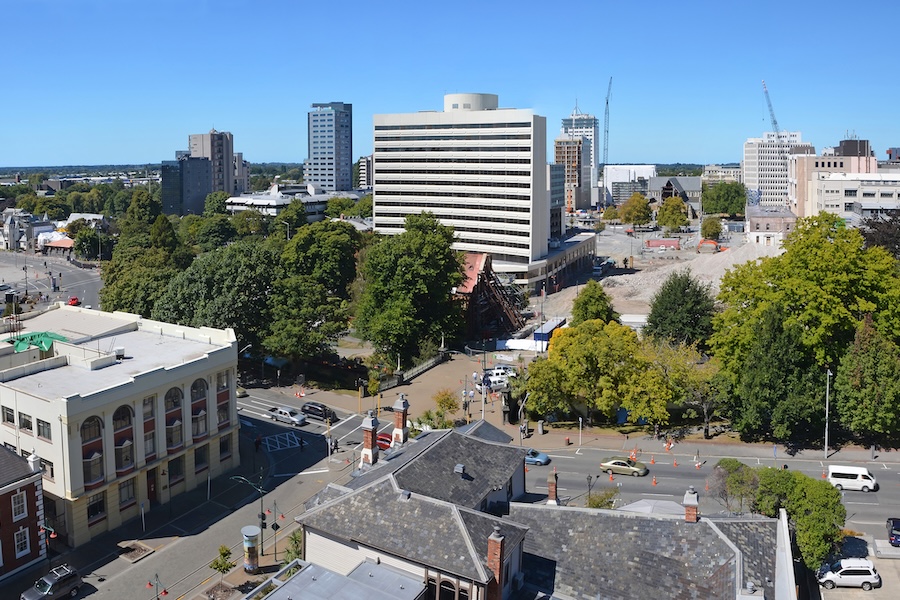
Canterbury has claimed the title of New Zealand’s strongest-performing region for the second quarter running, while Auckland’s rise up the rankings signals the country’s economic recovery is gaining broader momentum.
That’s according to ASB’s latest Regional Economic Scoreboard, which ranks the economic performance of New Zealand’s 16 regional council areas across 11 measures including employment, retail trade, construction and house prices. The report shows Canterbury securing its third quarterly win of 2025, outperforming the rest of the country across nearly every key indicator including employment, retail spending, housing activity and population growth.
ASB Chief Economist Nick Tuffley says the South Island continues to lead New Zealand’s multi-speed recovery.
“Canterbury has delivered back-to-back wins to close out the year, supported by strong dairy incomes, steady jobs growth, resilient consumer spending and the recovery of the tourism sector,” says Tuffley.
“The region enters 2026 in a very strong position.”
Otago and Waikato tied for second place. Otago’s result was driven by a strong tourism rebound, while Waikato benefited from its robust primary sector and improving labour market conditions. The expected Fonterra capital return is anticipated to provide a further tailwind for dairy farming regions through increased spending and investment.
Auckland’s climb to fourth place was one of the more encouraging stories in the latest results, with the country’s largest city recording improvements in retail spending, construction activity and consumer confidence, though labour market conditions remain subdued. Tuffley says the improvement is an important signal for the national picture.
“Seeing Auckland continue to improve is an important signal that the economic upswing is widening beyond the regions that led earlier in the cycle,” he says.
Wellington sits at the bottom of the rankings, weighed down by ongoing weakness in its housing market, construction activity and discretionary spending, despite relatively strong employment growth. Tuffley is cautiously optimistic about the capital’s prospects, but tempers expectations.
“Looking ahead, Wellington’s economy is forecast to recover, supported by low interest rates. Nevertheless, ongoing and emerging challenges may temper the pace of that recovery.”
At a national level, the economy showed signs of growth heading into the close of 2025, with retail spending lifting across most regions on the back of lower interest rates and early stabilisation in employment. However, Tuffley warns that global conditions bear watching.
“Conflict in the Middle East presents fresh headwinds, particularly through higher energy costs and inflation risks. The situation and extent of any impact to growth and inflation is highly uncertain and will depend on how long the conflict goes on for.”
The full ASB Regional Economic Scoreboard is available at asb.co.nz.