

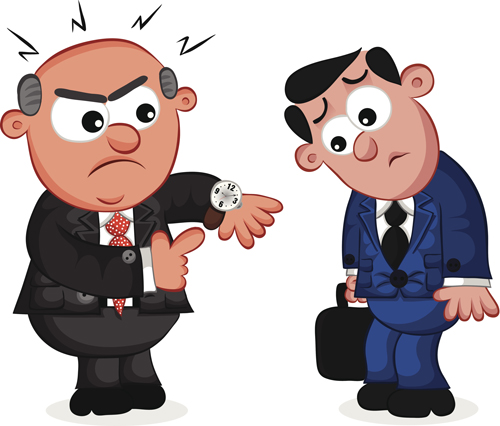

Having that dreaded ‘poor performance’ discussion with a staff member requires calmness, skill and tact. But it’s important you take action.
Dealing with poor performance is one of the hardest things for business owners to face. When asked why they don’t deal with poor performers, most will say something like:
- “They should know what they are supposed to be doing. Can’t they work it out?”
- “Look, it’s not serious enough for me to make an issue of it.”
- “You can’t get good staff these days – so we just accept poor performance is how it is.”
- “We are facing redundancies shortly; we’ll just make sure the poor performers get the chop!”
But what managers and team leaders are really saying is:
- “What if I did speak to the person and it went wrong?”
- “What if I made a mess of it and they took a personal grievance against me?”
- “I don’t actually know how to have these discussions, no-one ever showed me.”
- “What if they decided the conversation was really a constructive dismissal – too dangerous!”
The challenge with ignoring poor performance and hoping it will go away is that it won’t. And by not dealing with it, pretty soon instead of just one poor performer, you’ll have a whole team not performing because, sadly, poor performance spreads!
The usual performance issues are:
- Poor time-keeping.
- No sense of urgency when we are working towards a deadline.
- No understanding or care of our customer’s needs.
- ‘9 to 5’ thinking, or that ‘its-not-in-my-job-description’ mentality.
- Bad attitudes towards management and rules or authority.
- Lack of respect towards older workers/younger workers/women, or people of a different culture.
- Not a team player.
These behaviours on the surface may not seem to be too terrible, but all of the above are behaviours which will take their toll on a business’s morale and eventually, the bottom line. So here are some tips on what to do, when to do it and how to do it!
Addressing poor performance
First, define what good performance is and communicate it to your people. At a team meeting you might say something like, “Time-keeping seems to be slipping guys, and it’s important that we are all in the office by 8.30 sharp ready to start work”.
Then you need to keep tabs on performance. If you can’t measure performance you can’t manage it. In the case of time-keeping, it isn’t about having people clock in but it is about respect for the company; your customers and their co-workers. Of course this means that you, the manager also need to be in on time!
If you then realise that no matter how many times you remind your people as a team, some individuals are still not listening, then you will need to have a 1:1 discussion with each person. Yes, the dreaded one-to-one!
Do it as soon as you notice the poor performance – the longer you delay the more entrenched the behaviour will become. Make an appointment with the person and state the problem – for example: “Joan, I have said to the team on numerous occasions that it is really important that people are at their desks by 8.30 and I know that several times over the past few weeks you haven’t been here until almost 9am. Talk to me please, tell me what is happening for you,”… and then listen to what they have to say. There may be a very valid reason – and you must give them the opportunity to tell you what is going on for them.
When you have heard them out, repeat back what they have said – “So, the reason you have been late over the past few weeks is that your normal bus has been too full for you to get on and you have had to wait for a later one? Yes?”
Ask them for their ideas on how this can be addressed – and listen to their answer. The obvious answer is for the person to catch an earlier bus, but they may have child care issues, so it’s important that they come up with their own answer.
It’s at this point that the 1:1 could take many different twists and turns. There are a few predictable reactions to be aware of:
- Genuine concern and willingness to address the issue. Easy.
- “Tough luck! I’ll be here when I’m here – so sue me!” Not so easy.
- Aggression – “How dare you, do you know how hard I work?” Blah blah.
- Blame – “It’s not my fault, blame the useless Auckland traffic!” Etcetera.
- Fogging – “How come I’m being singled out? I know that John is late just as often as me – this is pure sexism!”
Tips for dealing with negative reactions
- Stay calm at all times.
- Hear them out; be willing to hear their side of the story. It may be genuine.
- Broken record – say the same sentence several times until they get it that you are not going to be manipulated. “I can see that it is difficult for you given the family situation, however, being here on time is vital, and I’m here to see how we can work this out.”
- Keep them on track. “We’re not here to talk about John, we’re here to find a resolution for you.”
- Be clear before the discussion what you are willing to negotiate, and what you are not willing to negotiate. Realise that if you say it is OK for one person to arrive late, others will expect the same.
- Look for workable compromises.
- Monitor progress and give them feedback on improvements.
That’s really important!
Dealing with poor performance isn’t easy but if you are a business owner, team leader or a manager, then it comes with the territory. It’s like anything, the more you do it the easier it becomes. And what is really interesting, if poor performance is annoying you, rest assured it will be annoying the person’s co-workers. They are waiting for you to do something about it, and when you don’t, they will lose respect for you. Not a good look!