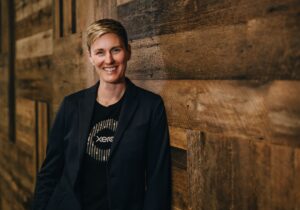
AI expert Nyssa Waters on closing the gap in SME adoption
Nyssa Waters explains where SMEs are missing out on AI gains, and how to turn funding support into measurable business impact.

Nyssa Waters explains where SMEs are missing out on AI gains, and how to turn funding support into measurable business impact.

From freeing up time to unlocking data insights, AI isn’t replacing people—it’s helping them work smarter, grow faster, and compete on a whole new level.

One of New Zealand’s most forward-thinking businesses is out to achieve a ‘first’ in adventure tourism. Following years of research, established 4WD tour operator Outback New Zealand has invested in a fully electric Yutong 25-seater bus, a first for Queenstown and New Zealand in the adventure tourism off-road sector. Trading as Nomad Safaris and with more than 30 years’ expertise in operating small personalised tours in Queenstown and the wider region, it takes passengers from around the world into some of the country’s most stunning backcountry in comfort, safety and style. For Nomad Safaris co-director David Gatward-Ferguson the commitment to the e-bus has been many years in the making, albeit frustrated with the slow rollout of technology that would enable

An ecommerce integration specialist says Kiwi retail business owners are falling short on educating themselves about technology. In this new digital driven world New Zealand retailers continue to lose money and opportunity because of not only their reluctance to invest in technology but more so by their failure to upskill and learn more about the tech driving their businesses—it’s no longer something that retailers can simply ‘leave to the experts’. Mark Presnell, managing director of Convergence, says that while Kiwi business owners are often derided for being slow to take up new technology, the critics have it backwards because knowledge – upskilling and learning – is more important at this stage. “How can you make a proper and astute investment

New Zealand tech company Auror has released a free AI framework to help Kiwi businesses embrace the game-changing technology. A recent survey by Auror and Talbot Mills has revealed more than 40 percent of New Zealanders consider artificial intelligence as a force for good, yet only 18 percent believe businesses are well placed to harness its potential. To help businesses harness AI responsibly, New Zealand tech company Auror has released its open-source Responsible Technology and AI Framework. The easy-to-use tools within the framework have been designed by Auror for businesses of all sizes to develop their own robust and ethical AI processes. The Attitudes to AI survey, commissioned by Auror, showed New Zealanders are most excited about AI’s potential to

Artificial intelligence deserves the same ‘zero trust’ approach we take with cybersecurity, says Matthew Evetts, so constantly check and verify AI systems to ensure the best outcomes. When customers ask me what the best way to secure their organisations is, my response is just two words: “zero trust”. This is the increasingly predominant approach to improving cybersecurity maturity that rests on the premise that you can’t trust anything or anyone connected to or accessing your network, applications and devices. Instead, you basically assume your computers are already compromised, that everyone is a risk. You verify everything, all the time. That’s a shift away from the “trust but verify” approach that long dominated cybersecurity – an approach that assumed that once

Using his own intelligence, Bill Bennett discusses AI’s current and potential uses for business owners. Artificial intelligence is no longer the stuff of science fiction. It’s here and it’s all around us. If you are active online you probably come across it most working days. Corporations raced to adopt artificial intelligence (AI). They use it to automate everyday processes as they look to cut costs and navigate skills shortages. T However, the results aren’t always great from their customers’ point of view. Quality can suffer. Mistakes are made. Customers can find it frustrating to speak to a robot or exchange text with a chatbot when they want to talk to a human. Yet there’s no question AI can have an

How much trust should your business be putting in ChatGPT? Horatiu Petrescu says don’t focus on the tool, focus on who is using it. The question of exactly how much trust we should put into ChatGPT has a simple answer, and a more nuanced one. For starters, it’s necessary to understand what ChatGPT is. At the most basic level, ChatGPT is a tool. Ask yourself how much you might trust any tool, say a spade, and you’ll have the simple answer to how much you should trust ChatGPT. The point is that tools are neither trustworthy nor untrustworthy. Instead, a tool is only as trustworthy as the person who holds it. How a person wields a spade matters because the
Upcoming event

Thursday 28 May 2026 | 7:00am – 9:30am
📍 New Zealand International Convention Centre, 101 Hobson Street, Auckland
Join us for a practical, insight-led morning exploring how Kiwi businesses are navigating today’s conditions and unlocking new growth opportunities in 2026.
Latest issue

Read the March issue of NZBusiness, focused on intentional growth — with practical insights, expert perspectives, and real-world stories.
Latest articles
Get practical insights, expert advice, and the latest from New Zealand’s SME community — delivered straight to your inbox in our fortnightly newsletter. Plus, access our latest digital issues anytime.