
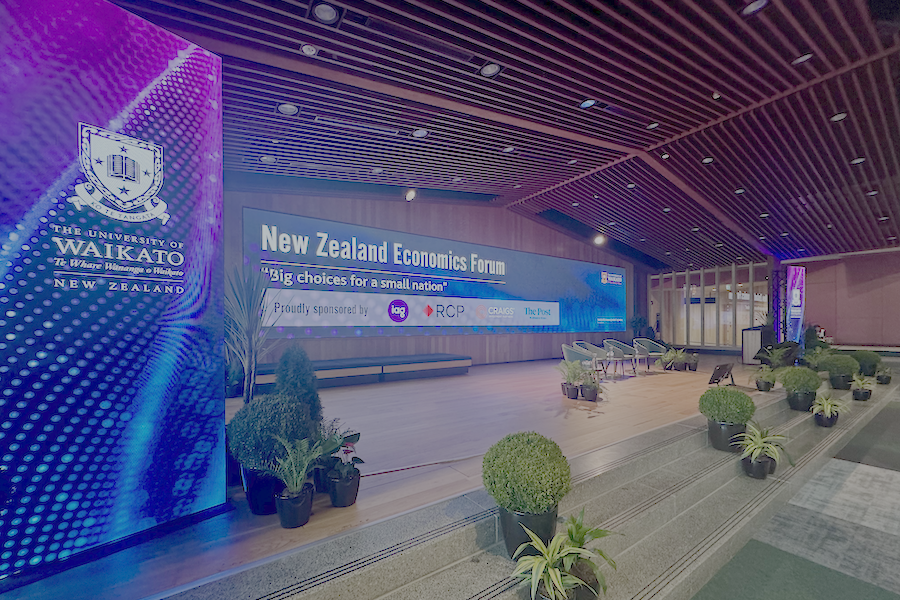

With the 2026 election year now firmly underway, New Zealand’s economic direction takes centre stage at the New Zealand Economics Forum 2026, themed Big Choices for a Small Nation.
The event brings together senior policymakers and leading economists to debate how New Zealand manages its public finances, positions itself globally, and lifts long-term productivity – all through a lens highly relevant to business leaders navigating ongoing uncertainty.
Opening the forum, Minister of Finance Nicola Willis framed the moment as one of national consequence.
“The choices we make now will shape our economic resilience, our productivity, and our prosperity for decades to come,” she said. “This is about building a country that is confident, competitive, and open for business.”
Willis’ keynote centred on three pillars: Fiscal responsibility, global competitiveness and investment, and productivity through structural reform.
She positioned public spending restraint and business incentives as foundational to growth.
“We have to live within our means,” she said. “Strong public finances are not an ideological position – they are a precondition for economic resilience.”
Willis warned that New Zealand’s high debt trajectory leaves the country exposed in a volatile global environment.
“Every dollar we spend servicing debt is a dollar we can’t spend on healthcare, education, or tax relief for working New Zealanders.”
She argued that Government must focus on removing friction for businesses rather than crowding them out.
“Innovation doesn’t come from Wellington. It comes from the factory floor, the start-up office, and the export warehouse. Our job is to clear the path, not stand in the way.”
In an election-year signal, Willis also claimed the Government’s economic programme is at risk of reversal.
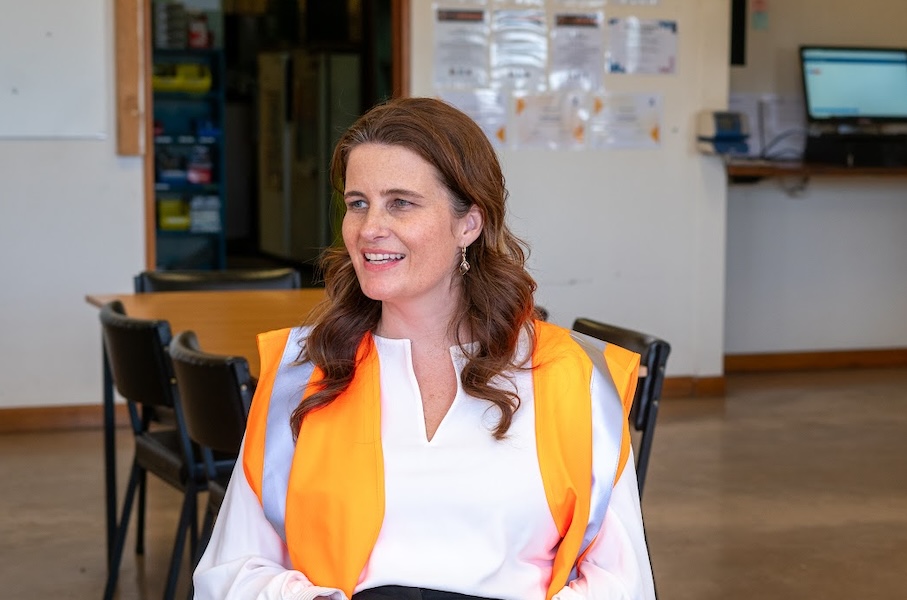
Minister Nicola Willis.
She said that Labour have been clear that they want to unwind the Government’s investment incentives and expand public spending. “That would be a step backwards for growth.”
Labour’s finance spokesperson Barbara Edmonds offered a sharply different framing of what “certainty” should mean for New Zealand’s economy during her keynote.
“In uncertain times, disciplined public investment isn’t reckless – it’s how small countries like ours protect themselves and position their economies to grow,” she said.
Edmonds repeatedly returned to the idea that New Zealand’s challenges – from low productivity to weak wage growth – are the result of “decades of under-investment and short-term thinking,” rather than an absence of ambition or capability.
Drawing on her background as a tax lawyer, she said the number one thing she heard from firms was simple. “Businesses want certainty. Families want certainty.”
She criticised the stop-start nature of major projects across election cycles, saying New Zealand is “too small a country to have the flip-flops that we do in infrastructure,” and signalled Labour’s willingness to work across the aisle on long-term frameworks, including public-private partnerships, to provide a more stable pipeline for investors.
But again it is an election year.
For SMEs, she stressed that responsibility does not mean inaction. “Responsibility isn’t about doing nothing. It’s about spending wisely and investing in things that last.”
In contrast to what she called the current “path of drift,” Edmonds framed Labour’s approach as one that uses investment, technology, and skills to deliver growth that “lifts everyone, not just those who already hold assets.”
The morning also saw economists Jarrod Kerr, Chief Economist at Kiwibank, Christina Leung, Deputy Chief Executive at the New Zealand Institute of Economic Research and Leonard Hong, Economic Analyst and Policy Advisor joined Steven Joyce, Chair of the Waikato Management School Business Advisory Board for a panel discussion on New Zealand’s place in the global economy.
They debated whether the Government’s strategy is delivering the confidence businesses need.
Leung said the private sector’s biggest request is predictability.
“What businesses are telling us is that certainty matters more than perfection. They need to know the rules won’t change every election cycle.”
Joyce agreed, saying innovation requires low-friction policy environments.
“If you want firms to invest and innovate, you need minimal barriers, not constant regulatory churn.”
Both described the current economic direction as a “cautious pass”, acknowledging improvement, but noting significant headroom for reform.
“We’re moving in the right direction, but we are not yet moving fast enough,” Joyce said.
Is NZ too focused on debt?
Economist Brad Kerr offered a contrasting perspective to the Minister’s warnings about debt, arguing New Zealand may be underusing its fiscal capacity.
“When you compare us to other AAA-rated countries, our debt is still relatively low. That suggests we actually have more room to invest than we sometimes admit.”
Kerr said business confidence remains fragile, but the recovery is gaining momentum.
“Confidence is still soft, but the economic recovery is well underway. This will be a growth year.”
He urged business leaders to look beyond negative headlines.
“Ignore the noise. Ignore the pessimism. The fundamentals are improving.”
Kerr also reinforced the importance of trade and export growth.
“We need more free trade agreements – including with India – because exports are where New Zealand is genuinely strong.”
Hong was more critical, arguing the country lacks a sufficiently reformist macroeconomic strategy.
“We are not doing enough at the macro level. We need a more structural, reform-driven fiscal framework that supports productivity and innovation long term.”
Hong warned that without deeper reform, productivity growth would remain weak.
“We cannot rely on population growth and commodity prices alone. Productivity has to be designed into the system.”
For business owners looking to declutter the noise consider takeaways from the morning, the forum underscored three clear messages. One, that certainty matters: Businesses want stable policy frameworks that encourage long-term investment. Secondly, exports remain central: Trade expansion is still one of New Zealand’s strongest growth levers. And that productivity is the real prize: Tax, regulation, infrastructure, and innovation settings must all align if NZ is to lift its economic performance.
As Willis concluded: “Economic policy isn’t about novelty. It’s about credibility, consistency, and giving people the confidence to invest and build for the long-term.”