


New Zealand businesses are entering 2026 with renewed optimism – but not without restraint – as fresh data points to improving confidence alongside continued pressure on demand, margins and consumer spending.
The latest New Zealand Institute of Economic Research (NZIER) Quarterly Survey of Business Opinion (QSBO) shows business confidence rebounding sharply in the final quarter of 2025, reaching its highest level since 2014. A net 39 percent of firms expect general economic conditions to improve in the months ahead, more than double the net 17 percent recorded in the September quarter.
For much of the past year, sentiment has been running ahead of reality. Firms felt increasingly positive about the outlook, yet continued to report weak domestic demand and subdued profitability. That gap, however, now appears to be narrowing.
Christina Leung, Deputy Chief Executive (Auckland) and Principal Economist at the New Zealand Institute of Economic Research, says lower interest rates are finally starting to translate into real economic activity.
“Since the RBNZ started cutting the OCR in August 2024, there has been quite a stark gap between firms feeling better about the general economic outlook and what they were actually experiencing in their own business,” she says.
“The latest NZIER Quarterly Survey of Business Opinion shows that for the final quarter of 2025, firms are finally starting to see an improvement on demand in their own business. This suggests lower interest rates are finally gaining traction in supporting a recovery in demand across the New Zealand economy.”

Christina Leung.
That shift is reflected in rising intentions to hire and invest. A net 22 percent of firms plan to increase staff numbers in the next quarter, while investment appetite has also recovered, with firms once again planning to spend on buildings, plant and machinery after pulling back earlier in the year.
Yet while confidence is climbing, consumer behaviour suggests households remain cautious.
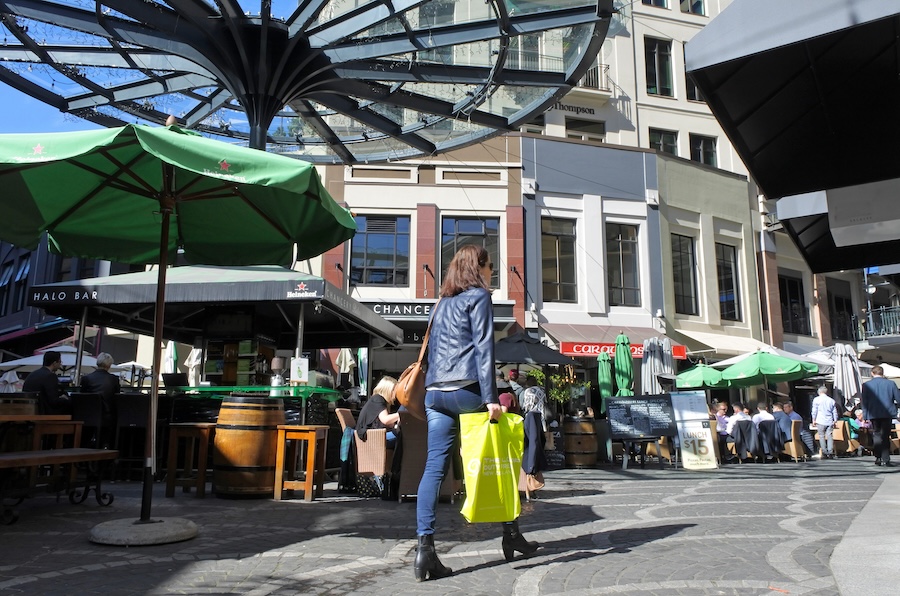
At the same time, New Worldline payments data reveals that while spending at food and liquor merchants increased in December 2025, overall core retail spending edged down slightly, highlighting a continued focus on essentials.
Consumer spending processed through Worldline’s payments network across core retail merchants reached $4.7 billion in December, down 0.2 percent year-on-year. Spending at food and liquor stores rose 4.0 percent, broadly in line with food price inflation, while spending across remaining core retail categories fell 4.4 percent. Boxing Day sales across non-food retailers dropped 12.4 percent compared to the previous year.
Worldline NZ Chief Sales Officer Bruce Proffit says the figures show consumers are still feeling the squeeze.
“There was more spending at Food and Liquor stores in Worldline’s network across December, which is consistent with generally higher food prices and people prioritising the essentials in their budgets,” he says.
At the same time, the shift to online shopping is accelerating, with online spending through Worldline up 18.9 percent in December. Black Friday also outperformed Boxing Day, reinforcing how consumer spending patterns are evolving.
Proffit says these patterns underscore how challenging the retail environment remains.
“The annual figures point to a tough retail sector last year, with extra spending appearing to be largely the result of higher prices,” he says.
For FMCG brands such as Forty Thieves Nut Butters, the data mirrors what is happening in-store.
Co-owner Shyr Godfrey says customers continue to prioritise staple products, even as discretionary purchases slow.
“We’re seeing a very similar pattern in our own data, with customers continuing to prioritise Forty Thieves Nut Butters, particularly Peanut Butter, as part of their regular shop,” she says.
“In December, our sales grew 62.1 percent year-on-year across all major supermarket chains, which tells us people are still backing trusted brands that earn their place in the trolley.”
Seasonal and value-led products have also performed well.
“Our core range continues to deliver consistent growth but we also saw a strong response to our festival seasonal product; Gingerbread Cookie Peanut Butter… It offered a familiar yet seasonal gift option that felt accessible for customers during a value-conscious period.”
However, profitability remains under pressure, largely due to rising input costs.
“Over the past few months, the biggest impact on our margins has come from rising cocoa and almond pricing,” Godfrey says.
“Where necessary, we’ve implemented targeted price increases, while also absorbing a portion of the cost increases ourselves.”

Brent and Shyr (left) Godfrey, Co-Owners of Forty Thieves Nut Butters.
The QSBO shows the construction sector is among the most optimistic about the future, despite continued softness in new orders, output and pricing power.
Leung says confidence is being driven by expectations that lower interest rates will eventually lift demand, but key barriers remain.
“This recovery has been slow to come through, as weak house price growth discourages property developers to undertake new housing developments,” she says.
“Sustained house price growth should support a recovery in residential investment.”
Until that happens, spare capacity in construction is keeping inflation pressures low and limiting firms’ ability to raise prices.
With inflation pressures contained and the Official Cash Rate expected to trough this year, interest rates remain central to the outlook.
“Given the majority of mortgages in NZ are on fixed-term rates, there will always be a lag as to when changes in the OCR flow through to activity,” says Leung.
“We expect lower interest rates will continue to support a recovery in demand as many households reprice onto lower mortgage rates over the coming year.”
That stabilisation is already encouraging investment decisions. At Forty Thieves, Godfrey says improving certainty is unlocking growth.
“Our confidence in the business has strengthened over recent months,” she says.
“We’re currently investing in a new production line to unlock further efficiencies.”
But risks remain. Leung points to global volatility and political uncertainty as potential headwinds.
“Global volatility poses downside risks… firms also tend to be more cautious about committing to substantial investments ahead of general elections.”
For now, the picture is one of guarded optimism – confidence is rising, but recovery is likely to be gradual, uneven and closely watched as businesses navigate the year ahead.