AI and the human touch in recruitment
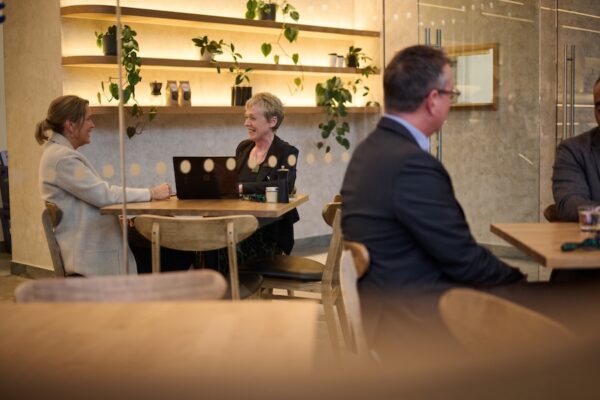
Artificial intelligence (AI) is no longer a distant concept or a futuristic experiment, it’s here, reshaping the way businesses operate and hire talent.

Artificial intelligence (AI) is no longer a distant concept or a futuristic experiment, it’s here, reshaping the way businesses operate and hire talent.

Stratalign Managing Director Matthew Prestige on how the company is leading the charge on smarter and safer lifting technology as it eyes international growth.

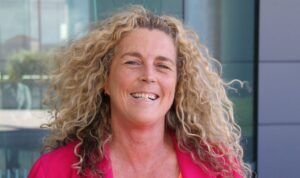
At home or in the office, workplace fun isn’t a one-size-fits-all affair – leaders need to acknowledge that and offer a safe environment, according to a University of Auckland study. Working from home one or more days per week has become a norm for many employees post-Covid; how has this shift affected the ways workers have fun? Business School researchers Associate Professor Barbara Plester (pictured) and Senior Lecturer Rhiannon Lloyd explore fun in hybrid work and psychological safety in their article Happiness Is ‘Being Yourself’: Psychological Safety and Fun in Hybrid Work. Based on in-depth interviews with workers from two companies, the study finds that fun activities shouldn’t be uniformly enforced or encouraged by workplaces; instead, a nuanced understanding of

A business owner hopes to improve New Zealand’s woeful productivity performance with a new training programme, utilising neuroscience to help Kiwis work smarter, not harder. New Zealand has one of the worst levels of productivity and growth compared to other countries in the OECD, according to the country’s Productivity Commission. Per person, our income is only about 70 percent of that in countries that perform in the top half of the OECD, it says. However, Nat Milne, an Auckland business owner, HR and people specialist, and mother of two wants to help change that. She is introducing a new scientifically-backed productivity training programme, called Beminded, to New Zealand workplaces. Milne has partnered with the Swedish founder of Beminded, to launch

Laurence McLean offers tips on ways to keep team morale high if Christmas parties need to be pared back, as well as how to meet WH&S obligations for any parties going ahead. 2023 has been a year of many challenges for SMEs and their workforce. So how can businesses boost staff morale amidst today’s cost-of-living woes? Christmas work parties provide employers the perfect opportunity to showcase their appreciation for their employees, says Laurence McLean (pictured below). “Maintaining high employee morale doesn’t necessarily mean a big spend is needed. If employers have previously asked staff to cover their own expenses; they could consider covering the costs this year to promote staff engagement. If that is not financially feasible, employers can explore budget

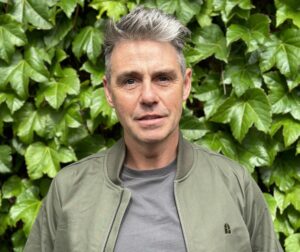
The demand for biophilic elements such as green walls is soaring in New Zealand as employers strive to make working from the office better than home. This is particularly so as companies downsize physical office spaces or accommodate a more remote workforce. Simon Chamberlain (pictured), director of GreenAir, an Auckland-based Green Design company, said companies need ‘culture’, which is hard to build when most of the staff are working from home. This is particularly true at a time when company culture (shared values, belief systems and attitudes) is so important to achieving the organisation’s strategic objectives. “In today’s dynamic work environment, companies are cutting down on office space by 25 percent or more, renegotiating leases to accommodate smaller teams, and

New Zealand’s employers are being urged to be less clinical in their hiring practices as, increasingly, candidates report that job interviews seem to be turning into a checklist exercise. Kathryn Sandford, CEO of Move to More (M2M), a recruitment company and career/job-hunting coach, wants employers to prioritise the human connection when evaluating prospective employees for a role. “The checklist approach covers points like flexibility, no bullying policies, diversity and inclusion, certification, flexibility, not ageist, not sexist – all good things, but unfortunately, much of it is lip service. Employing the best person for the role is not an exercise in compliance. “Our culture of busyness means that nobody pauses to prioritise and focus on what is important; there’s no reflection or

Ben Rose explains his company’s unique digital first work culture and shares his take on the future of crypto, blockchain and Web3. I’ve worked in a number of companies during my career in which I’ve managed teams abroad, but my role with Binance is the first one that I’ve done largely from home. And it’s not just me – our entire workforce is remote and digital first. On any given day, I might work with a policy specialist from London or a comms specialist from Tokyo, and we work together based on expertise rather than location. Just like cryptocurrency itself, Binance was deliberately set up six years ago to be decentralised, with people all over the world. This was before
Upcoming event

Thursday 28 May 2026 | 7:00am – 9:30am
📍 New Zealand International Convention Centre, 101 Hobson Street, Auckland
Join us for a practical, insight-led morning exploring how Kiwi businesses are navigating today’s conditions and unlocking new growth opportunities in 2026.
Latest issue

Read the March issue of NZBusiness, focused on intentional growth — with practical insights, expert perspectives, and real-world stories.
Latest articles
Get practical insights, expert advice, and the latest from New Zealand’s SME community — delivered straight to your inbox in our fortnightly newsletter. Plus, access our latest digital issues anytime.