
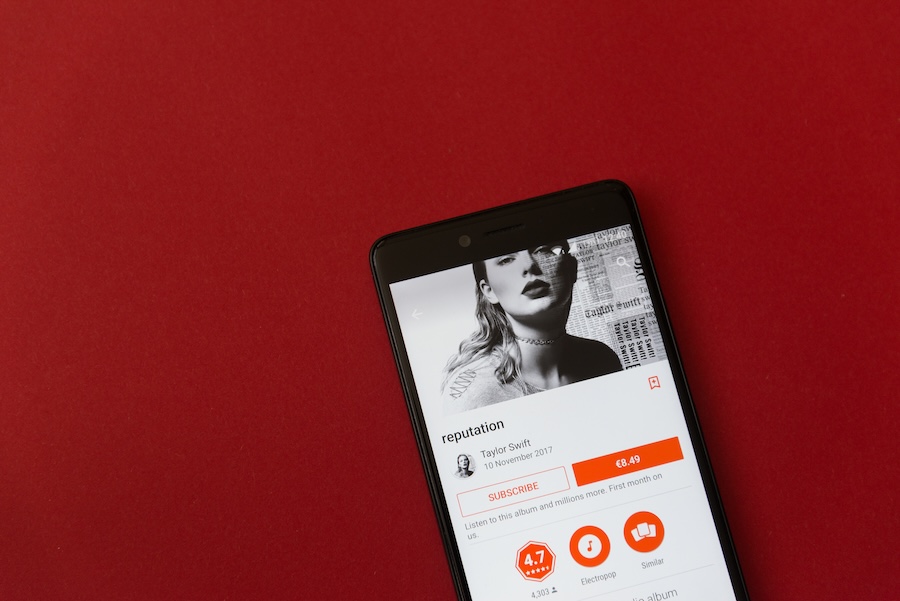
In the era of online reviews, instant comparisons and digital-first customer journeys, credibility has become the new competitive edge for SMEs. Taking a cue from by Taylor Swift’s Reputation, Elise Balsillie argues that for Kiwi businesses in 2026, reputation isn’t just image, it’s a measurable commercial asset that drives trust, conversions and long-term growth.
New Zealand SMEs are now well into 2026 with something many markets would envy, confidence.
That matters. Confidence gives business owners the nerve to invest, adapt and keep building when conditions are uneven.
However, confidence alone does not secure growth.
The theme I believe deserves to be front and centre for Kiwi SMEs this year is credibility. Not as a branding buzzword, but as a commercial capability. Credibility is what makes a customer feel safe to choose you, easy to buy from you and willing to come back.
It is built in the moments that sit between intention and action, your search result, your reviews, your response time, your booking process, your follow-up and the consistency of the experience after the sale.
That is where growth is increasingly won.
The latest New Zealand findings in the Thryv Business Index and Consumer Report support this argument, but they are not the story itself. The story is that in a tighter, more selective market, credibility is becoming the growth multiplier. The data simply helps us see where it strengthens and where it slips.
Why credibility matters more in 2026
This is a year where many SMEs are trying to balance optimism with pressure. In the report, economic uncertainty is the most cited barrier to growth at 41 percent, with cash flow issues at 32 percent and a lack of skilled staff at 31 percent. At the same time, businesses are making pragmatic moves, with 33 per cent planning to increase prices, 33 percent planning to expand their offering and 31 percent planning to increase marketing spend.
Those are rational decisions. They reflect a sector that is active, not passive.
However, when customers are also under pressure, they become more discerning. They look for proof. They compare faster. They abandon sooner when something feels unclear or harder than it should be. In that environment, credibility does real commercial work. It reduces hesitation, improves conversion and protects margin because customers feel more certain about the value they are getting.
This is also why credibility sits naturally alongside other growth conversations already underway in the New Zealand SME market. Decision-making speed matters. Operational resilience matters. However, credibility is what ensures those capabilities are visible and felt by customers.
If a business improves its systems but the customer still experiences slow replies, patchy communication or a clunky booking process, the commercial upside is capped.
The credibility gap is not effort, it is alignment
One of the most important patterns in this year’s New Zealand report is not a lack of effort from SMEs. It is a gap between how businesses perceive delivery and how customers experience it.
That gap shows up clearly in digital presence. Three-quarters of SMEs say their online presence is strong, yet only 54 percent of consumers agree. It also shows up in service and experience. Forty-nine per cent of SMEs completely agree they deliver consistently high service, compared with 24 percent of consumers. For seamless customer experience, 33 percent of SMEs completely agree, compared with 19 percent of consumers.
I do not see this as a negative headline about SMEs. I see it as a strategic insight.
It tells us exactly where the next growth opportunity sits. Not only in lead generation or reach, but in alignment. In other words, closing the gap between what a business believes it provides and what a customer can consistently see and feel.
What customers are really responding to
Kiwi consumers are actually very clear about what builds trust. The report shows that recommendations from people they know and friendly, responsive communication are the top trust builders, both at 68 percent. Positive reviews or testimonials follow at 60 percent. A professional website or social presence also matters, cited by 36 percent of consumers.
Customers are telling us that credibility is built through proof, responsiveness and professionalism. They are not asking every SME to become a tech giant. They are asking for confidence signals that make the decision easier.
Just as importantly, they are also clear about what erodes confidence. Higher prices are a major barrier, but so are digital and reputation gaps, including lack of online shopping options, an unprofessional website or social media presence and too few reviews.
This is where I think many businesses can sharpen their thinking. When owners say customers are price-sensitive, they are often right. However, price sensitivity and credibility sensitivity now travel together. Customers will pay when they trust the experience. They hesitate when they sense risk, friction or inconsistency.
Digital credibility is now commercial credibility
We still sometimes talk about digital capability as if it is a future-readiness issue. For most SMEs in 2026, it is a present-day credibility issue.
New Zealand consumers expect practical digital basics. The report shows 52 percent expect a mobile-friendly website, 51 percent expect online booking and 48 percent expect an online store. SME delivery trails those expectations at 35 percent, 39 percent and 29 percent respectively.
This is not only a technology gap, it is also a trust gap.
Consumers also report they are likely to choose another business if digital tools such as online ordering or mobile payments are missing, with 34 percent somewhat likely and 13 percent very likely to switch.
For SMEs, this means digital friction quietly drives lost revenue. A customer may still enquire because your local reputation is strong. However, if the next step feels slow, unclear or inconvenient, credibility drops and comparison shopping starts.
In practical terms, digital readiness now directly supports conversion, retention and pricing resilience.
Reviews are one of the fastest ways to strengthen credibility
If credibility is the theme, reviews are one of the clearest places to act.
More than 80 percent of New Zealand consumers either always or sometimes check reviews before buying from a SME. Consumers also care not only about star ratings but about whether a business actively responds to reviews, with 35 percent saying responsiveness is the most important factor when looking at reviews.
At the same time, only 44 percent of businesses always encourage customers to write reviews and 49 percent always respond to them.
Review management is often treated as a marketing extra when time allows. In reality, it is one of the most visible credibility systems a business has. It shows social proof, service quality and responsiveness in one place. It can also become a live feedback loop that helps owners spot where customer confidence is dropping before the problem becomes expensive.
What credibility-focused growth looks like in practice
When I talk about credibility as a growth engine, I do not mean a major rebrand or a six-month transformation project. I mean disciplined improvements across the customer journey.
It starts with the first impression. Search visibility, business details, website clarity, review presence and mobile usability all shape whether a customer moves forward. From there, credibility is either strengthened or weakened through response times, booking steps, communication quality and whether the experience delivered matches the promise made.
For many SMEs, the biggest commercial gains will come from fixing one or two friction points well, rather than trying to overhaul everything at once. A clearer next step after enquiry. Faster follow-up. More consistent review requests. Better communication during delays. A smoother booking process. These changes are not flashy, but they are powerful because customers feel them immediately.
The opportunity in front of New Zealand SMEs
The encouraging message here is that Kiwi SMBs do not need to become something they are not. New Zealand businesses already have strong foundations, resilience, community connection and a reputation for service. The next growth step is making that strength easier for customers to recognise and trust in every interaction.
That is why I believe credibility should be the defining business theme for 2026.
It is measurable in customer behaviour. It lifts the return on marketing, digital investment and service effort. Most importantly, it gives SMEs a practical path to grow in a market where confidence alone is no longer enough.
The businesses that win this year will not necessarily be the loudest. They will be the ones that feel easiest to trust.