
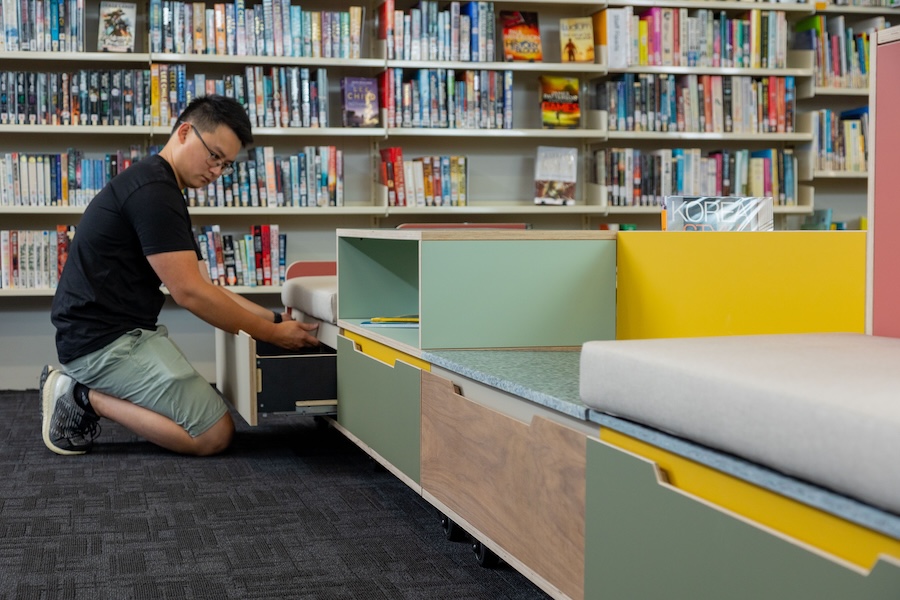

In an industry often defined by short-term trends and throwaway materials, Spacebar Design is quietly, and quite literally, rebuilding the rules. The Auckland-based studio, Co-founded by designer and maker Anson Kong, was crowned Supreme Winner and Most Innovative Business at the 2025 David Awards, recognised for its groundbreaking approach to circular, sustainable interiors that are changing how Kiwis think about furniture and cabinetry.
For Anson, the recognition is more than a trophy. It’s validation of years of behind-the-scenes work to prove that beautiful design and environmental responsibility can co-exist.
“A lot of the work we’ve done has been behind the scenes. So it’s good to get the opportunity to showcase the mahi our team does, and the impact we have,” Anson says.
A mission to end wasteful design
Founded in 2020, Spacebar Design began with a simple mission: To end wasteful furniture and cabinetry practices for good.
In New Zealand, construction and interior fit-outs are among the biggest contributors to landfill waste. Anson says that during his years working in commercial construction, he saw the problem firsthand.
“I’d been in the industry for a full cycle. You’d do a shop fit-out that might cost a million dollars. It would stay there for seven or eight years, and then one day we’d go back, rip everything out, send it straight to landfill, and build a whole new shop. To me, that just doesn’t make sense, from a sustainability point of view, or from a design and operational perspective.”
The numbers, he says, are staggering. Construction waste accounts for up to 40 percent of New Zealand’s landfill, and an estimated 122,000 tonnes of furniture and cabinetry are dumped every year. Much of it comes from materials like MDF and particle board – cheap, easy to use, and destined for a short life.
Anson’s response was to reimagine how interior spaces are designed from the start.
“We wanted to build what we call circular interior fit-outs. Spaces designed so they can be repaired, repurposed and reconfigured over and over again,” he explains. “That way, people can create new spaces without generating unnecessary waste.”
From construction to circular design
Anson trained as an industrial designer before finding his way into commercial fit-outs. The experience gave him a unique lens on both the creative and the practical sides of the industry. “Coming from that background meant I could see where design decisions directly led to waste. It wasn’t about bad intentions, it was about habits. We’d been taught to build for function and appearance, not for longevity or circularity.”
By combining design thinking with construction know-how, Anson, his Co-founder Tim Lee and small team began prototyping cabinetry and furniture that could evolve with its environment. Their pieces are built from red-list-free plywood (a list of worst in class chemicals in building), recycled plastic panels, and organic textile finishes, designed for disassembly and reuse.
Each Spacebar product carries an engraved message explaining its mission, with repair instructions and contact information – inviting users to think of it not as a disposable fixture, but a long-term asset.
“Whether it’s five or 15 years down the line, we want customers to know we’re still here to help them make the best decisions for both their space and the environment.”
Anson says that Spacebar’s sustainability focus isn’t just ethical, it’s economical. The company’s design systems give clients the ability to move, reconfigure, and adapt their interiors without starting from scratch.
“When people move offices, we can deconstruct everything, bring it to the new space, and reuse it to redesign a new layout. That means instead of spending another $200,000 on a new fit-out, they’re paying maybe 40 to 50 percent of that to reconfigure what they already own. It becomes an asset to the business.”
The financial argument has proven to be one of Spacebar’s strongest tools for driving change. Anson says that he often reframes sustainability as a matter of efficiency – of time, materials, and cost.
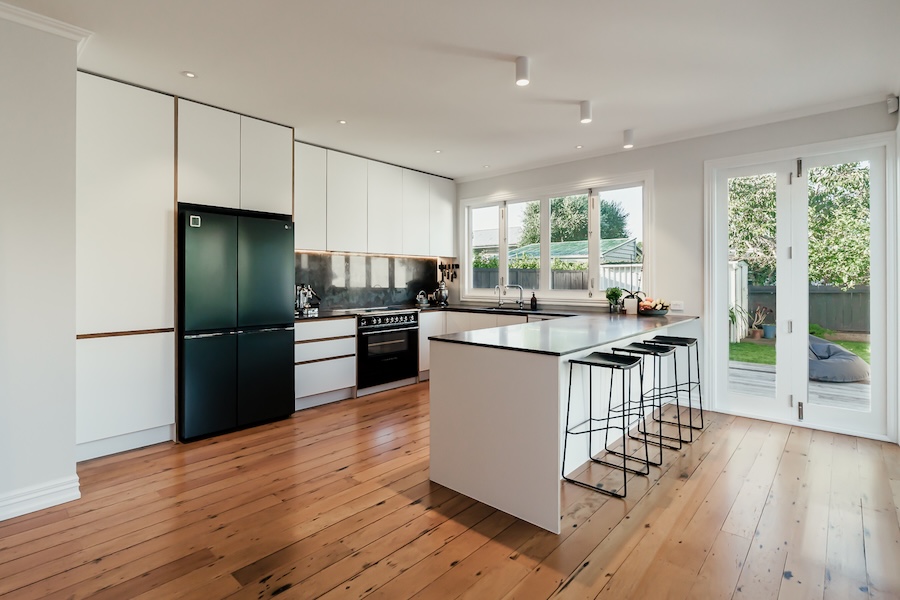
Modular Spacebar Design kitchen fitout.
“Sustainability is really just efficiency. If you’re efficient at using resources, energy, materials, and costs, that’s sustainability. And if you can spend five to 10 percent more upfront to get something that lasts decades instead of years, the value is obvious.”
It’s an argument that resonates increasingly with clients, particularly as costs rise and sustainability targets tighten. Over the past few years, the company has completed more than 200 projects, diverting over 80 tonnes of materials from landfill.
Educating the industry
Perhaps Spacebar’s most ambitious work happens outside its workshop, through education and advocacy. Anson quickly realised that one of the biggest barriers to circular design wasn’t resistance, but lack of awareness.
“People aren’t asking for circular solutions because they don’t know they exist. And a lot of people in construction say, ‘We’re not doing it because no one’s asking for it.’ But if the industry doesn’t educate people outside of it, they’ll never know to ask for the right things.”
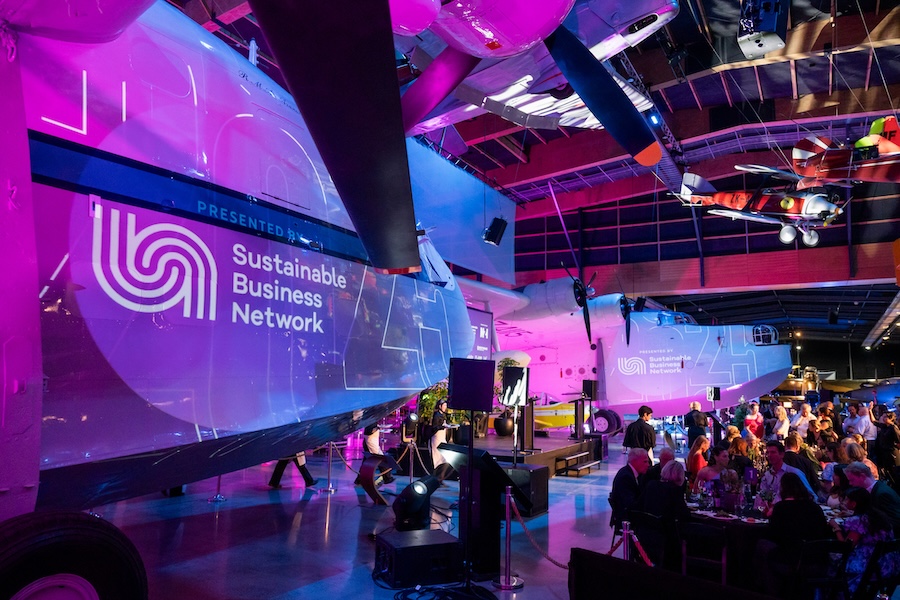
To bridge that gap, Spacebar partners with organisations like the Sustainable Business Network, New Zealand Green Building Council, and Waste Minimisation NZ to run workshops and material showcases for architects, builders, and designers. These sessions, he says, demonstrate how sustainable and circular materials perform in practice, and how they can be integrated into large-scale projects.
The team also collaborates with Māori and indigenous experts at Warren and Mahoney, embedding cultural storytelling and environmental values into their products through engraved motifs. It’s a partnership that reflects the company’s holistic approach: Design that honours both people and the planet.
“It’s not just about reducing waste. It’s about designing with intention, embedding stories, values, and longevity into the space.”
Inspired passion project
As for the business side of being an entrepreneur, Anson says that what began as a side project has quickly grown into a thriving business. But he’s quick to point out that the journey hasn’t been easy.
“The biggest challenge early on was education,” he admits. “We were essentially building a market from scratch. When we started, there wasn’t much demand for sustainable interiors, so we had to show people why it mattered.”
Today, demand has caught up with their vision. Anson says the shift began around three years ago, as both residential and commercial clients started to take sustainability seriously.
“We’ve definitely seen a spike in interest. People are realising that creating spaces responsibly doesn’t mean compromising on creativity or functionality.”
The company’s impact extends beyond the environment, it’s reshaping how businesses think about interior assets. A Spacebar Design fit-out doesn’t end when a lease expires; it evolves, moves, and adapts with the organisation.
“Our dream is that one day, all office spaces across New Zealand will share the same modular system. No matter where a tenant goes, they can reconfigure and redesign their space without much waste. Like building with Lego pieces, there’s nothing to waste.”
For Anson, entering The David Awards was never just about competition, it was about connection.
“Being part of the awards gives us credibility. It puts us front of mind when people think about creating their next space. They remember that we exist, that this kind of solution is possible.”
He also valued the process itself.
“It was actually a really good chance to sit down and reflect. When you’re deep inside the problem, you don’t always stop to celebrate the wins. Writing our submission made us realise the impact we’ve had, and it reminded us to have fun, that’s what keeps us going.”
Recognition from The David Awards has already amplified Spacebar Design’s visibility. For a company whose mission depends on awareness, that spotlight is invaluable.
“Awards like this show that sustainable business isn’t niche anymore, it’s innovation at its best. It helps others see that doing good can also mean doing smart business.”

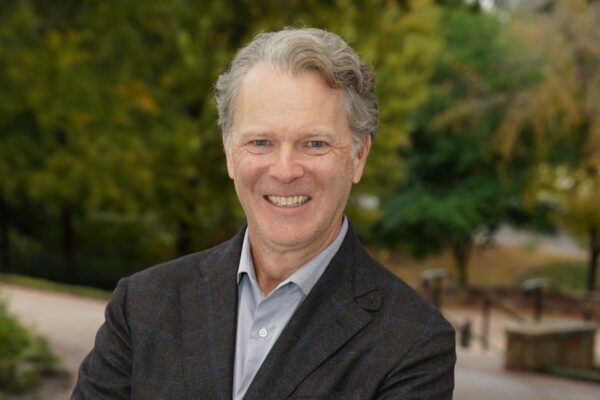
Anson Kong (right) and Tim Lee, Co-founders of Spacebar Design.
Anson’s advice for other entrepreneurs reflects the patience and persistence that have defined the company’s rise.
“You have to be consistent. People might think you came out of nowhere, but they don’t see the years of quiet work that came before. Success isn’t about one big idea – it’s about being consistent, improving 1-2 percent a day. That’s what makes it snowball.”
He admits there were moments when the uphill battle for recognition felt endless. But now, with momentum building and partnerships expanding, Spacebar Design stands as proof that persistence pays off.
“For a long time, it felt like we were shouting into the void. Now people are listening, and that’s incredibly rewarding.”
A future built to last
Looking ahead, Anson says the company plans to scale its systems for broader use across commercial, residential, and public sectors, while deepening collaborations with architects and local manufacturers.
“The next couple of years will probably be our biggest growth period. People’s awareness of sustainability and circularity in interior spaces is spiking, and we’ve spent six years building the infrastructure to provide those solutions efficiently. Now we’re ready to expand that offering.”
There’s also a strong emphasis on digital design systems, developing ways for clients to visualise the full lifecycle of their interiors before construction even begins.
“We’re working on tools that help people see the long-term value of their design choices. When you can literally see how something can be reused or reconfigured 10 years from now, it changes the decision you make today.”
Ultimately, Spacebar Design’s vision goes beyond its own projects. The company wants to catalyse an industry-wide shift, a move from what Anson calls linear thinking to circular design that could dramatically reduce New Zealand’s waste footprint.
The David Awards were founded to recognise the entrepreneurial spirit of small businesses making a big impact. Those who, like the biblical David, punch above their weight.
The judges say that Spacebar Design embodies that ethos: A small team with a big idea, tackling a global problem from a local workshop.
“We’re not just a design studio. We’re a catalyst for change in the interior industry, creating beautiful, circular solutions that future-proof our spaces while caring for the land we all share.
This article was originally published in the October 2025 issue of NZBusiness, read it here.