
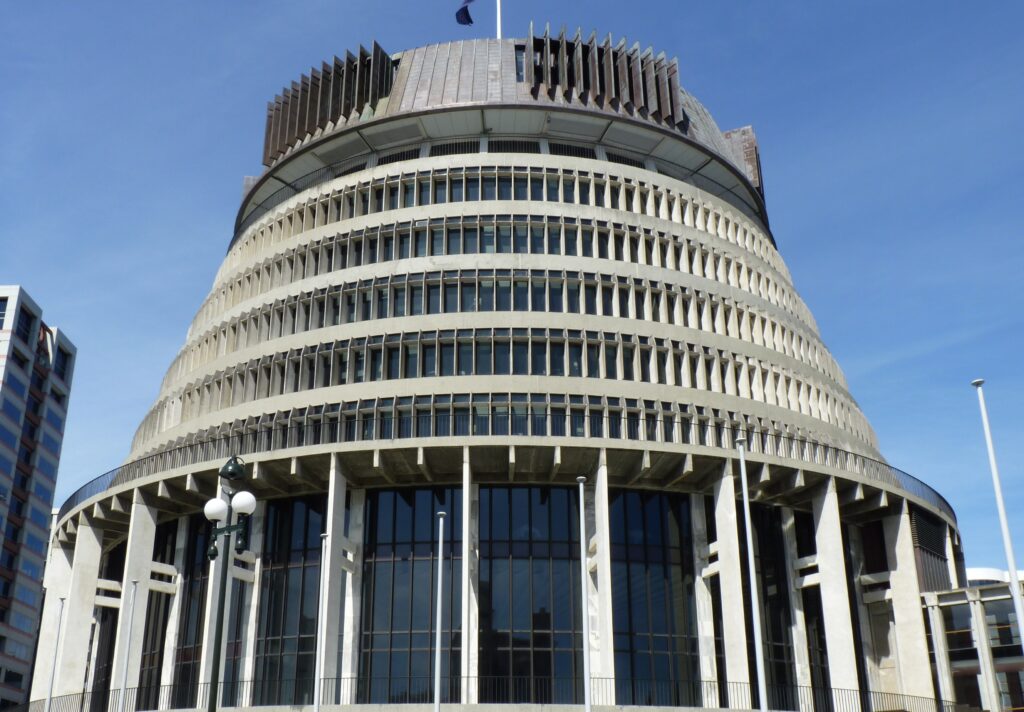

BusinessNZ is urging political leaders to form a stable government with a coherent economic programme, after preliminary election results left National, ACT and New Zealand First with a narrow majority.
The three parties hold 67 seats in a projected 131-seat Parliament on the preliminary count. About 400,000 special votes are still to be counted, and the Electoral Commission aims to publish official results on 27 November.
Formal coalition negotiations are not expected to start until those votes are in. National leader Christopher Luxon has spoken briefly with ACT’s David Seymour and New Zealand First’s Winston Peters, and on Monday met Qiulae Wong, leader of the Opportunity Party. Opportunity provisionally holds seven seats and could decide who governs if the three-party majority disappears on the final count. Labour leader Chris Hipkins has not conceded.
BusinessNZ Chief Executive Katherine Rich says business leaders understood negotiations would take time, particularly while special votes could still affect the final allocation of seats.
“What matters is that the eventual government is stable, has a coherent programme and can build confidence about the direction of enduring economic policy,” she says.
BusinessNZ would engage in good faith with whichever grouping ultimately formed the government, Rich said.
The result removes several of the ministers business has dealt with most over the past three years. National won 42 electorates but, with 29 percent of the party vote, no list seats. That leaves list-only candidates Finance Minister Nicola Willis and Speaker Gerry Brownlee out of Parliament.
Housing and Infrastructure Minister Chris Bishop and Justice Minister Paul Goldsmith lost their electorate races in Hutt South and Epsom on the preliminary count. Between them, Willis, Bishop and Goldsmith held 19 ministerial portfolios, RNZ reports.
Rich acknowledges the “considerable effort and commitment” the ministers brought to their portfolios, and paid tribute to Brownlee’s three decades in Parliament.
Who takes the finance portfolio is already contested. Seymour has put himself forward, while Luxon says the role will go to a National MP.
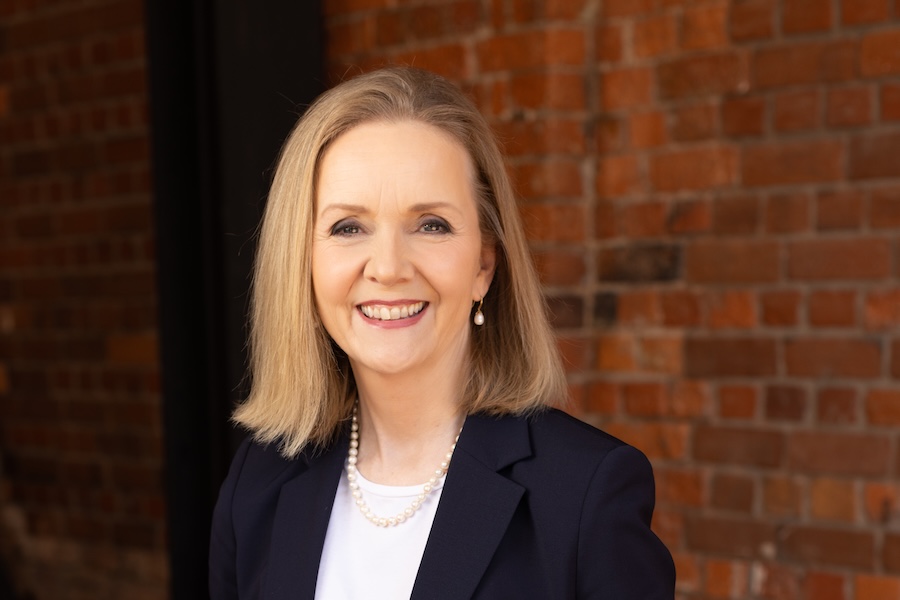
Katherine Rich.
Smallest businesses least convinced
Research released the day before the election suggests the next government has work to do with the smallest end of the business community.
A Thryv survey of 1,007 business decision makers, carried out between 24 October and 3 November, found 62.5 percent consider central government policies supportive of small business. Among one-person businesses the figure was 16.2 percent, compared with 77.5 percent for businesses with 25 to 100 people.
Perceived support rose with each step up in size, to 48.5 percent among businesses with two to nine people and 71.5 percent among those with 10 to 24.
Sole operators also reported tougher trading. More than a third (34.2 percent) said revenue had fallen over the past year, against 10.6 percent of the larger businesses, and 36 percent reported lower profit margins, against 11.1 percent. Rising costs worried 45 percent, compared with 21.2 percent.
“For someone working alone, those pressures affect both their livelihood and their ability to invest in the business,” says Elise Balsillie, head of Thryv Australia and New Zealand.
“Decisions about spending or taking on more work become harder when income is less certain and there is limited capacity to absorb rising costs.”
In written comments about central government policy, costs, cash flow and profitability came up in 21.4 percent of responses, and regulation, compliance and administration in 21.1 percent. “I would prefer them to lower taxes for small businesses,” one respondent said.
The survey is unweighted and not nationally representative, and the one-person group numbered 111 respondents. Thryv notes the findings do not establish that government policies caused the business outcomes reported.
Rich points to BusinessNZ’s Election Priorities 2026 report as its agenda for whoever governs.
It “sets out the durable policy settings we believe New Zealand needs to lift productivity, strengthen investment and create the conditions for businesses and the wider economy to thrive”, she says.