

Back in the December 2010/January 2011 issue, NZBusiness named Brolly Sheets a hero of small business at that year’s David Awards, which celebrated companies with ten or fewer staff. Founder Diane Hurford was four years into a business built on a purple cotton bed protector Diane had sewn at her kitchen table, already talking about turning Brolly Sheets into “a globally recognised brand.”
Sixteen years on, Brolly Sheets celebrates its 20th anniversary this month. The globally recognised part hasn’t quite panned out as Diane once imagined, and she’ll tell you that’s by design. Instead, the business has quietly become one of the country’s most enduring e-commerce stories, still run on the values it started with, still largely designed by the woman who founded it, and still growing.
A purple bed pad and a bump on the head
The idea came from an ordinary, exhausting problem. Diane’s child Theo, now 24, slept on the bottom bunk, and every time Diane changed a wet bed in the middle of the night she’d crack her head on the bunk above. “Once I’m awake in the night, I don’t get back to sleep,” she says. By the time she’d stripped and remade the bed, Theo would be wide awake too.
Diane could sew, so she went to Spotlight, bought some fabric and a waterproof tablecloth, and made the first version of what would become a Brolly Sheet. She chose cotton because Theo had eczema and dust allergies, and purple because she reasoned a child would “buy into it” if it looked good. That instinct turned out to be the whole business model. Theo had a friend over for a sleepover, and when the friend asked about the sheet, Theo said it made the bed look cool. The friend wanted one too. “That had nothing to do with wetting the bed,” Diane says. “It just made your bed look cool.” That ethos, dignity and good design over anything clinical, has carried through the product range ever since.
Brolly Sheets wasn’t Diane’s first business. Once she started her family, she needed something flexible enough to fit around two young children, so she’d tutored travel and tourism and ran a small property management business, five houses in Ponsonby, around playcentre sessions. When Glenn was offered a job in Sydney, that property business, four years in the making, had to be sold. Diane had already been making Brolly Sheets for friends and family in Auckland, and when someone suggested she sell them properly once the family relocated, she found a home sewer in Sydney and began doing markets.
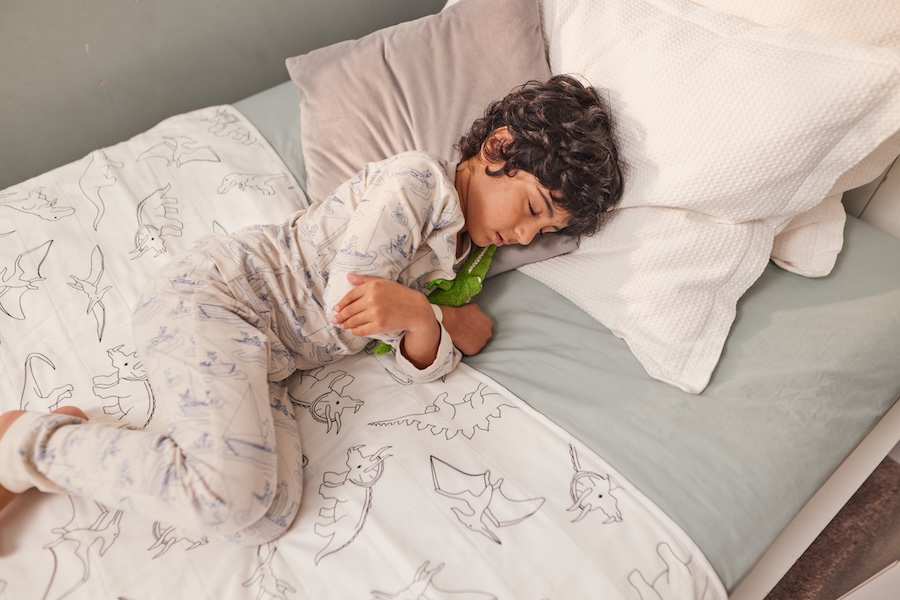
A Brolly Sheet in the playful Dino print, part of the range Diane Hurford built on a simple idea: Waterproof protection that kids actually want on their bed.
Building an e-commerce business before e-commerce existed
Diane had never worked in e-commerce, but knew she wanted to sell online from the start. She built a basic template website and combined it with markets and, notably, $80 classified ads in Sydney’s and Melbourne’s parenting magazines. “There was no Google, no Facebook ads, nobody competing for attention. There was just nobody in e-commerce 20 years ago,” she says. Those small classifieds drove enormous traffic to a website almost nobody else was building.
The family returned to New Zealand, and once her youngest child started school, Diane had something she’d never had before: A full working day – well a school hour day. She also found a business mentor through Business Mentors New Zealand, who pushed her on pricing and manufacturing. Made in Australia, at cost, Brolly Sheets would stay a hobby; made offshore, with proper margin, it could become a real business. “The biggest risk,” her mentor told her, “is if you don’t sell it, you’ll be at Takapuna Market every Sunday morning trying to shift these things.” Diane went offshore, and has worked with the same Chinese manufacturer, James, for 18 of the business’s 20 years, at a small rural factory where staff go home to their families each night rather than living in city dormitories, and are paid by the piece, so nobody has to rush.
Knowing her numbers became, in her words, “the biggest thing.” Early on she paid someone from MYOB to help code her spreadsheets, so every dollar of freight, product development and advertising was tracked from day one. It took about three years before she paid herself a wage.
Brolly Sheets’ product range grew almost entirely out of conversations at those early markets, baby expos and disability shows. A customer asking whether the product would suit her 18-year-old son, not just her toddler, led Diane to develop a more absorbent version suited to all ages. A Devonport mother whose son has cerebral palsy and used cotton fashion bandanas that weren’t absorbent prompted a patterned, absorbent bandana, which grew into its own category. When Diane’s own mother lost her sight and didn’t want to wear a bib at the dinner table, the range expanded into florals rather than just the funkier prints aimed at younger customers. A New Plymouth mother’s frustration with washing blankets led to a waterproof flat sheet that took five or six prototypes to get soft enough not to irritate skin.
That direct line to customers is now formalised in a sister brand, Independently You, aimed at seniors and people with disabilities, a market Diane has grown personally invested in while designing products for her own family, including a recliner-chair protector with a pocket for her mother’s lift-chair remote. It’s a harder market to reach than parents of toddlers, she says, because it involves carers, medical professionals and end users rather than one obvious buyer.
But she’s working on growing the category and taking on learnings from past category endeavours, some having worked and others not so much.
Lessons and staying relevant
Not every one of these lesson was gentle either. In 2022, Brolly Sheets closed operations in the UK and US, markets Diane now views partly as “vanity”, after Brexit made European shipping unworkable and Amazon’s margins proved too thin. Today the focus is New Zealand and a much larger Australian market.
Diane says she once deferred too readily to marketing consultants simply because they held degrees she didn’t, until one contractor resigned two days before Christmas with no marketing plan in place for January. She now builds accountability and KPIs into every hire, alongside a 30/60/90-day onboarding process and a formal viability framework for new product ideas, weighing competition, price, cash outlay and risk before committing to anything new.
With an nine-person team, Diane relies on younger staff to keep the brand relevant on social media, since, as she puts it, “the founder is not the target market” anymore. She still fronts the videos herself, but leans on her team to tell her what’s trending and where the camera should point. Watching those marketing graduates go on to bigger things elsewhere is, she says, one of the quieter satisfactions of running a small business. She’s also excited about what AI might do for Brolly Sheets next, though by her own admission she’s still just “dabbling,” and is now looking at bringing in proper training and outside expertise rather than teaching herself from scratch.
As for what the next 20 years holds Diane is clear that she has no interest in an exit. Her plan instead is to bring in a general manager to run HR and the day-to-day, freeing her up to focus on the parts of the business she loves most: Developing new products and representing Brolly Sheets at trade shows and expos.
“I don’t want to be working the 60-hour weeks,” she says, pointing to people she knows in their 80s still working part-time and loving it as the model she’s aiming for. What she’s determined to protect, whoever ends up running the business day to day, is the story. Competitors have copied the wording, the imagery, even the product itself over the years, she says, but nobody else has 20 years of history behind it. Keeping that authenticity and quality front of mind, rather than chasing every trend, is how she plans to keep Brolly Sheets relevant for the next 20 years, not just the last twenty.
In the lead-up to this month’s celebrations – which includes a birthday sale and bash with long-time Brolly Sheets supporters – Diane has been going through the business’s own history. She’s even unearthed the very first logo, a clip-art umbrella rendered in Comic Sans, and recalled how the earliest packaging was designed in Microsoft Word and printed off by Glenn at his desk at work in Sydney before Diane packed it by hand.
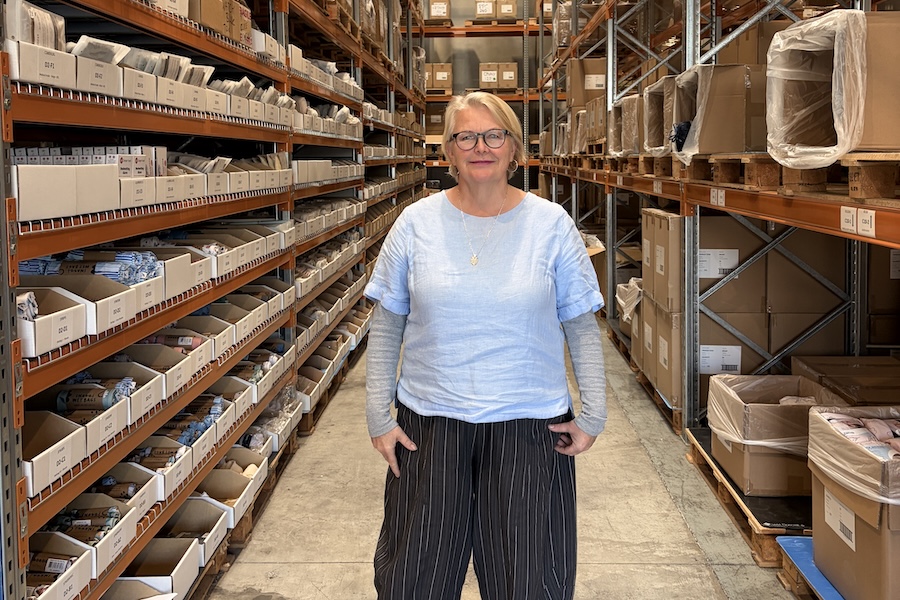
Looking back over two decades, from a Deloitte Fast 50 ranking achieved when it was still just her, to moving out of a cramped Devonport apartment and into a purpose-built North Shore warehouse, Diane’s proudest moments are less about scale than staying power: A team member who’s been with her for 15 years, a business that has stayed true to why it started, and a story, hers, that she’s determined never to lose sight of. Her advice to other founders starting out is simple: “Pick up the phone, trust what you know rather than deferring to whoever sounds most confident, and stop overthinking the decision you’ve already made up your mind about.”
Twenty years in, it’s advice she’s still taking herself.