
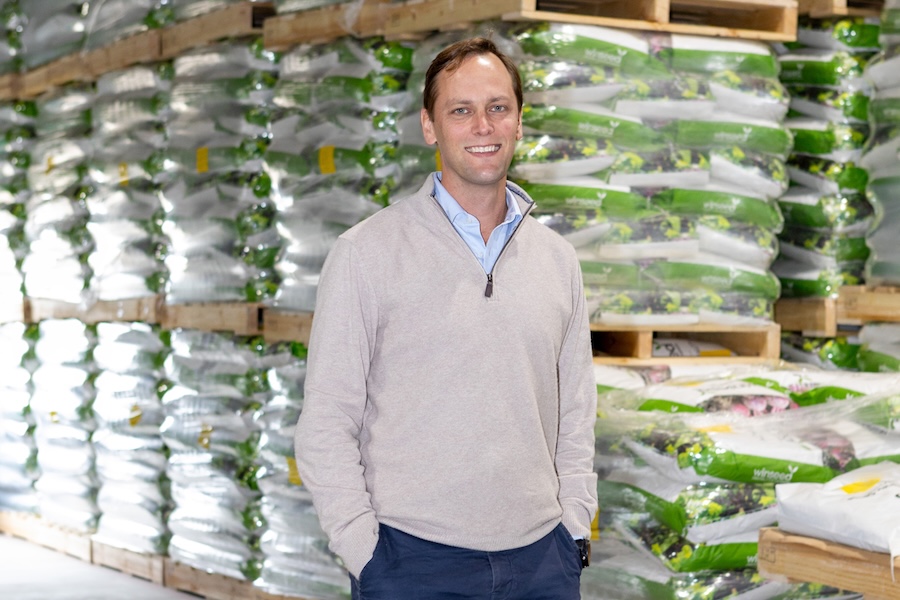


Tom Sherratt leads Winseed International, a seed company at the forefront of the industry, operating both here in New Zealand and from Hyderabad in India. Recognising the growing business was demanding more led Tom to the Icehouse Smart Governance Programme and he hasn’t looked back.
Headquartered in Canterbury, New Zealand, Winseed is a global vegetable seed company combining advanced breeding and seed technology to deliver high-performing vegetable varieties for growers worldwide.
Core crops – beetroot, carrot, radish, and peas – are grown and distributed across six continents, supported by breeding programmes in Canterbury, Hyderabad, India, and development in North Africa and the Middle East.
Q: Was there a moment you realised the business had outgrown the way it was being run?
Tom Sherratt: There wasn’t a single “lightbulb” moment. It was more like an accumulation of decisions and increasing exposure to risk, particularly around capital investment. When the stakes got higher, the consequences of getting it wrong became much more significant.
At that stage, we were essentially operating as managers and shareholders, making decisions ourselves. So, we started bringing in independent advisors to broaden the conversation. Over a couple of years, that evolved into a more formal governance structure.
Q: How did the Smart Governance Programme help at that point?
TS: Joining the Icehouse Smart Governance Programme gave me a fast-tracked understanding of how governance should work. It provided a framework, a toolbox, and clarity around roles, responsibilities, and processes.
We applied that across the business and our subsidiaries. Now, about 18 months on, it’s working really well.
Q: What tangible differences has that structure made?
TS: All of the above – better risk mitigation, more forward planning, and stronger discipline.
The structure creates a framework for decision-making. It ensures we’re not making knee-jerk reactions but instead we’re taking a considered, strategic approach whether it’s capital allocation decisions or new initiatives.
It also gives me confidence. When a decision is made, we know it’s been properly tested, discussed, and challenged by the right people. That means we can focus on execution rather than second-guessing ourselves.
Q: Does governance reduce the pressure on your leadership?
TS: Absolutely. It takes the stress out of it.
Decision-making becomes a shared responsibility. I’m not carrying everything on my own or making calls on the fly. Instead, I’ve got a disciplined process and a group of people working through challenges together.
That gives me the headspace to focus on implementation and do it well.
Q: Has having a formal board changed how others perceive the business?
TS: Yes, definitely.
Internally, our team understands there’s a clear process behind decisions – it’s not just based on someone’s mood or instinct on the day. Externally, customers and stakeholders see that we’re structured and strategic.
It also helps eliminate short-term thinking and keeps everyone aligned with the broader strategy.
Q: Did the Programme influence how you operate internationally?
TS: Very much so. I spend a significant amount of time in Hyderabad, where we’ve made major changes including new management, a new CEO, and a formal governance structure.
The Programme gave me the confidence and tools to implement those changes. We now have clear processes, regular board meetings, and defined decision-making pathways.
That’s critical when you’re dealing with time zones, cultural differences, and remote management. The structure allows the business to operate day-to-day without constant hands-on involvement from New Zealand.
Q: What value did the Programme’s small group format bring?
TS: That was one of the highlights. You’re learning alongside people who are at a similar stage in their business journey, so there’s an immediate connection.
The facilitators guide the frameworks, but the real value comes from participants sharing real-world business examples. You leave not just with theory, but with context and how others in the group are applying it in practice in their companies.
Q: What’s the biggest benefit of governance for a growing business?
TS: Discipline and confidence.
It creates boundaries, a clear process, and a dedicated space for strategic thinking. Ultimately, it ensures better decisions, and it gives shareholders confidence that the business is well managed, well governed, and positioned to deliver returns.
Want to learn more about The Icehouse Smart Governance programme? View more information at theicehouse.co.nz.