

For most New Zealand businesses, enterprise software has meant three things: Expensive, slow to implement and built for someone bigger. AI is starting to chip away at all three.
That’s the underlying story at Oracle NetSuite’s SuiteWorld in Las Vegas this week. The company has confirmed that NetSuite Next, its AI-rebuilt platform, and its conversational assistant, Ask Oracle, have begun rolling out across Australia and New Zealand, a year after they were unveiled at the same event.
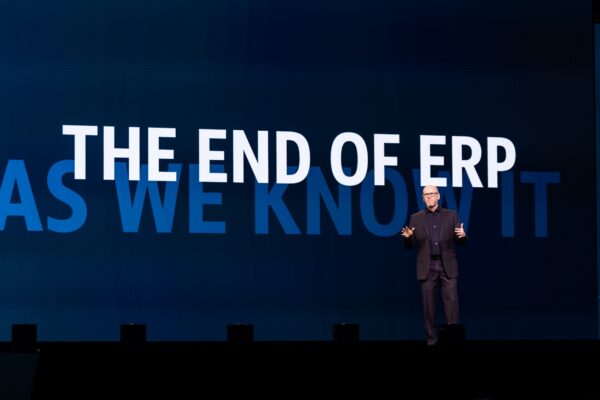
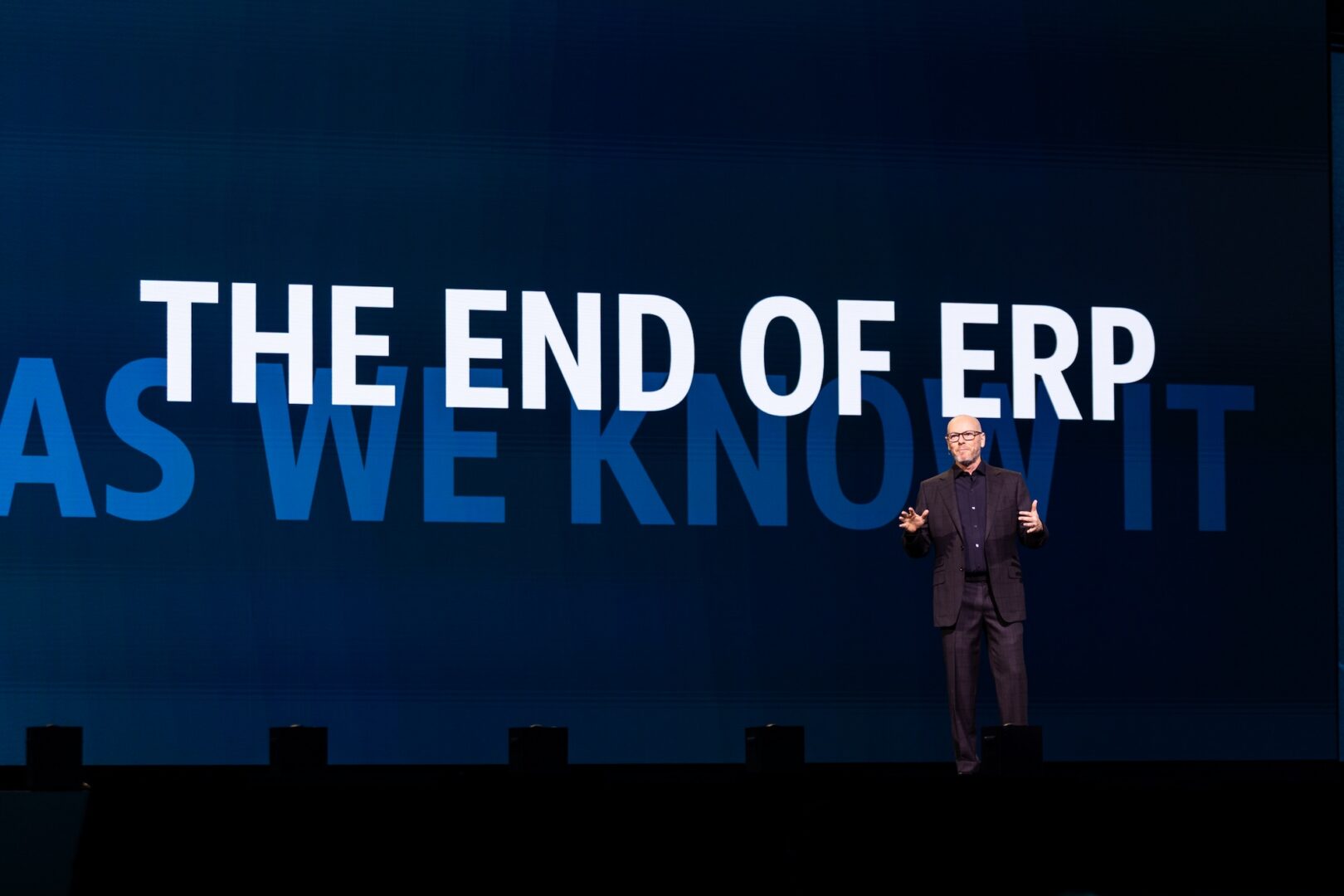
NetSuite calls it its biggest update since launching in 1998, and founder Evan Goldberg goes as far as declaring “the end of ERP, as we know it”. Big claims are standard fare at vendor conferences. More telling is what changed over the past year, and which businesses the company now has in its sights.
Goldberg’s case for that claim comes down to who does the work. For decades, businesses have had to learn to operate their software. With NetSuite Next, he says, “AI is the UI”. Users describe what they want, and AI agents take on more of the routine work in the background. “So much more of the work can happen behind the scenes when you sleep, if you do sleep as an entrepreneur,” he says, speaking to Australian and New Zealand media at a briefing in Las Vegas. The invitation to businesses is to start directing those agents rather than doing the clicking themselves, freeing people to focus on “the longer term, more important things”.
In practice, Ask Oracle lets users ask questions of their business data in plain English rather than building reports or clicking through screens. It works within each user’s existing permissions, and shows how each answer was reached, a nod to the trust problem that still dogs AI tools that answer confidently but not always correctly.
In a statement, Scott Wiltshire, NetSuite’s Vice President and General Manager for Australia and New Zealand, frames the local pitch in practical terms. “AI isn’t about adding another layer of technology. It’s about getting more from the systems you already rely on, reducing manual work, and creating capacity to grow.”
Alongside Ask Oracle, NetSuite announced tools it says move it towards an “autonomous suite”, where AI coordinates and completes work across business processes while people approve what matters.
The centrepiece is SuiteSkills, more than 45 pre-built skills that teach AI how specific processes work, such as explaining month-end variances, spotting revenue leakage or investigating inventory problems. They work inside Ask Oracle and with outside models such as Claude and ChatGPT, and NetSuite customers can download them from GitHub and popular AI marketplaces. Users can also create dashboard panels simply by describing what they want to see, and work through processes in shared “workspaces” that bring people, AI agents, data and approvals together. One of these aims to move businesses towards a zero-day close by fixing accounting issues as they arise rather than at month-end. Industry-specific AI agents are available now for software, product and construction businesses, with healthcare, services and nonprofit versions planned, and new tools let businesses build, monitor and switch off their own agents within set permissions.
The skills, dashboards, workspaces and some of the agents are available in every market where NetSuite Next is live, so local customers get them as the rollout reaches their accounts. Several other capabilities are listed as planned, with Oracle’s standard caveat that features and timing may change, and almost all of it is aimed at businesses already running NetSuite.
Early learnings
Goldberg says NetSuite Next itself has “only been available for a few months even in the US”, with ANZ among the first regions to follow, alongside the UK.
Much of what NetSuite has learned has come instead from its AI Connector Service, launched at last year’s conference. It lets businesses connect outside AI models to their NetSuite data, and more than 13,000 customers have adopted it in a year, including some in ANZ.
The feedback was blunt. Early versions of Ask Oracle were too slow. “It can never be fast enough, right? So we sped it up a bunch,” Goldberg says. It also didn’t always know which of NetSuite’s many tools (saved searches, reports, scripts) to use for a given question. SuiteSkills were the answer, giving AI “better context to use the right tools to answer the right question”. Customers now tell NetSuite the answers improve every month, he says.
The company has also changed how it ships software, moving to monthly releases. “We couldn’t even imagine going to monthly releases a couple years ago. Now we can’t imagine not doing it,” he says.
For existing customers wary of disruption, Goldberg stresses that switching on NetSuite Next doesn’t break anything. “All your customisations, everything you’ve ever done with NetSuite, it still works exactly the way it worked before.”
Adoption can also be gradual. Businesses can turn the new experience on user by user and role by role, starting with an administrator and a few power users, and switch it back if they don’t like the results. Goldberg contrasts this with the early days of cloud computing, when moving to the cloud felt like a one-way leap. “We’re giving people much more of an easy way to dip their toe in rather than you have to dive in.”
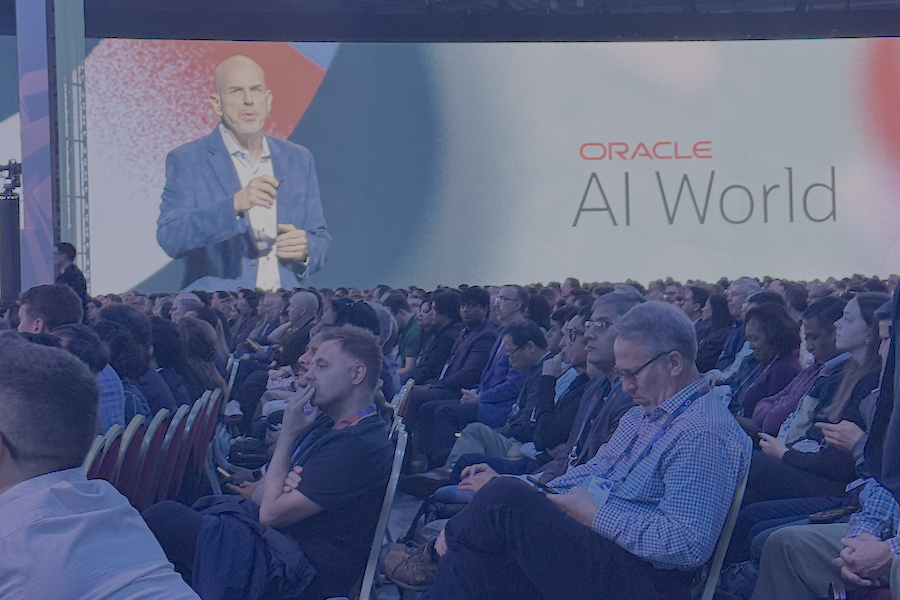
Oracle Chief Executive Officer Mike Sicilia opens the AI World keynote in Las Vegas. Oracle’s AI World conference runs alongside NetSuite’s SuiteWorld.
Reaching smaller businesses
The other big takeaway from a New Zealand perspective is who NetSuite can now serve. ERP has long been seen as too expensive and complex for smaller firms. AI is starting to change both the cost of getting started and the effort of implementation.
NetSuite QuickStart, launched in the US on 14 October, is a free, AI-run finance platform for early-stage tech start-ups. It’s aimed at single-entity companies of five people or fewer buying their first financial system, and it’s free within monthly limits, including five users and 2,500 new business records. It isn’t available in ANZ yet.
QuickStart pulls in bank and card transactions and matches, categorises and reconciles them automatically. It tracks start-up metrics such as recurring revenue, burn rate and runway, and founders can query it through Ask Oracle, Slack or AI tools like Claude and ChatGPT. When a company outgrows it, Goldberg says, “they literally click a button and they’re on full NetSuite”.
AI is what makes it viable. “The reason why now is because of AI. It’s very simple,” Goldberg says. QuickStart can take whatever a start-up already has and set up a tailored version of NetSuite “without a single person being involved”.
Tech start-ups are the starting point because so many are being formed. “Now you don’t even have to be a programmer or even hire programmers. You can just sort of describe what you want,” he says.
Asked at a SuiteWorld news conference whether micro businesses, which make up a significant share of New Zealand’s small businesses, could be next, Goldberg keeps the focus on tech start-ups for now. But he says that “most of those companies started as micro companies at some point”, and that the approach of AI handling finance in the background is “a successful formula for every business, because no entrepreneur really wants to deal with that stuff”.
For larger customers, SuiteExpress is an AI-driven implementation toolset that NetSuite says can cut deployment time to “weeks or even days”. It ingests a business’s meeting notes, documents, spreadsheets, recordings and legacy data, then combines that with NetSuite’s own implementation knowledge to recommend and carry out setup work, with consultants overseeing it.
SuiteExpress is available now only to software companies in the US and Canada. Goldberg says availability outside the US is likely “months away”.
Taken together, he says, “between QuickStart and SuiteExpress we do think that NetSuite is going to be a great choice for even more companies than it was before”.
The closest example to New Zealand comes from across the Tasman. Linen House, a family-owned bedding and homewares business founded in Melbourne in 1993, has grown from a wholesaler into an omnichannel retailer with 24 stores and about 250 staff, selling close to two million units a year.
As it added retail stores, ecommerce and dropshipping, its systems struggled to keep up. It implemented NetSuite with partner Annexa, bringing finance, procurement, inventory and order management onto one platform and handling thousands of orders a day at peak.
“Moving to an omnichannel retail business model added significant complexity, and our systems were making it hard to keep up with demand,” says chief technology officer Tez Osman.
“NetSuite has given us a single source of truth that allows us to run the business more efficiently. We can now set up technology for new stores in minutes instead of weeks. Whether it’s a new store, a new marketplace or a new AI capability, we can say yes to the business quickly instead of costing it out and shelving it.”
Linen House also uses the AI Connector Service to link an AI service to its NetSuite data for analysis, within its existing data governance and security controls.
“As retailers expand across more channels, business processes that span multiple systems add friction, cost, and complexity,” Wiltshire says in a statement.
What it means for New Zealand
For Kiwi businesses already on NetSuite, the change is tangible: AI built into the system they use every day, which they can switch on one user at a time and switch off again if it doesn’t earn its keep.
For the much larger number of NZ businesses that have never considered an ERP, this week’s news is more a signal than an offer. The tools that would bring the cost and complexity down furthest, QuickStart and SuiteExpress, are still North American. When these tools reach markets like ours, the question for many SMEs may shift from whether they can afford enterprise software to whether they can afford not to let AI take on more of the work.