


Customers are harder to know than they used to be. They are choosier about where their money goes and spread across more channels, which makes understanding them both more difficult and more valuable.
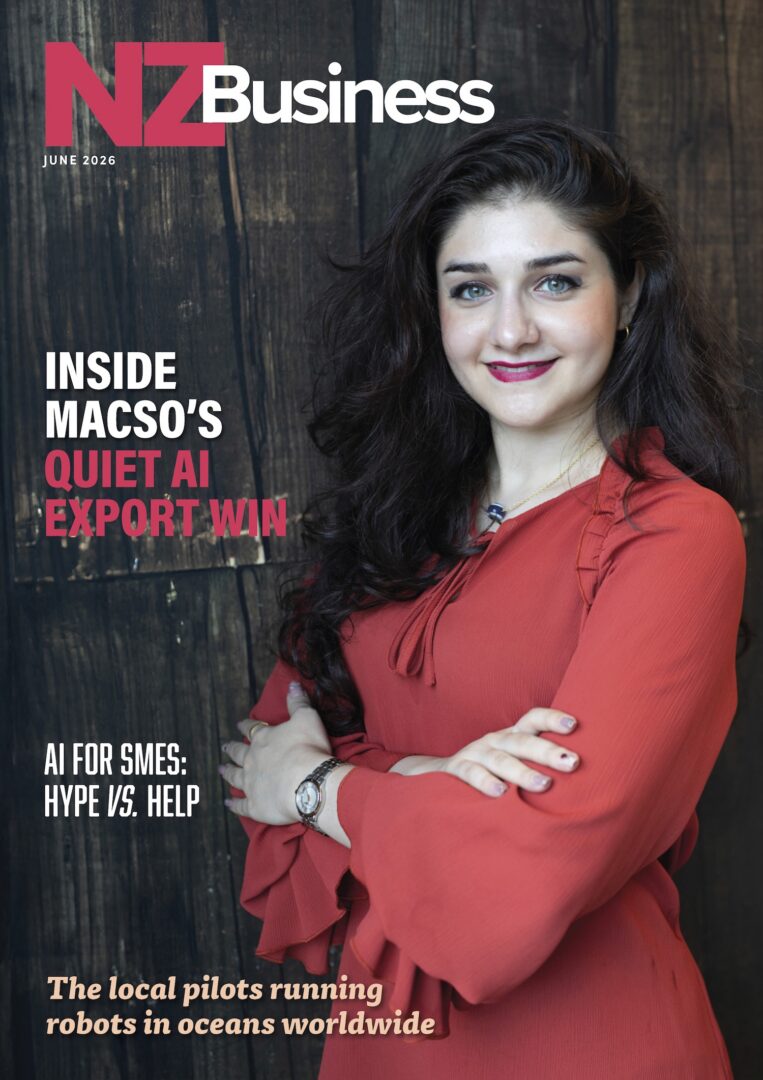
Kate Gatfield-Jeffries has built Moodi on that understanding. The wellness brand tops the 2026 Deloitte Fast 50 with 926 percent revenue growth over three years, and its founder traces that back to the two years it sold only online, getting to know its customer base.
“I knew every customer’s name, had their contact details, knew how old they were, what they did for work, where in New Zealand they lived, what they liked about the product and what they didn’t,” says Gatfield-Jeffries.
That base has kept growing. Gatfield-Jeffries says one in 13 New Zealand women has ordered from Moodi online, and that it now sells the country’s top wellness drink and protein snack.
That depth of knowledge lets Moodi anticipate needs, not just respond to requests.
“You ask someone what they want and they say a faster horse and carriage. They don’t necessarily think, I want a car,” she says.
Understanding why customers want something, she says, matters more than the answer they give.
A flywheel, not a survey
Customer input now runs through every launch. Before development, Moodi asks what matters most, be it protein, fibre, calories or sugar. The answers shape the formulation and what goes on the pack.
“It turns out the answer is they care about everything,” she says.
Customers who helped shape a product are then brought along to buy it. Moodi gives away hundreds of thousands of free samples a year and builds attention-grabbing campaigns around each launch. After launch it surveys buyers again on taste, price and where they want to find it, then asks what should come next.
“It’s a real flywheel, and I think we’ve really refined each of those stages,” she says.
Customers still message her directly on Instagram. One recent message ran to a full paragraph and ended by saying there was no reason for writing, other than to say the product had changed the sender’s life.
“To create something that has that level of impact on people is such a privilege,” Gatfield-Jeffries says.
That relationship underpins the brand, which she regards as Moodi’s real protection. The company has no proprietary technology and imitators have followed its success.
“You can copy a product, but you can’t copy a brand,” she says. “What they’re copying is what I was working on three years ago.”
Staying ahead means disrupting its own products before others do. It also means saying no. Each new product must fit the brand and resonate with existing customers.
“If you become everything, you become nothing,” she says.
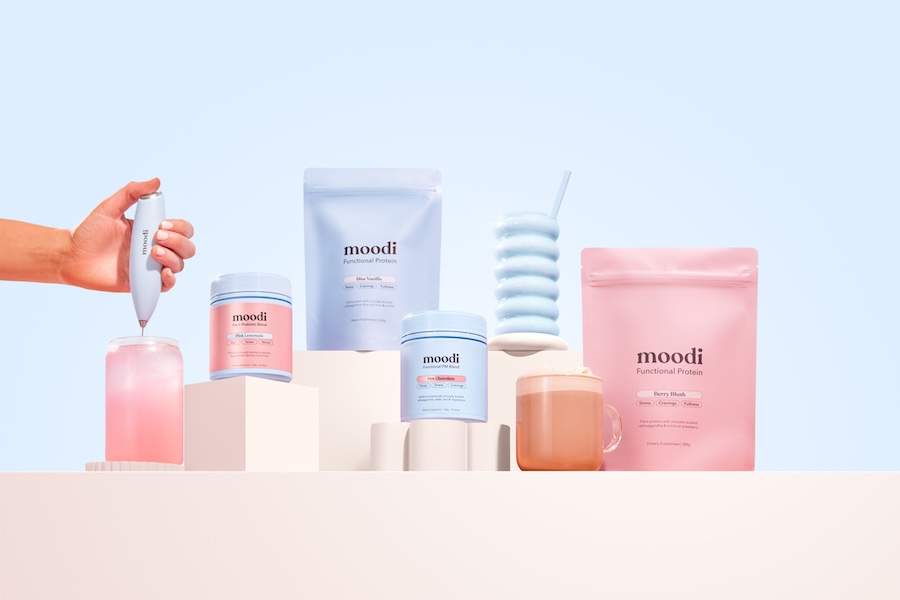
Moodi’s range has grown from functional protein powders to drinks, gummies and protein snacks, shaped by what its customers ask for. Photo: Supplied.
Scaling on its own cash
Customer demand had to fund the growth, because nobody else did. Moodi has grown without any debt or outside investment. Early conversations with investors revealed a mismatch between what they were looking for and what Gatfield-Jeffries was building.
The mismatch is sharper for women. Gatfield-Jeffries says only around two percent of venture capital in New Zealand goes to women, and that debt is hard to come by. Asked whether she would have sought investment if the path had been easier, she says she would at least have explored it.
“The irony is that Moodi is very commercially successful and would have been a great business to invest in, but it just didn’t have the same profile of what they’re used to investing in,” she says.
Reinvesting every dollar from a small base made scaling hard. But not unachievable.
“It’s almost like an impossible financial equation. We managed to do it. Quite a few out-of-stocks, but we managed to do it.”
The business is now in a healthy position, she says, though she doesn’t rule out capital for a major US retail launch or a strategic partnership. The stakes are higher too. Putting a canned drink into 500 supermarkets is a different proposition from selling a few thousand units of protein powder online.
Overseas, the customer closeness that built Moodi has to be earned from scratch.
“In New Zealand, I walk down the street and people come up to me and they know what Moodi is. That does not happen in America.”
Every marketing dollar has to work harder as a result, and partnerships with established audiences count for more. Moodi sells in New Zealand, Australia and the US, with no new markets planned for at least two years.
She says that future growth rests on three levers: New product categories, new sales channels and going deeper into existing markets.
“I absolutely think we can keep growing at this rocket ship pace,” she says.
Her advice to owners
Gatfield-Jeffries started with no experience, connections or capital. She tells other owners to pay for expertise, and calls business coaching one of her best investments.
“You don’t know what you don’t know,” she says. “Learning from people who have done the exact thing you want to do, but are a few chapters ahead, is just so powerful.”
She is putting some of that into practice herself. Moodi’s Female Founder Fund backs early-stage women-led businesses, and after the Fast 50 win she is hosting a lunch for female founders “in the arena, taking risks and backing themselves”.