
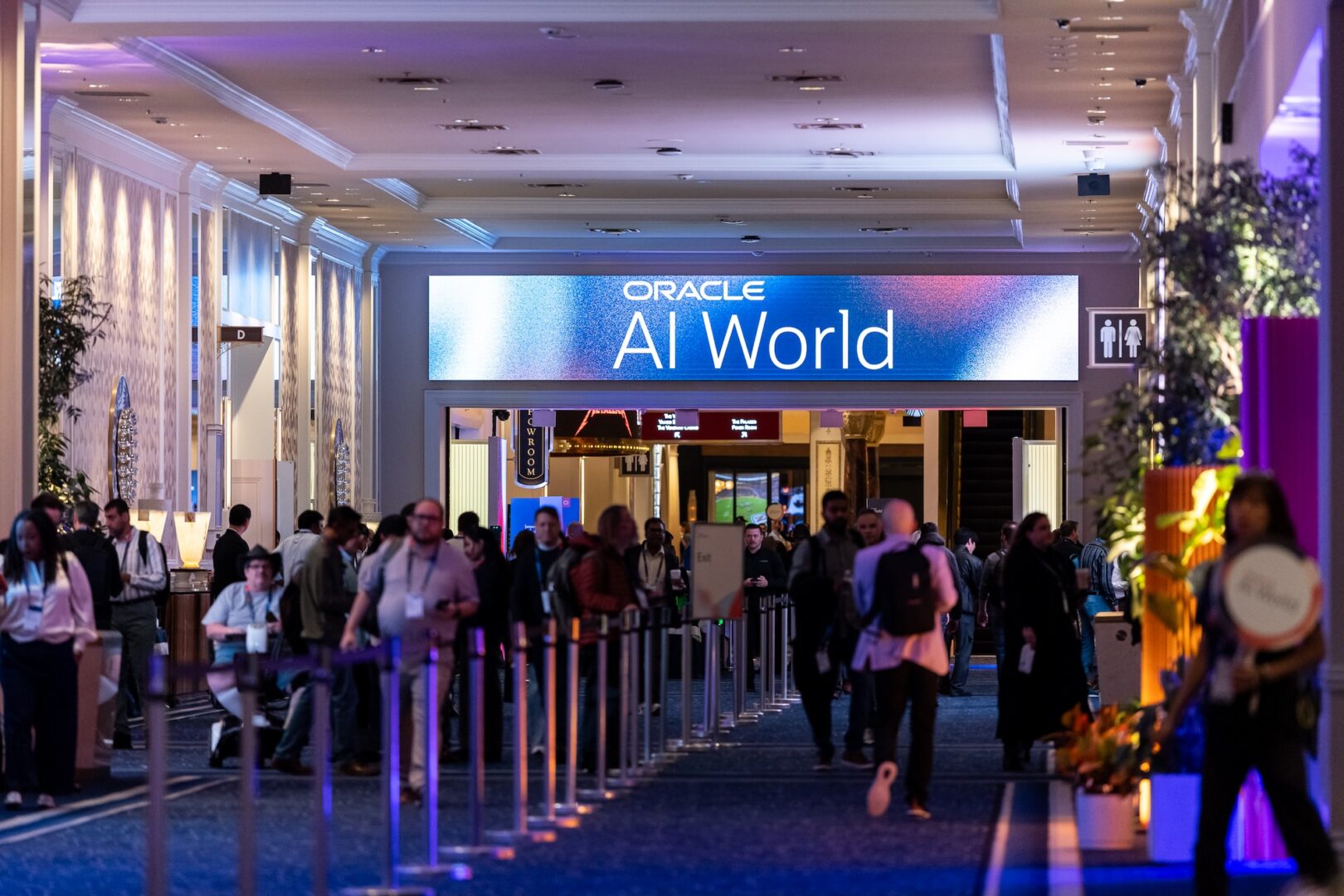

Las Vegas doesn’t do subtle. Before a single executive spoke at Oracle’s AI World, a live band and DJ were warming up a hall of thousands of delegates with a wall of sound somewhere between the White Stripes and Taylor Swift. Bigger, louder, brighter: It’s the American way, and it can make the distance between Silicon Valley ambition and a 30- or 40-person business in provincial New Zealand feel very wide indeed.
Back home, the conversations are rather more down to earth. Every SME owner I speak to has a version of the same complaint. The team isn’t getting bigger, costs keep rising, and too much of the week goes on invoices, approvals, reconciliations and chasing information across systems that don’t talk to each other. This coupled with navigating the dramatically shifting business landscape thanks to AI.
This year, Oracle ran two conferences side by side at The Venetian and Caesars Forum in Las Vegas from 25 to 28 October. AI World is Oracle’s flagship event on AI across its wider business, from cloud infrastructure to databases and enterprise applications. SuiteWorld is the annual gathering for customers of NetSuite, Oracle’s cloud ERP for growing businesses. I came expecting a week of product launches, and there were plenty, complete with the kind of special offers only an American company can pitch. However, while not every NZBusiness reader runs an enterprise system like NetSuite, I did come away with far more than a list of new features: Practical lessons on putting AI to work that apply to businesses of almost any size.
Many came from conversations on the expo floor where finance leaders and NetSuite’s own executives spoke candidly about what has worked, what hasn’t, and what a Kiwi business owner could borrow on Monday morning.
It starts with a bigger shift in how we use software.
Software that operates for you
The big idea on the main stage was simple to say and harder to absorb. For decades we have learned to operate software: Clicking through screens, building reports, copying numbers from one system to another. The next generation, as Oracle CEO Mike Sicilia put it, operates for you.
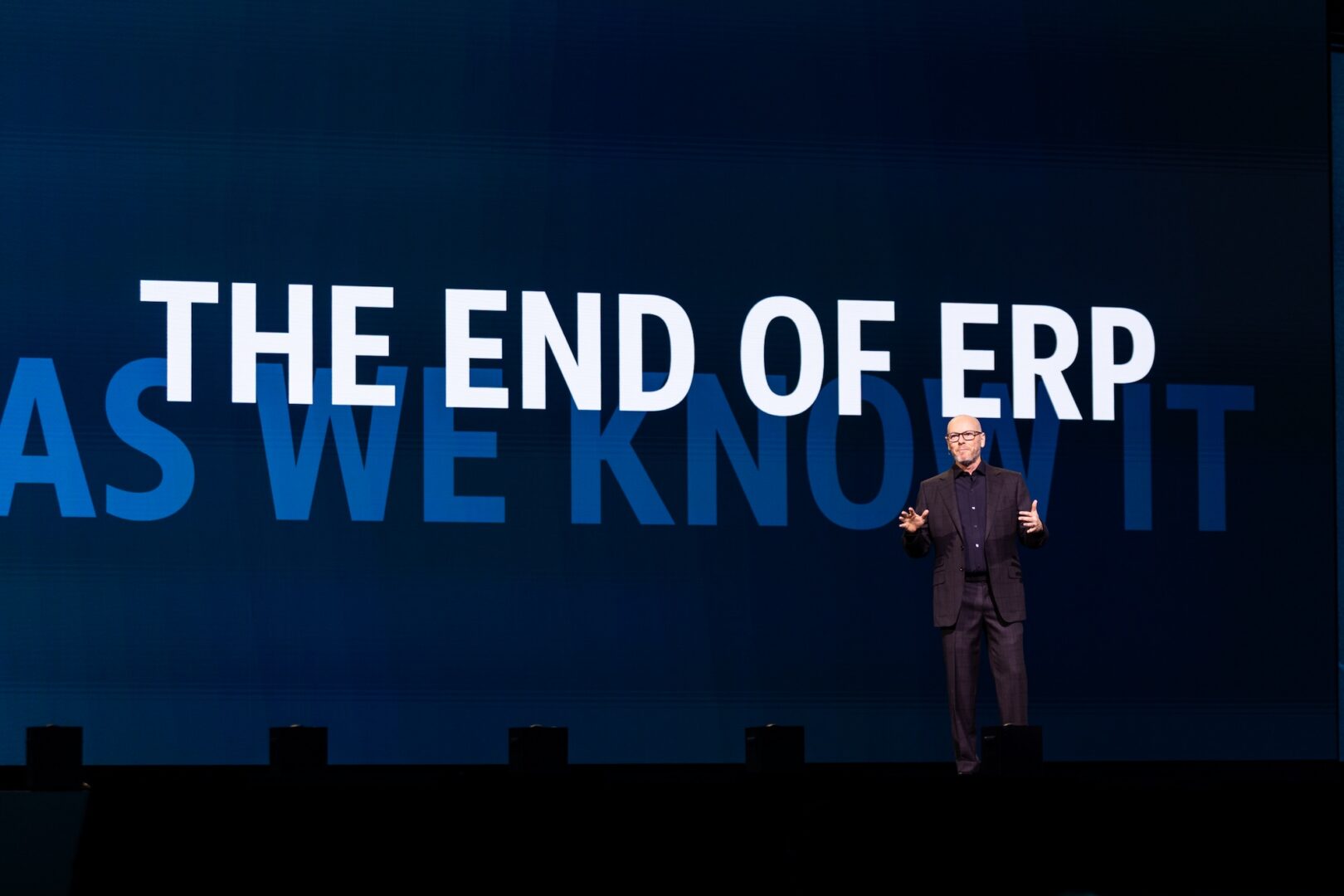
You describe what you need in plain language and the system works out how to do it, often in the background while you’re doing something else. NetSuite Founder Evan Goldberg calls it “the end of ERP as we know it”. He also has a shorter version: “AI is the UI.”
That isn’t just an enterprise story. The same shift is happening in the accounting, CRM, inventory and email tools SMEs already use. Many now connect to AI assistants such as Claude and ChatGPT. In NetSuite’s case, more than 13,000 businesses switched that connection on within a year.
The tools are arriving whether we’re ready or not. The real question is how to use them within the context of your business without creating a mess or causing a cyber security disaster. Here’s my takeout from a wild few days.
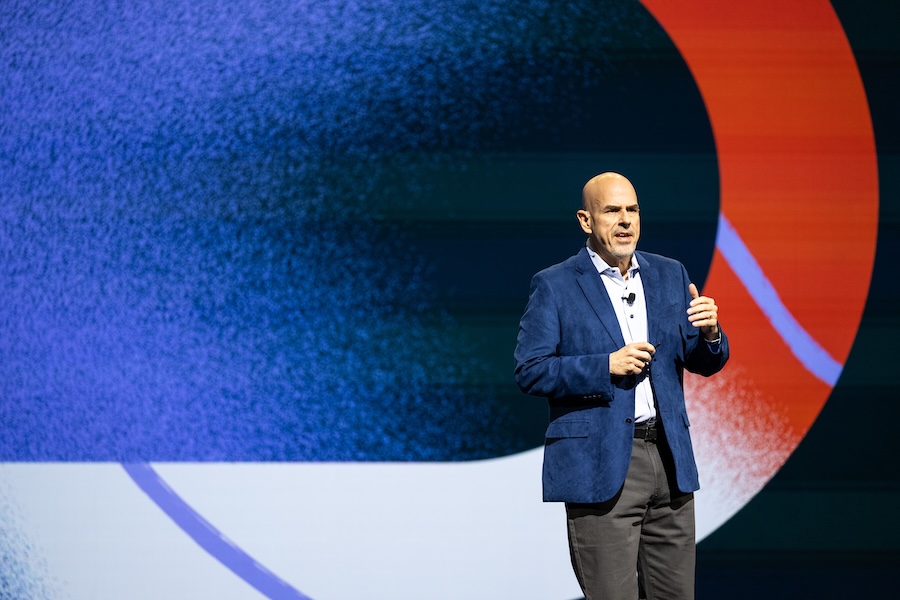
Oracle Chief Executive Officer Mike Sicilia opens the AI World keynote in Las Vegas.
1. Protect your special sauce, then change everything else
At a briefing for Australian and New Zealand media, I asked Goldberg what advice he’d give founders navigating AI. His answer was the best thing I heard all week. Work out what makes customers choose you over your competitors, protect it, use AI to make it better “and then change everything else”. In a city built on high-stakes bets, it was refreshingly unflashy advice. In poker terms: Hold the cards that win you customers, and be ready to trade in the rest. Because there’s no doubt AI is changing a lot we know about doing business, and those leaders who make the bold calls to change will be the ones who win big.
It’s a useful filter for any SME. Your relationships, your craft, your local knowledge are the things to guard. The admin around them is fair game.
2. Start with people, not tools
Steve Fox, CFO of US grooming brand Every Man Jack, sums up his AI strategy in three words: Train, transform and track. “The team has to be on board,” he told me on the expo floor at SuiteWorld. “Everything starts with change management.”
His company set up an AI oversight committee with a liaison from every department, who bring ideas up and carry guidance back down. On stage, Spectrum’s Head of HR Technology and AI Strategy, Derek Dreyfus, made a similar point: Treat governance as an accelerator, not a blocker. Get the right people in the room early and agree what AI can simply handle.
Culture matters as much as technology. Most of us already use AI in our personal lives, but turning that into something that works across a business is harder, especially at the scale of a 30- or 40-person business. Stephen Bovis, Oracle’s Regional Managing Director for Australia and New Zealand, expects that gap to close quickly, noting AI is being adopted far faster than smartphones were. Part of closing it, he says, is a cultural shift: Teams using the tools and feeling empowered to use them.
For a Kiwi SME, that might be the owner and a few curious staff meeting once a month. Not glamorous, but it’s the difference between strategy and chaos.
3. Hand over the transactions, keep the judgement
Every Man Jack’s internal target is “Nix the Clicks by ’26”: No more manual transaction processing. It now handles triple the volume with the same team (five in the finance department), has halved its financial close, and expects to save more than 4,500 hours a year.
The trick is that AI does the routine and people handle the exceptions. Fox’s example: A customer who normally orders US$100,000 suddenly orders US$300,000. “Somebody should be reviewing that.” The AI flags it, and a person decides.
Of his finance team, he says: “Their time is so much better spent on building relationships and analysing data and making business decisions, not processing transactions.”
4. Use what you already have
You don’t need a new system to start. US smart-diffuser brand Pura’s 15-person finance team supports a 220-person business growing fast. Its Senior Director of Accounting, Carlin Simmons, says connecting an AI model to their existing finance system has become “a big part of our automation stack”.
“We’ve been able to grow our capacity without growing our team a lot,” he told me.
Every Man Jack’s IT manager set up the same kind of connection in an Uber on the way to the airport. The barrier to entry is lower than most of us assume, provided you’re using the right tools.
Just don’t marry the first tool you try. Bovis says one of the biggest concerns he hears from businesses in the region is lock-in: With AI moving this fast, they want the freedom to change direction quickly if a better option comes along. For an SME, that means favouring systems that connect openly to more than one AI assistant, rather than betting the business on a single one.
5. Give AI a job description, not the keys
The most practical warning of the week came from Oracle CEO Clay Magouyrk. He told the story of friends who gave an AI agent full access to their laptop and email, then couldn’t tell which messages they’d sent and which the agent had.
His rule: Give AI its own identity, the least access it needs, for a limited time, with a person approving anything sensitive. Goldberg’s approach to rolling out AI is the same in spirit: Switch it on for one or two people first, see what works, and be able to switch it off. “Dip their toe in rather than… dive in,” as he put it.
OpenAI CEO Sam Altman, who joined Magouyrk on stage, added a security warning. Asked for the one thing companies should do now, he pointed to the security risks AI is exposing. He says AI isn’t creating new vulnerabilities so much as uncovering decades-old ones faster than ever, and the only way through is to find and fix them before someone else does. Bovis made a related point: Software delivered as a service, where updates are applied automatically, is one of the simplest ways to stay ahead. Keep software patched and choose providers that are watching.

Sam Altman, CEO of OpenAI, joins Oracle’s Clay Magouyrk on stage at AI World 2026 to discuss the accelerating pace of AI.
6. Get your house in order before you automate
I asked Bovis what’s holding Kiwi businesses back and he listed three things: Data, trust and openness. AI is only as useful as the information it can reach and the rules it’s given. Point it at messy data or an unclear process, and it will simply make the mess faster.
That’s where growing businesses often hit the limits of a patchwork of spreadsheets and disconnected apps, and where a single, well-run system of record, whether that’s an ERP or simply better-connected tools, earns its keep. Clean data, clear approval rules and sensible permissions are the unglamorous groundwork, and they take time and effort inside the business. But they’re what let AI graduate from answering questions to safely doing the work.
NetSuite describes the typical journey the same way: Start by asking questions, act on recommendations as confidence grows, and only then let AI execute on its own.
7. Treat every dollar like it’s capped
The sharpest SME parallel came from Formula One. Oracle Red Bull Racing works under a season cost cap, and its Head of Technical and Performance Partnerships, Jack Harrington, said deciding where the money goes is fast becoming as important as designing the car. The team now uses AI to model its budget.
SailGP, which counts New Zealand among its teams, uses NetSuite to forecast the whole league’s finances, “making every dollar count”. Most SMEs don’t have a cost cap written into the rules. Most operate under one anyway.
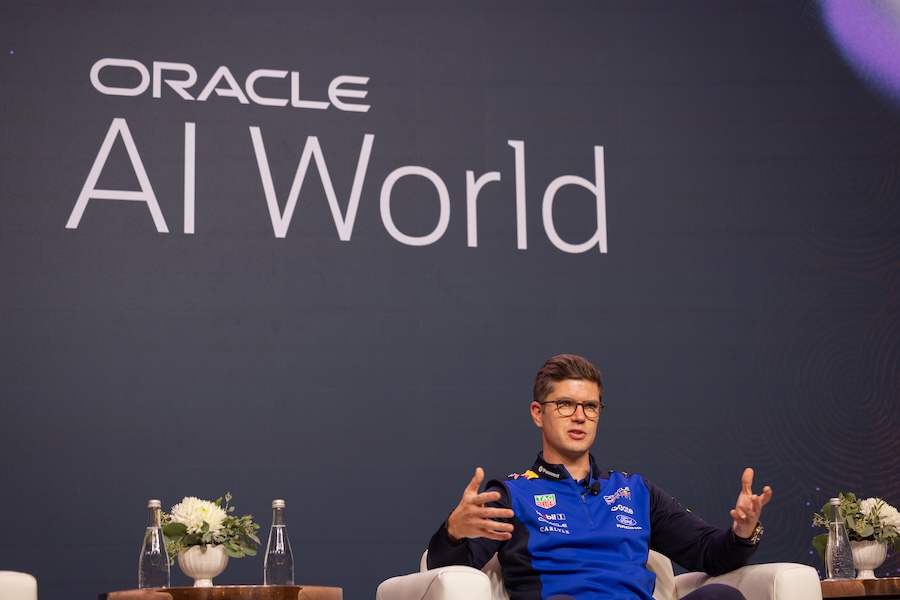
Oracle Red Bull Racing’s Jack Harrington.
The Excel moment
Fox compared this moment to the arrival of the spreadsheet. “I still remember when Excel came out and it was a game changer. Granted, it’s like Excel on steroids. But we have to think of it as a tool,” he said.
Altman went a step further. He described people who never thought of themselves as software makers now simply building an app whenever they need one, and likened his own work to managing a factory inside his computer. Ideas he would once have given up on as too hard, he now explores. The payoff he hears from users isn’t just productivity: People say they feel dramatically more productive and enjoy their jobs more, because they’re doing less of the drudgery.
And isn’t that what every founder wants to get back to: The exciting, creative, entrepreneurial work that sparked their business in the first place? It’s clearly a priority for NetSuite, which launched QuickStart this week (albeit only in the US for now) to take finance admin off tech founders’ plates.
That’s the right way to think about it. AI won’t fix a business that doesn’t know what it’s good at, and it won’t replace the judgement that keeps customers coming back. But it can give a small team back the hours it currently loses to work nobody started a business to do.
Kiwi businesses have a reputation for being cautious with new technology. Done carefully, with a small group, clear guardrails and a person signing off on what matters, caution and AI aren’t opposites. The bigger risk is waiting.
Fox’s last piece of advice costs nothing at all: “If you ask somebody, ‘Hey, how did you do that?’, they’re so happy to help.” Ask around. Somebody you know is already doing this.
They say what happens in Vegas stays in Vegas. This time, it shouldn’t. Strip away the bright lights and the big claims, and the lessons from this year’s SuiteWorld and AI World are surprisingly Kiwi: Know what you’re good at, get your basics right, start small and keep a human in charge. None of it requires a Silicon Valley budget. It just requires starting.
David Nothling-Demmer is editor of NZBusiness. He attended SuiteWorld and AI World 2026 in Las Vegas courtesy of Oracle NetSuite.