



For most founders launching a consumer product, the first big decision is where to make it, and the answer usually comes down to cost. For Nigel and Jo Wilson, the founders of new skincare brand Apiora, the question never came up, and their first product is coming off a production line in Blenheim just in time for NZ Made Day on November 21.
“We actually never considered manufacturing offshore. If you’re building a skincare brand around New Zealand ingredients, with a strong connection to the land and natural environment here, we believe the product should be made here too,” Nigel says.
Apiora’s first product, Skin Restore, is a fragrance-free daily moisturiser for dry, sensitive skin. It combines mānuka honey and kawakawa with established skincare ingredients such as ceramide and panthenol. It launched on World Mānuka Honey Day in early November, and the first commercial production run has just been completed by a specialist formulation and manufacturing partner in Blenheim.
They’ve also chosen New Zealand suppliers for retail cartons, shipping boxes and printing. Nigel says they haven’t benchmarked the costs against offshore manufacturing.
“Working with experienced New Zealand specialists, maintaining close relationships and supporting local businesses are things we genuinely value. It’s an investment in the integrity of the brand,” he says.
Nigel previously worked as a brand manager in Fonterra’s NZMP ingredients business, and says the biggest lesson he’s carried over from Fonterra is the importance of trust.
“Customers around the world needed to know they could trust New Zealand dairy ingredients, so a significant part of our brand work focused on building confidence through provenance, quality and dairy expertise.”
At Apiora, that means choosing a well-regarded manufacturing partner and quality ingredients, and paying for professional photography rather than using AI-generated images. “These are all deliberate decisions to build an authentic brand that people can trust.”
What doesn’t carry over is the scale. “At Fonterra, we had significant resources and established international networks. With Apiora, we’re starting small and building everything from scratch.”
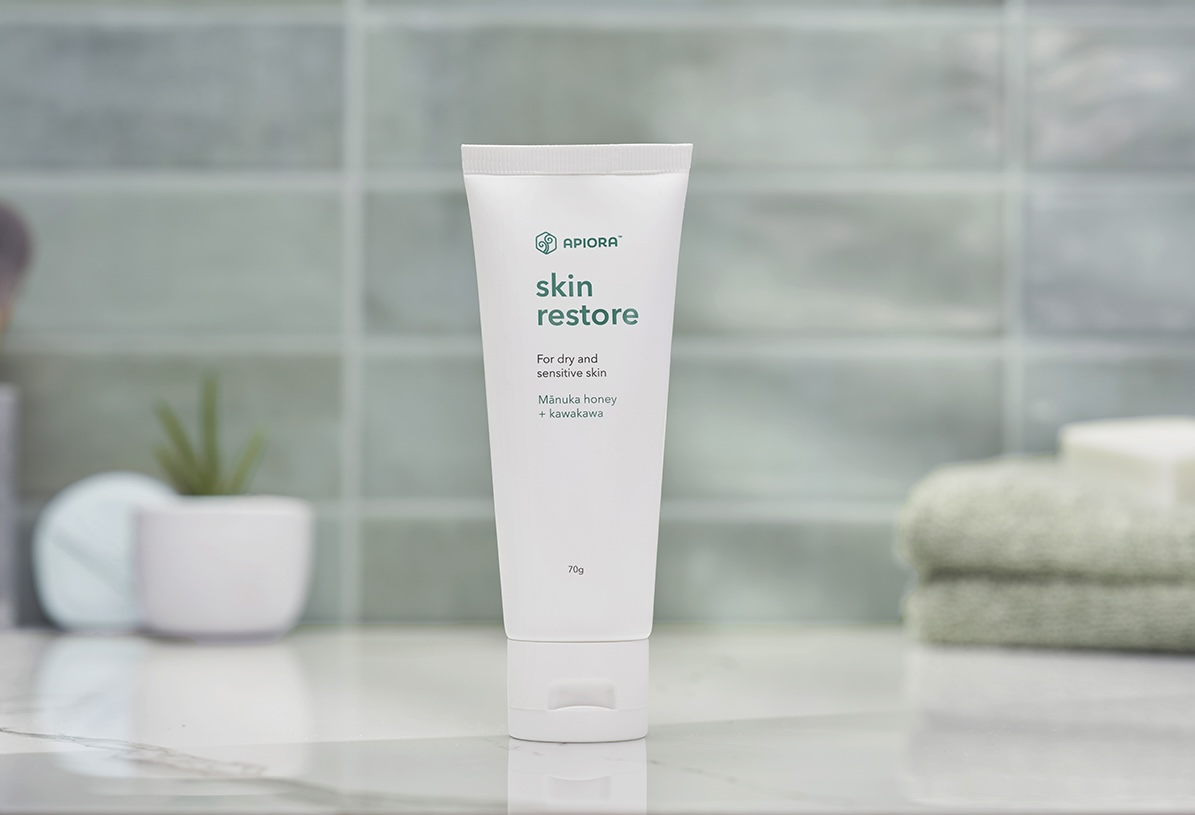
Apiora’s first product, Skin Restore, combines mānuka honey and kawakawa with ceramides and panthenol for dry and sensitive skin. Image: Supplied
The pair split the work along their strengths. Nigel came up with the original idea and led product development and supplier relationships. Jo has contributed her graphic design and marketing expertise to refining the brand identity, packaging and marketing materials.
“We bring different but complementary skills to the business, and we’ve both learned an enormous amount through the process,” Jo says.
Getting Skin Restore to market took more than a year, including multiple formulation iterations, stability and microbiological testing, packaging development and a small consumer trial.
“When we set out, we probably didn’t appreciate just how much work goes into developing a single skincare product. It’s one thing to create a formulation that looks and feels great, but quite another to ensure it performs consistently, meets quality requirements and can be manufactured commercially,” says Nigel.
The business is self-funded, and the founders are deliberately starting with a single product. They want to establish demand before investing in the broader range they have planned.
Finding a gap in a crowded category
Mānuka skincare is a busy market, but Apiora is carving out its own niche with a focus on sensitive skin, combining New Zealand botanical ingredients with modern skincare science. Skin Restore is positioned as a premium daily moisturiser, with a retail price of $49.95.
“It’s not 100 percent natural, and that’s by design,” Nigel says. “We combine New Zealand mānuka honey and kawakawa with well-established skincare ingredients such as ceramides and panthenol, bringing together the best of nature and science.”
On its use of kawakawa, which holds deep significance in rongoā Māori, Apiora positions Skin Restore as a contemporary cosmetic rather than a traditional preparation. It buys the extract from an established New Zealand botanical supplier that works with local iwi on sustainable harvesting. The brand also supports the Native Forest Restoration Trust.
Apiora is selling direct-to-consumer through its website, allowing the founders tell the product’s story and learn from customer feedback without first building a retail network. Independent pharmacies are also part of the strategy, providing an opportunity for staff can explain the ingredients to customers. The brand has already secured opening orders from several Auckland pharmacies.
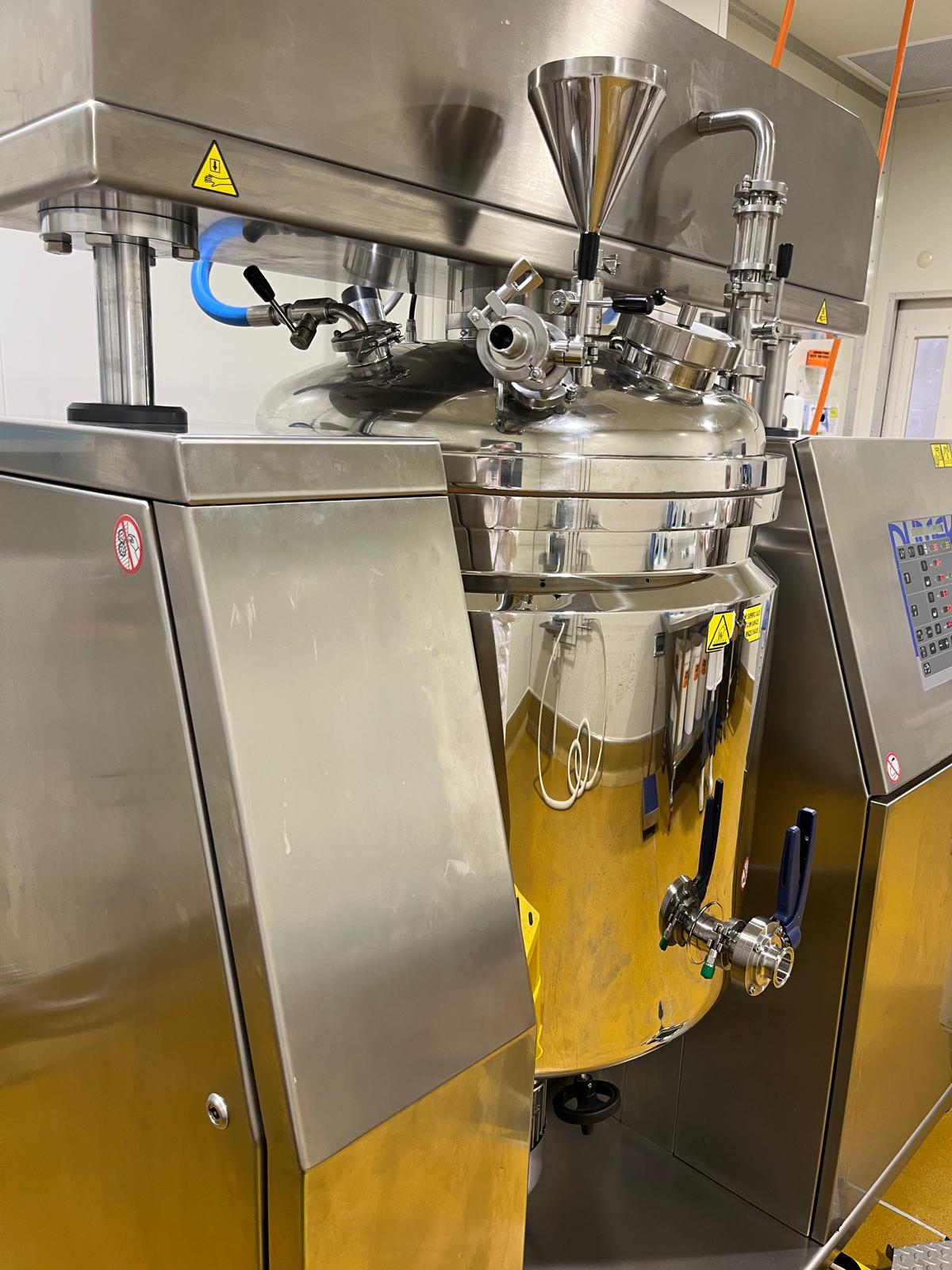
Skin Restore’s first commercial production run under way at Apiora’s specialist manufacturing partner in Blenheim. Image: Supplied
Export is on the horizon but not yet on the schedule. The pair say Australia is the logical first market, with Hong Kong, Singapore, Japan and China also of interest because mānuka already has strong recognition there.
“Our immediate priority is establishing demand in New Zealand, building repeat sales and proving the business model,” Nigel says. Before entering any new market, they’d need to understand its regulations, distribution options, pricing and the investment required to support the brand properly.
His advice for other founders weighing up local and offshore manufacturing is to look beyond the unit cost.
“Start by thinking about what your brand stands for, rather than looking solely at the cost of manufacturing. Quality, communication, flexibility, supplier relationships and the ability to resolve problems quickly all matter.”