

Carl Rein has been raising the same issue with government ministers since 2023. The Wellington personal trainer wants the GST registration threshold lifted, and he’s disappointed National has committed only to reviewing it.
“Sole traders are the grey in the spectrum, and parties for ‘business’ only see black or white – it’s all about the SMEs or big business, not sole traders,” he says.
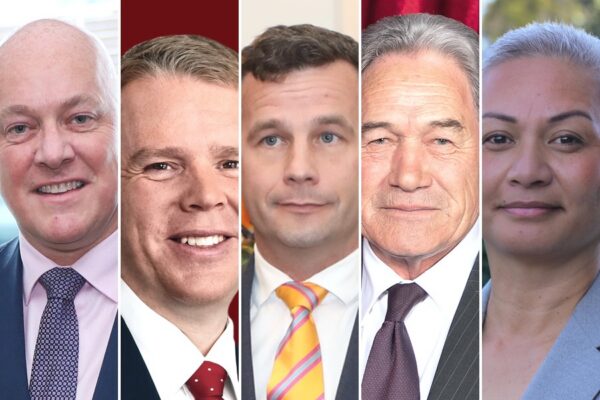
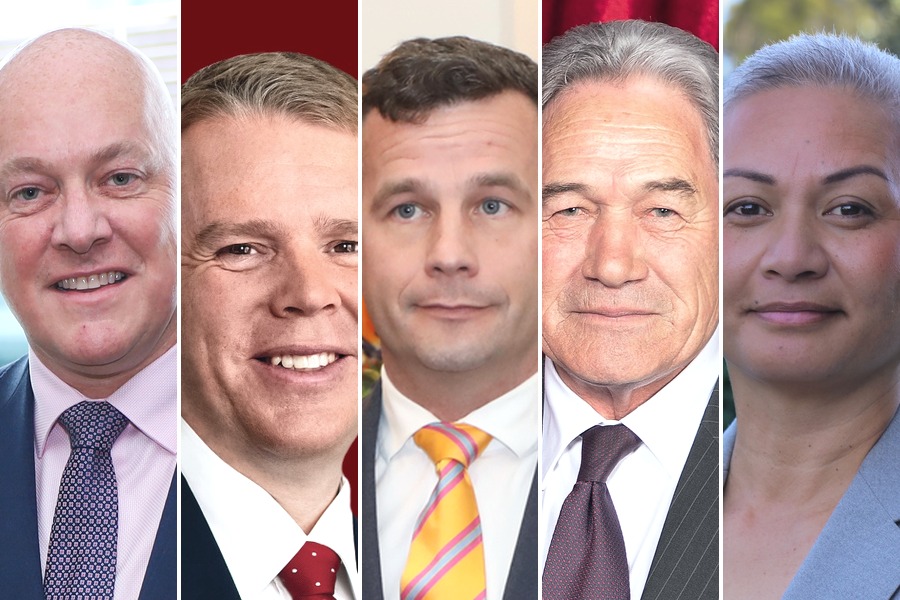
It’s an awkward message in what BusinessNZ chief executive Katherine Rich has called “the small-business election”. National, Labour and NZ First have all announced small-business policies, from Labour’s higher GST threshold to NZ First’s lower SME tax rate and National’s push to cut compliance costs.
In our October issue, the message from small business was stability. But economist Shamubeel Eaqub also warned that “despite being a nation of small businesses, the lobbying and political power is in large businesses and large unions”. The ask from small business, he said, “is atomised and the answer from politicians so far is to look another way”.
A round of pre-election surveys suggests he had a point.

Katherine Rich.
Who’s doing the talking?
The survey that gets the most airtime is the Deloitte and Chapman Tripp Election Survey, released by BusinessNZ last month in front of the Prime Minister and the Leader of the Opposition. Its headline message was that business wants growth, tax settings held steady and infrastructure delivered. A majority of respondents wanted no change to personal (61.8 percent) or corporate (57.6 percent) tax rates.
But BusinessNZ was upfront about who answered. The survey drew 423 responses, 279 of them fully completed, and was “more heavily weighted towards large businesses than in previous years”. More than a quarter of respondents employ 500 or more staff. Small businesses and the self-employed were under-represented. Rich says BusinessNZ doesn’t consider this “materially changed the overall findings”, but it asked readers not to treat the results “as a precise mirror of the whole business community”.
Baker Tilly Staples Rodway’s pre-election poll of nearly 350 business leaders paints a similarly upbeat picture. Some 58 percent say the Government is managing the economy well or very well, up from 14 percent before the 2023 election. Nearly half (49 percent) say their business performance improved over the past year. National chair David Searle calls it “a vote for continuity”.
The one survey built specifically around SMEs tells a more mixed story. MYOB polled 502 SME owners and decision-makers, with quotas by industry, business size and region. Only a third (33 percent) expect the economy to improve in the next 12 months, while 38 percent expect it to decline. For 41 percent, uncertainty about the election result is denting their confidence.
Their votes are moving, too. Among SMEs, the coalition’s lead over the Opposition has narrowed from 37 points in 2023 to 13. ACT’s share has halved from 15 percent to 7 percent, while Labour’s has almost doubled from 15 percent to 28 percent. More than a third say their party vote this time is likely to differ from 2023.
“This contest is far from settled,” says MYOB Chief Executive Paul Robson.
Nor do SMEs all want things left as they are. A third (33 percent) want the company tax rate cut to 25 percent. NZ First told BusinessNZ it would introduce a 25 percent rate for firms turning over less than $30 million.
The surveys use different samples and questions, so their numbers can’t be compared directly. But the closer you get to small business, the less settled the mood looks.
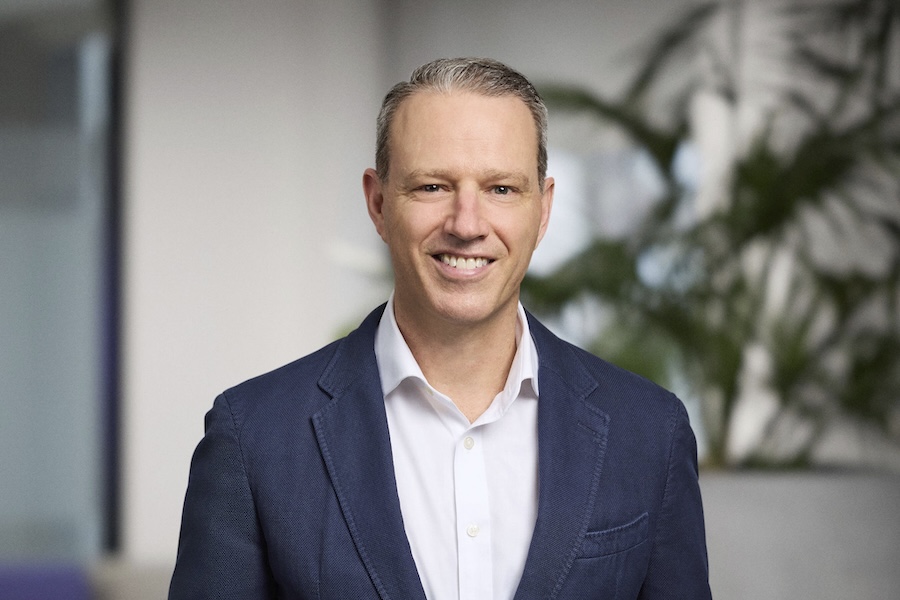
Paul Robson.
What’s actually on the table
Strip away the campaign noise and the two main parties are taking quite different routes to the small-business vote.
National’s 47-point Small Business Plan, released this month, is largely about paperwork:
- A fast-track Employment Relations Authority process for minor disputes;
- Health and safety guidance rewritten in plain English;
- A “Tell Government Once” service built on the NZBN;
- An end to compulsory newspaper notices and fax-era paper rules;
- The Next 200 programme of intensive NZTE support for exporters.
It also keeps Investment Boost, which lets businesses of any size deduct 20 percent of the cost of new assets up front. National says the plan will be funded from existing agency budgets.
Labour’s Small Business Action Plan, announced in August, puts more money on the table: $1.56 billion over four years, funded by scrapping Investment Boost. Large businesses would have to pay invoices of $25,000 or less within 15 days. From July 2027, businesses turning over less than $10 million could immediately write off equipment costing up to $10,000, up from $1,000. From July 2028, the GST registration threshold would rise from $60,000 to $80,000. Labour says that would free about 35,000 of the smallest businesses from having to register.
Business groups have given both a mixed reception. Rich calls National’s plan “a thoughtful document”, but on the GST threshold National is offering only a review. Finance spokesperson Nicola Willis says any change “needs to be funded”. BusinessNZ backs Labour’s GST change but calls the 15-day rule “a heavy-handed way to get there”. It also describes Investment Boost, the policy Labour would scrap to pay for its plan, as “one of the most important productivity policies New Zealand has introduced in years”.
Do they go far enough?
Measured against what SMEs say they want, each party answers part of the brief. National speaks directly to red tape, which tops SMEs’ wish list. Labour goes further on cashflow – another major pain point for small businesses – and the GST threshold.
Both leave gaps. Neither touches the company tax rate, the change a third of SMEs asked for in the above-mentioned surveys. Neither small-business plan deals with energy costs, which now worry most firms. And Labour’s biggest changes don’t take effect until mid-2027 and mid-2028.
If SMEs are only partly heard, sole traders are barely heard at all. Accounting firm Hnry estimates there are around 400,000 of them, or about 20 percent of the workforce, contributing an estimated $78 billion (17 percent of GDP) in 2025/26.
In September, Hnry put a five-point Sole Trader Agenda to the parties: Fairer KiwiSaver settings, a higher GST registration threshold, recognition of the costs of self-employment, and better access to training and business support. Three weeks out from the election, it counts one firm commitment.
That’s Labour’s GST threshold pledge, which was announced before Hnry published its agenda. The Greens and Te Pāti Māori also back an increase.
The threshold hasn’t changed since 2009. According to Hnry, nearly half of sole traders deliberately keep their income below $60,000 so they don’t have to add 15 percent GST to their prices.
“Raising the GST threshold to $80,000 in 2028 is better than a kick in the teeth, but if the goal was cost-of-living relief or economic stimulation, I’d argue sooner is better,” Rein says.
KiwiSaver shows the gap most clearly. In the BusinessNZ survey, 89.1 percent of respondents backed compulsory KiwiSaver contributions for employers, employees and the self-employed. BusinessNZ itself noted that the self-employed were “barely represented” and “may well take a different view, given many regard their business as their long-term retirement savings”.
National’s published policy would require the self-employed to contribute four percent of their income from July 2028. It doesn’t say how that would work when income goes up and down. According to Hnry, the policy follows the Government’s decision in 2025 to halve its own KiwiSaver contribution, which Hnry describes as the only incentive sole traders had to contribute.
The other parties’ positions vary:
- Labour says it will explore more flexible arrangements for sole traders.
- The Greens and Te Pāti Māori support stronger incentives.
- ACT proposes removing tax on qualifying KiwiSaver investment earnings.
- NZ First hasn’t said how its proposed compulsory scheme would apply to sole traders.
In our October story, The New Zealand Initiative’s Oliver Hartwich described higher KiwiSaver contributions as another cost for employers. Sole traders have no employer to share that cost.
“We’re still seeing policies designed primarily for employees or businesses with staff,” says Hnry Chief Executive and Co-founder James Fuller. “It’s time the parties – and policies – caught up with the way people actually work.”
Where everyone agrees
Whoever forms the next government, the surveys agree on a short to-do list.
Cut the red tape. Reducing compliance, such as tax reporting deadlines and consents, is SMEs’ joint top priority (36 percent) in the MYOB survey. In the BusinessNZ survey, 47.1 percent say regulatory changes have raised the cost of doing business. In October, the EMA’s Alan McDonald pointed to an EMA survey that found compliance taking up half of business owners’ time.
Deliver the infrastructure. Infrastructure is SMEs’ other joint top priority (36 percent), specifically regional resilience: Roads, internet connectivity and energy. In the BusinessNZ survey, 94.7 percent back a bipartisan 20-30 year infrastructure plan, and 86 percent of Baker Tilly respondents rank infrastructure in their top three spending priorities. “New Zealand cannot afford another cycle of projects being stopped, restarted or redesigned whenever the Government changes,” says Searle.
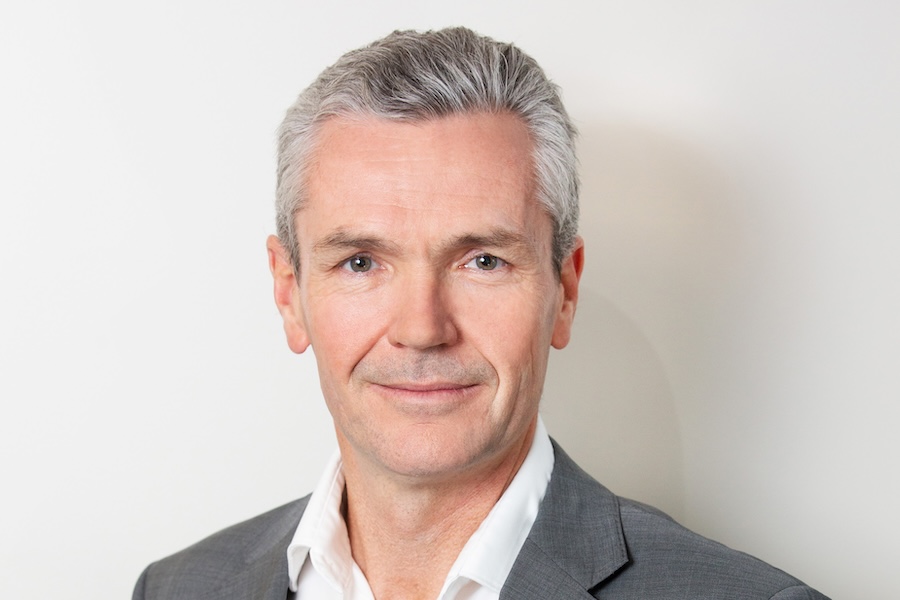
David Searle.
Sort out energy. In the BusinessNZ survey, 80.4 percent say future energy prices worry them, and ASB’s Energy Resilience Business Survey released this month puts concern about energy costs at 73 percent. ASB’s figures also show the smallest firms are the least prepared:
- Only 15 percent of sole operators and 12 percent of businesses with two to 10 staff have invested in energy resilience or have a plan in place. For firms with more than 100 staff, the figure is 39 percent.
- 42 percent of sole operators haven’t thought about energy resilience at all.
Get small firms paid. In the Baker Tilly poll, 57 percent back Labour’s 15-day payment rule, despite BusinessNZ’s reservations. McDonald supported the idea in October, “but good luck with that as it’s very hit and miss at present”.
Rich offers a simple test for every party’s promises: “Will these policies reduce costs, improve certainty and lift productivity?”
The evidence suggests a second question: Who was asked? Shamubeel’s challenge to small businesses was to work out how to speak with one voice. The answer may decide whether this really is the small-business election, or just an election in which small business gets mentioned a lot.