


|
Small business owner/managers struggling with marketing in the current economic climate can rest assured they’re not alone. When business expo organisers Bizzone recently asked 27,000 Kiwi business owners to name their biggest challenges, the answer came back loud and clear. Bizzone managing director Sarah Trotman says most concerns centre around sales and marketing, cashflow and business planning. Trotman’s upcoming three-day Business Expo in There’s advice a-plenty elsewhere for marketing managers of large corporations. They’re told to ensure they have the ear of the CEO. They must help the chief financial officer by joining the dots between marketing spend and ROI. They should bolster the brand in consumers’ minds. But what about advice for small and medium size companies (SMEs), where the typical owner/manager may also be the marketer, CEO, brand champion and chief financial bottle-washer? Here are five big ideas for small Kiwi companies. Don’t be fooled by their simplicity. Smart companies are already using them and reaping the results in today’s tough times. 1. Do the basics really well When Raana Horan, director of Auckland-based Exhibition Hire Services (EHS), wanted to ramp up business in tighter times, he knew he had to home in on core business principles. For Horan, that centres around providing a quality product at a competitive price and excellent service including relationships. “Get those right,” he says, “and there should be no reason for clients to go elsewhere.” In practice, that means EHS is concentrating on its existing clients, refining its spending in all areas and watching its cost base. “Once our ducks are in a row we are targeting new business,” says Horan. In response to the economic downturn, EHS has streamlined where it spends its marketing dollars and focused on its core business. “We have made a concerted effort to encourage staff to do more face-to-face business with clients,” says Horan. “That way we can be more in touch with their needs, identify issues or requirements, provide input, and work a win-win solution. At the same time we hope this further strengthens our relationships with our clients. EHS is also muscling up online: constantly updating its website imagery and optimising its ratings in key search engines. It is spending considerable money and time reinvesting in stock – and working alongside clients in their ad campaigns or marketing and receiving spinoff through exposure on their websites and even radio. In other words, it’s making all the right moves in tough times. 2. Have a plan Having a plan sounds way too simple. Yet this is probably the missing link for most SME owner/managers. When opportunities emerge on Burt Neville’s horizon he knows which ones to grasp. That’s because as director of Bokashi produces environmentally-friendly products that help manage household, agricultural and commercial waste. Adding to current customer groups, Neville is now targeting first the corporate sector and then individual staff members working within those companies. So when an opening came up to sponsor a team for the Taupo Oxfam Trailwalker team challenge in April this year, Neville spotted its potential immediately. The event would put the Bokashi brand in front of 2000 or so potential customers at a very reasonable price. “When I saw who the participants were likely to be, that was every box in our marketing plan ticked off,” he says. Knowing where he’s going has meant Neville has been able to increase both his marketing activity and overall marketing spend recently. Neville stays on track by reviewing his plan regularly. He also holds marketing sessions on the phone every two months with Helen Down, director and marketing specialist at Hutt Valley-based Synthesis Marketing. 3. Home in tight Helen Down also works closely with Clive Cannons, owner of award-winning Unichem Clive’s Chemist in Wainuiomata. Cannons says he’s getting more serious about marketing the pharmacy to targeted segments locally. The campaigns may be small and often low-tech. But they can pack a powerful punch. “We have been sending handwritten notes to our customers to celebrate significant events such as weddings, birthdays or anniversaries,” says Cannons. “And we’re giving handwritten notes for targeted promotions where we identify about 50 people with an interest in a particular special or event. “We are following up with phone calls to consultations we have in-store with people: minor ailments, new prescription medicines.” Cannons’ actions are a living, breathing example of close customer segmentation in action. This Wainuiomata-style thinking is echoed in global advertising agency M&C Saatchi which has been doing international research into consumer attitudes towards the economic downturn. Back in September last year the agency identified eight distinct consumer types after quizzing buyers in the Six months later, it reran the survey – this time adding in Nick Baylis, CEO of the agency’s |
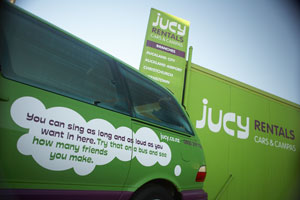
The update revealed Kiwi consumers are now much more aware of what the economic downturn can mean for their own financial wellbeing. “Only 41 percent of those surveyed felt optimistic about their personal finances,” said M&C Saatchi, “compared with 59 percent in the last study.” M&C Saatchi identified eight ‘consumer types’: justifiers, scrimpers, crash dieters, treaters, ostriches, abstainers, clothcutters and vultures. It identifies the key characteristics of each group: their underlying attitudes towards spending, plus age, income and skill levels. Take the ‘justifiers’, for example. At 21 percent of the total, this is the largest group. They’re likely to be skilled professionals earning $100,000 a year so they’re well worth targeting. These people will spend if you give them an excuse to open their wallets. Techniques such as packaging, bundling and partnerships work well. “It’s important to think laterally about partnerships,” says Baylis. Audi has got the measure of this group. Its new campaign offers a year’s free petrol to anyone buying a new car. An offer like that is music to justifiers’ ears. How about the ‘treaters’? These people are typically 65 years old or more, ‘retired and optimistic about the economy and their circumstances’. Belt tightening doesn’t come naturally to this group, says Baylis. “So while they may buy more own-label goods at the supermarket, treaters also want ‘reward’ brands such as wine and chocolate.” Ironically, the reward may cost more than the money saved in the first place. Marks & Spencer in the Or how about marketing to the ‘abstainers’, who have postponed purchases on big ticket items? These ones are likely to be skilled workers with low household incomes. Baylis points out the latest survey contains a telling clue. The number of abstainers has fallen from 8.3 percent to five percent between the two surveys: proof, perhaps, that these people got a bit bored with their new-found frugality. The trick with this lot, says Baylis, is to reassure them at time of purchase. Hyundai in the 4. Hold on to what you’ve got Most smart SME marketers have worked out that keeping current clients is a whole lot simpler than hunting down new ones. Clive Cannons at Unichem Clive’s Chemist figures out different ways to reward existing customers for their loyalty. He wants his staff to make a difference in customers’ lives. Customer feedback on the company’s website earlier this year praises the store: ‘just go to this pharmacy and you will feel better for just walking in the door’. “As other companies cut back on marketing or throw money at newspapers and radio, I hope we will stand out from the crowd as genuine, inviting and unique,” says Cannons. His efforts ripple out into the town. “We are about to dispense our one millionth prescription,” says Cannons. “We’ve built a careful promotion around that to promote the pharmacy, increase foot traffic and give some good news to the town.” 5. Make your dollars work hard Just as it makes sense to tap into current clients, so too does it pay to make each marketing dollar work as hard as it can. That’s the message from Sue McCarty, chief executive of the New Zealand Marketing Association. McCarty urges companies to ensure each campaign or promotion is response-driven. By that, she means set up communication loops so customers reply to you. Smart marketers can use the mechanism so they learn a little bit more about their customers every time. They then use that information to make sure they offer something even more tailored to that customer next time. It’s a way of ratcheting up your links with customers at each step of the way. A classic example from years ago is the Crunchie Bar campaign which got people to text in when they ate the chocolate. Guess what those chocolate marketers learnt? That Crunchies go down a treat in offices throughout the land as the Friday afternoon energy slump kicks in. That insight paved the way for further marketing and yet more insights – and sales. McCarty is also a big fan of referral marketing for SMEs: “It’s by far the most cost-effective method of generating and protecting your revenue”. She retells an Andy Sernovitz story to make her point. Sernovitz, author of the book Word of Mouth Marketing, saw a motel owner roll out the most perfect of referral marketing strategies. The owner told guests they could make free phone calls from their rooms. “So what did they do? They sat there in their rooms, calling everyone they knew and telling them about this great place where they were staying.” Finally, McCarty suggests SMEs embrace affiliate, or partnership, marketing with open arms. The idea, she says, is for smaller companies to pinpoint other companies targeting their customers with bigger marketing budgets and front up with ways in which they can add value to that company’s efforts. The desired end result is to ride the marketing wave together. With a bit of lateral thinking they can pull together some highly successful, if unlikely, pairings. In the The partnership rewarded all customers who bought a Black and Decker Dustbuster Pivot Vac by giving them a free hair cut worth £40 from 400 independent salons across the And whoever would have dreamt of teaming up the Lord of the Rings with Heinz? Ruth Le Pla is an Auckland-based freelance writer.
|