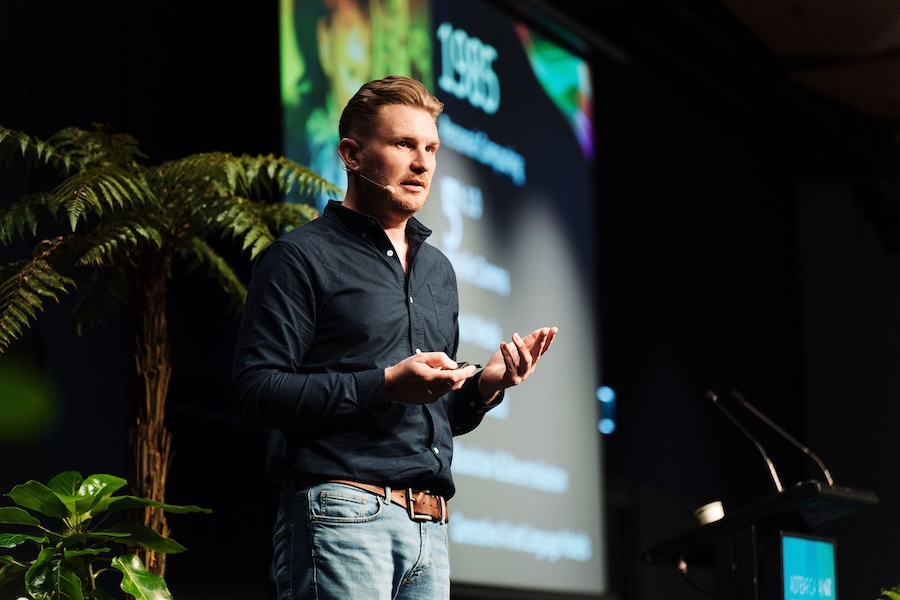

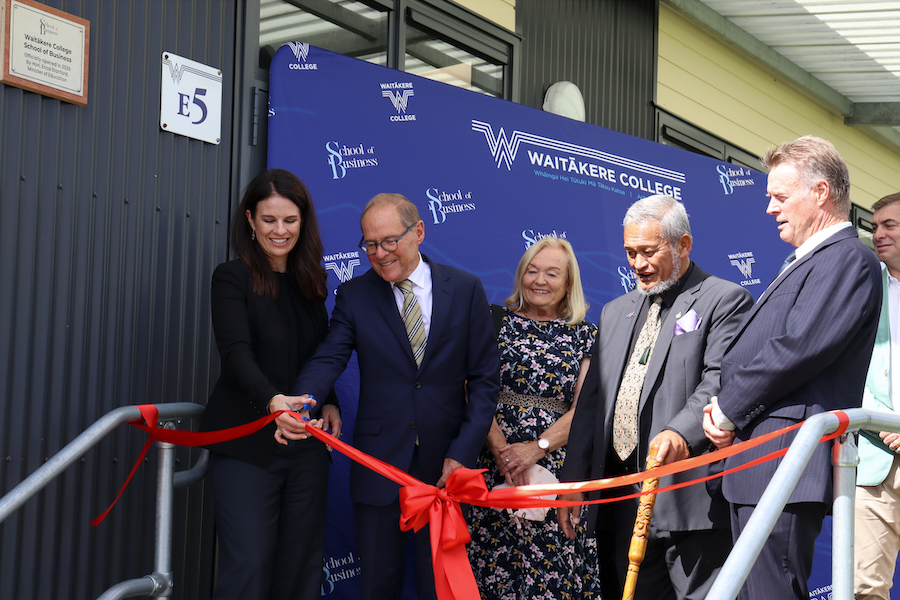

The school, officially opened in March by Minister of Education Erica Stanford, is built on a model Falkenstein first established more than 20 years ago at Onehunga High School — New Zealand’s first business high school, set up at a time when officials still insisted business would never make it into the national curriculum. Business studies was formally introduced into NCEA in 2011.
Falkenstein has tipped in $200,000 through the New Zealand Business School Trust, which holds two million Just Life Group shares. The funding includes five annual scholarships of up to $8,000 each, delivered in partnership with the University of Auckland Business School, Waikato Management School and AUT Business School.
Speaking at the opening, Falkenstein was direct about why the school sits in West Auckland rather than a more affluent catchment.
“I believe the next generation of entrepreneurs in this country will come from communities like this — not from privileged backgrounds, but from places where people understand resilience, where they’ve had to problem-solve and make things work,” he said.
“Most students in New Zealand grow up in families of employees, so they don’t realise that being a world-class entrepreneur is even an option. No one’s showing them how that path works. That’s what this programme is here to change.”
Nearly 60 percent of Waitākere College students identify as Māori or Pasifika, and the inaugural cohort of 23 Year 13 students reflects that demographic, with around 40 percent Māori or Pasifika. More than 300 students across the school are taking business-related subjects.
The programme blends NCEA Accounting, Economics and Business Studies with site visits, mentoring and regular sessions with founders and operators. Students have already heard from Anna Mowbray, co-founder of Zuru and now ZEIL, and Shawn Pope, who started behind the counter at McDonald’s and now owns 15 cafés through the Melba Group. They have toured Falkenstein’s Just Water bottling plant and will go behind the scenes at the Blues, the Australasian league’s most successful football franchise, in the coming weeks.
The point, Falkenstein says, is that classroom theory needs a counterpart in the real world.
“What really makes this model unique is the real-life learning. Once they see how business actually works up close, the path becomes visible.”
He pointed to alumni of the original Onehunga programme now running consumer brands on supermarket shelves — including Renée Stewart, CEO of Mохx Brand — and others working in New York and London, or building their own ventures back home. At the opening, he read out a message from a former scholarship recipient, Johnny, who is now nearly 20 years into a career across marketing, communications and community engagement, and asked him to stand to be acknowledged.
Minister Stanford, who recently announced that business education will be introduced from Year 1 under government curriculum reforms, said she would be watching the Waitākere model closely with a view to wider replication.
“The idea of connecting business people and entrepreneurs with young people, to inspire them and give them confidence that this pathway is available, is invaluable,” Stanford told attendees. “I’ll be looking forward to coming back at the end of the year to see how students’ views have changed and what pathways have opened up to them.”
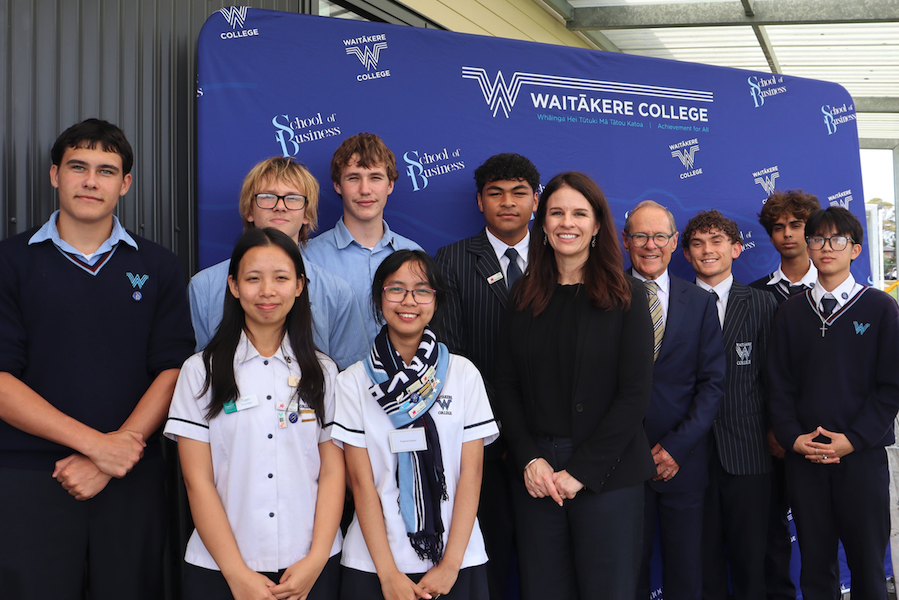
Waitākere College School of Business students alongside Minister Erica Stanford and Tony Falkenstein.
Stanford drew a parallel with a Trades Academy she visited earlier in the week, where exposure to working tradespeople had pivoted students’ career intentions in real time. “That connection with trade, industry, business and entrepreneurs — getting them into schools and changing your ideas about what you want to do with your futures — is crucially important.”
She also flagged the foundational work underway in literacy, numeracy and curriculum reform aimed at ensuring students arrive at high school ready to take up opportunities like the Waitākere programme.
Waitākere College Principal Mark Shanahan, who has worked closely with Falkenstein on the build-out, says the programme is designed to be genuinely aspirational rather than aspirationally branded.
“Giving them hands-on exposure to the business world connects their learning to real experiences they can see and relate to, which we know improves retention,” Shanahan says. “Through company visits, guest speakers and mentorship, they gain real insight into their options and are better equipped to make informed decisions about their futures.”
The governance board reflects the programme’s corporate weight, including former ANZ Banking Group global CEO Shayne Elliott, Tahua Partners CEO Rob Redwood, and former NZ Hockey CEO Manoj Daji.
Falkenstein closed the opening with a pitch aimed squarely at his peers in the New Zealand business community:
“If you’ve been successful in business, don’t just be satisfied with that. There’s something practical you can do to give back to the schools that formed you. The model, the structure, the sessions, the speakers — the package can be dropped into any school in the country. You just need to be willing to invest in young people and find a principal like Mark.
“If we get this right, we’ll build a pipeline of young people who understand business and are capable of creating real economic value for New Zealand. That’s something worth investing in.”