

For many business leaders, AI still feels like a technology discussion, one centred around tools, platforms, licences, and experimentation.
But according t0 Dave Howden, Co-founder and CEO of SupaHuman, that framing fundamentally misses what’s actually happening.
“Most businesses are still treating AI as a tools decision,” he says. “Which platform do we buy? Which licence do we roll out? Who owns it in IT? But the real question is how the work itself changes when you’ve got intelligence systems that can read, draft, summarise, and decide alongside your people.”
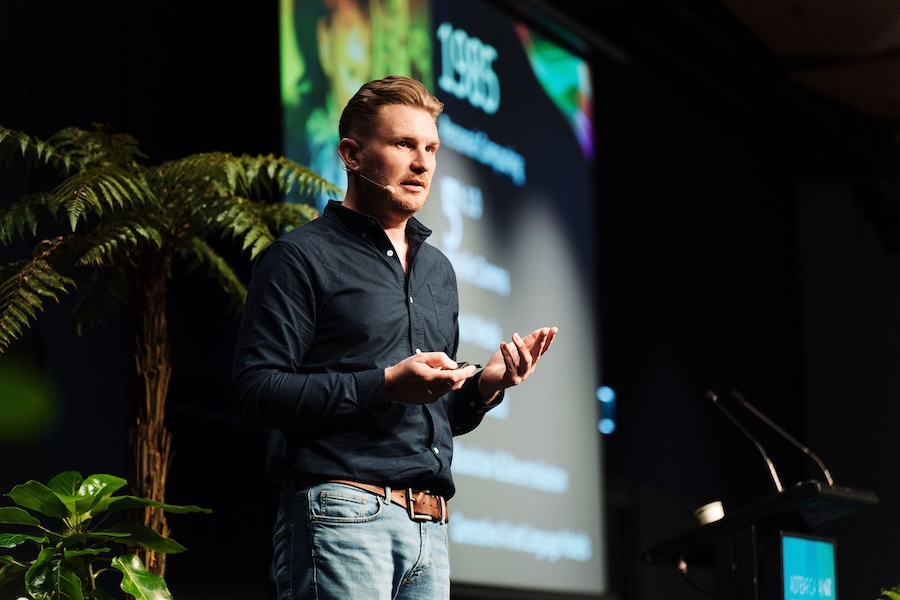
It’s a perspective that Howden will unpack further as part of NZBusiness’ upcoming Ready to Rise Business Breakfast on May 28 at NZICC, where he’ll join a panel exploring how AI is reshaping growth, productivity, and business strategy.
Through SupaHuman, Howden works with businesses in complex and regulated industries to automate repetitive, document-heavy work and rethink workflows around emerging AI capabilities. The company was founded two years ago on the belief that AI adoption would require more than generic software solutions.
“We started SupaHuman because there wasn’t a specialist AI firm focused on freeing smart minds from the tedious work that bogs them down,” he says.
“The goal is straightforward: Keep humans doing the work where they genuinely add value, and shift everything else onto intelligence systems.”
Beyond the broader market shifts, Howden says building an AI-focused company has also reinforced the importance of deep specialisation, particularly when working in regulated industries.
“The horizontal AI tools are extraordinary, but customers in regulated industries need someone who understands their context, their compliance obligations, and the specific shape of their work,” he says. “You can’t fake that with a generalist team.”
He says one of the biggest challenges is that the technology is evolving faster than many organisations can realistically absorb.
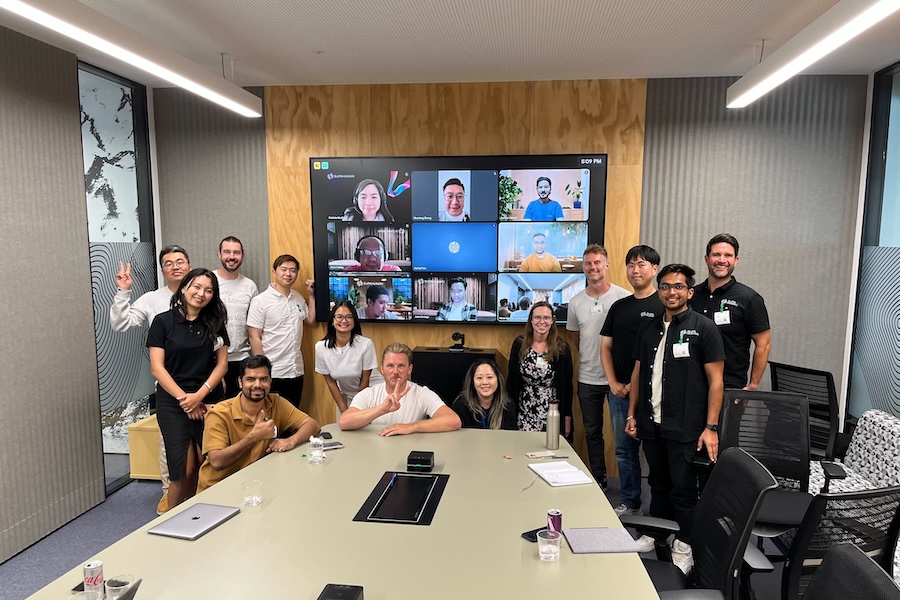
The SupaHuman team.
For business owners thinking strategically about AI adoption, Howden says the starting point should not be the technology itself, but the work happening inside the business.
“Map where your highest-volume, lowest-judgment tasks sit and ask honestly which of them could be handled by an intelligence system with human oversight,” he says. “Then pick one and prove it out.”
Importantly, he warns against trying to “AI transform” an entire business overnight.
“Pick one workflow, go deep, get it working, then move to the next one,” he says. “You get conviction by shipping something useful and seeing what happens.”
Howden believes some of the biggest disruption will first be felt in industries heavily reliant on paperwork and structured processes, including legal, accounting, compliance, insurance, and professional services.
But while AI’s rapid advancement has triggered widespread concern around job displacement, he argues the bigger shift is about redesigning work itself.
“It’s a redesign. The businesses that thrive are the ones that use the capacity they’ve freed up to do more, not the ones that use it to do the same with fewer people.”
Another common mistake, he says, is businesses becoming overly focused on the latest AI models or tools, rather than building operational capability around them.
“The moat isn’t the model. The lasting advantage is in the process knowledge, the data, and the workflow design that sits around the model.”
That idea, that AI is ultimately becoming an operational and strategic capability, rather than simply a software layer, is likely to form a central part of the discussion at Ready to Rise.
For business owners still waiting for certainty before moving, Howden has a blunt assessment.
“Waiting feels prudent, but it’s the most expensive option. The businesses that started early are already years up the learning curve.”
—
You can get tickets to the Ready to Rise Business Breakfast, here.