

Te Whangai Trust is an inspirational community-led social enterprise creating opportunities, training and advocacy for people who struggle to enter the labour market.
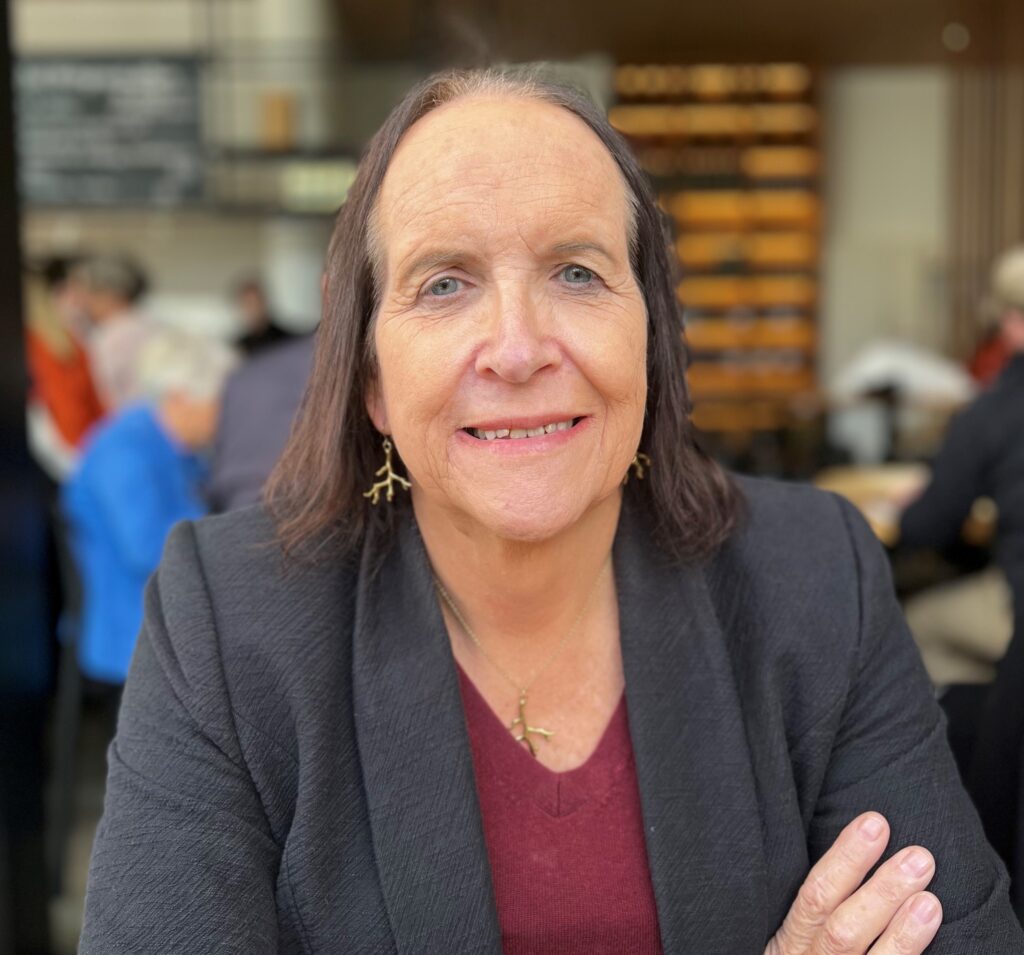
For Adrienne and Gary Dalton, the couple behind the formation and growth of South Auckland-based Te Whangai1 Trust, the task of driving a successful social enterprise while empowering marginalised people to enter the workforce and break inter-generational cycles of welfare dependence, is both relentless and immensely challenging.
They describe their 16-year journey as a profound mix of triumphs and trials.
“Our most formidable challenge was honouring our late daughter’s vision for the Trust,” says Adrienne. “We staked everything – mortgaging our farm to launch Te Whangai with 100 percent debt funding. This was our commitment to uphold Leigh’s aspiration of supporting the marginalised people in our society and becoming kaitiaki of the land.”
Recently the Covid-19 pandemic delivered the ultimate test, with the Trust’s headcount rising from 32 to 74 living-wage employees, all while businesses throughout New Zealand were downsizing.
That decision to up the headcount was spurred by the disproportionate impact of the pandemic on the already vulnerable members of the communities.
“We were reminded of the real human cost that would result if we failed to support this growth and downsized,” explains Adrienne. “Thankfully, our rapid top-line growth meant this wasn’t necessary and now three years later, we’ve stabilised at around 66 people.”
Over the years the Trust has also navigated political fluctuations and policy changes.
“Building an innovative model in a space that is inherently politically charged is risky and everyone has an opinion,” says Adrienne.
Balancing high-level pastoral care for employees, who often grapple with complex issues, while competing with other nurseries and pursuing philanthropic funding, has been a tightrope walk, she admits.
Despite the challenges the journey has been rewarding. However, the couple acknowledge that navigating the issues and mitigating risks while guiding people with complex needs into sustainable employment would not have been possible without the unwavering support of their corporate and philanthropic partners.
To succeed, Adrienne and Gary say they lean on two elements: heart and gut.
“Heart represents our passion, purpose, and unwavering belief in the innate goodness of humanity,” explains Gary.
“Gut symbolises the instinctive cues guiding us when a situation feels right or wrong, and prompting us to ask why? It fuels our belief that ‘impossible’ just means we need to look at the problem in a different way, and another way will present itself.”
Shattering myths
New Zealand’s social enterprise scene has many myths and misconceptions. One of the biggest myths is that social enterprises can’t be financially viable or efficient.
Adrienne says this couldn’t be further from the truth. “At Te Whangai Trust, our team generates 70 percent of the cost of running the enterprise as they transition from dependency to self-sufficiency, despite the massive costs we carry in learning and development and lost productivity,” she explains.
And they’re determined to keep growing that share.
“We’re demonstrating that not only can a social enterprise reduce welfare costs significantly, but they can also produce tangible benefits for our strained justice, police, health, and social support services.”
Adrienne says that in a trial with the police, 73 percent of the youth who transitioned through Te Whangai didn’t go on to reoffend.
“Another myth is that people from difficult backgrounds can’t work well together. We’ve proven the contrary,” says Adrienne. “Our enterprise is built on the principle of giving a hand up, not a handout. Focusing on participants’ skills and outcomes, fosters an environment of inclusion and collaboration.”
A true social enterprise like Te Whangi is able to invert the traditional business model. People and the environment are paramount, and the money serves this purpose, explains Adrienne.
“This model provides our most vulnerable and marginalised people a place, purpose, belonging, and the ability to contribute to a community that supports them.”
Seeking corporate partnerships
Today Te Whangai is looking to establish partnerships with corporates and businesses.
“We want to create win-win situations,” explains Adrienne. “To build a network based on trust, integrity, and mutual benefit.”
She says with recent government investment in shovel-ready programmes inadvertently disrupting the market they operate in; corporate support is needed more than ever.
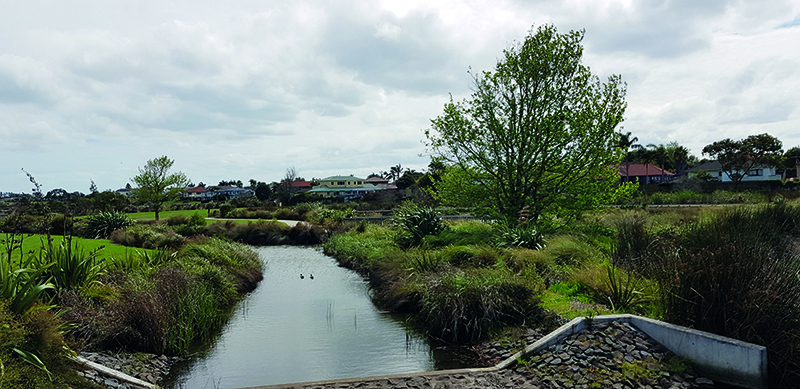
The Trust’s latest initiative ‘Whangai A Tree-Whangai A Future’ is an annual subscription-based corporate partnership model designed to help businesses meet their ESG requirements and build employee engagement around social and environmental causes.
By partnering with Te Whangai, corporates can help provide the financial lifeblood needed to continue the Trust’s work and scale it to the next level.
“We will, in turn, report back to them on the social and environmental impact they are enabling, changing their ESG compliance into a tangible, powerful story of community transformation,” says Adrienne.
Business leaders can also greatly help Te Whangai by offering their services at cost or on a pro bono basis.
“If a company provides pro bono services, we aim to generate reciprocal benefits for them. The lost opportunity cost, while not directly financially advantageous, can be considered as a donation, attributable to measurable ESG outcomes, or be incorporated into their marketing and advertising initiatives,” explains Adrienne.
“As a community enterprise, our skillset is distinctive, with roots in agriculture, education, justice, and community work. We operate with a profound respect for tikanga Māori, viewing our work through a Te Ao Māori lens, which goes beyond financial costs, revenues, and profits.”
Three-tier model
The Trust partnership model has three tiers and is flexible in developing bespoke programmes to align with the specific needs of different businesses.
“Involvement with our programme can help businesses foster diversity, equity, and inclusion – values we hold in high esteem,” says Adrienne.
“By participating in our initiatives, businesses can actively contribute to societal change, crediting their social license to operate and strengthening their connection with the community.
“‘Whangai A Tree – Whangai A Future’ is designed to forge a sustainable future for people and planet. We’re creating a system change, ensuring a stable social and environmental landscape for future generations.
“As we move forward, we invite businesses and individuals to contribute. By pooling our talents and investing a small amount of time, we can support the Trust’s programme and work together towards a more sustainable future.”
Visit www.tewhangai.org or call Adrienne 027 240 2455, or Gary 021 662 463.
By Editor Glenn Baker