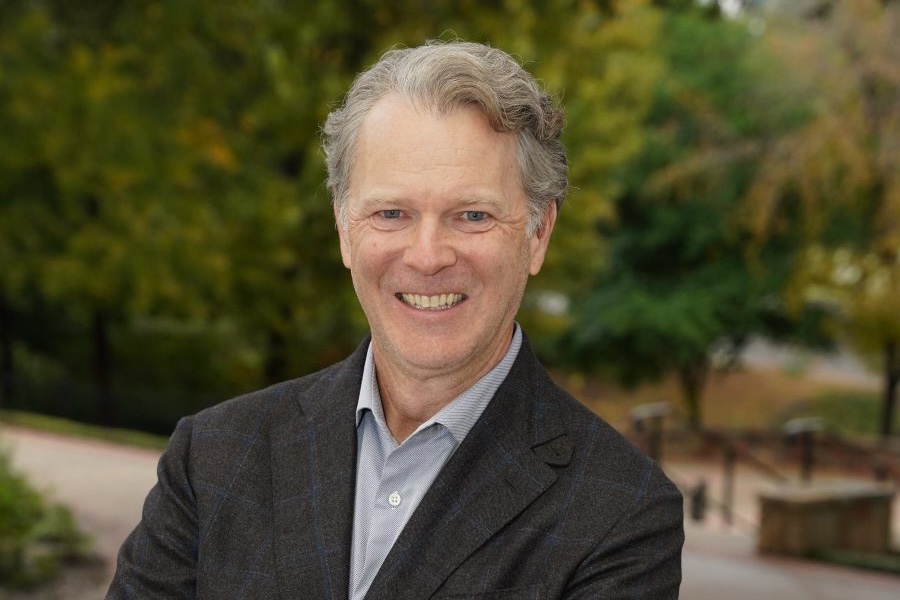

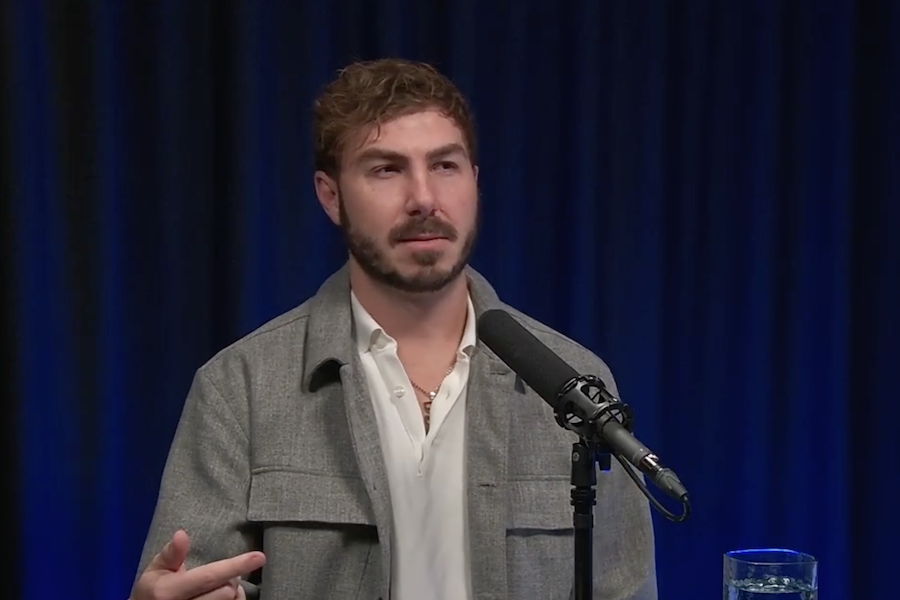

Josh Burgisser didn’t set out to build a marketing agency. He set out to understand why nobody could explain, in plain terms, whether their marketing was actually working.
“Out of all of the different marketing channels, social and digital is the most straightforward,” he says.
“There is reporting, there is lead capture, there are proper methods that you can use to track your ROI. It is not something you have to go, ‘oh yeah, there were maybe this many viewers’, you can actually quantify it a lot better than you can with other methods.”
That conviction, formed over several years inside corporate marketing roles, is now the engine behind Burgs Digital, an Auckland-based agency Burgisser founded when he went full-time in 2024. The business has “only just turned two,” he says, but it already has close to 40 clients on the books, a team of six full-timers plus two contractors, and a stated goal of reaching 20 people by the end of next year.
From business development to the attention economy
Burgisser didn’t come from a design or content background. Before Burgs Digital, he was a business development manager for a real estate marketing company, where (almost by accident) he found himself driving growth through websites and social media.
“I never was someone that loved designing websites or anything, but then I got my head around the concept of a website, and I was like, how do you get people to the website? That’s the secret to the growth.”
The deeper shift came from a now-familiar documentary. “Have you ever watched The Social Dilemma? I watched that, and that was like the changing moment for me,” he says. Where many viewers came away wary of social platforms, Burgisser went the other way. “I doubled down. I instantly [thought] how does this attention economy work?”
That idea, that attention itself is the resource businesses are competing for, still shapes how he pitches his own value. “I’m not a specialist, I’m a strategist. I know how to take a campaign from creative concept through to revenue generated. There’s not very many strategists, a lot of people are specialists. But you need someone who can put themselves in the shoes of your customer and ask: What would make me click on this ad, buy from this website, and come back again?”
Burgs Digital started as a social media business. It hasn’t stayed one. “It became a content thing, and then it became a full-stack marketing solution, and that happened very fast,” Burgisser says. The agency now covers websites, SEO, paid advertising and, increasingly, GEO – generative engine optimisation, or making sure a business shows up when people ask ChatGPT or Claude for a recommendation rather than typing into Google.
“Stop and think, twelve months ago, how often were you Googling stuff versus how often are you now?” he asks. “That’s the thing I’ve been putting all my business owners onto. We’re integrating that into all of our strategies, right down into the content itself.”
Why video isn’t optional anymore
Ask Burgisser what most small businesses get wrong online and the answer is immediate: They’re still posting static images into a video-first world.
“You can be good on camera now and still not be good, that’s the thing that’s really difficult about 2026,” he says. He points to research suggesting 86 percent of New Zealanders spend around two hours a day on social media, most of it watching short-form video. “If you’re putting effort into making Canva posts and putting that stuff up, I don’t care if it’s ten hours a week, you’re wasting ten hours a week. That is literally the only scenario where I’ll agree with just burning your social media and not posting at all.”
The fix, he says, isn’t about becoming a natural performer. “That’s such a lazy take; ‘I don’t want to be on camera.’ I didn’t want to be on camera either. Look at me now.” What matters is the experience around the content: Burgisser sends two people to every client shoot, and pairs each client with a dedicated account manager who scripts, coaches and builds the relationship. “If you make someone comfortable, make them laugh, make them look natural on camera, all of a sudden they like being on camera. It’s not rocket science. It’s just giving someone a good experience.”
Burgisser is blunt about a mistake he sees constantly: Business owners running paid ads into a social profile that’s essentially dead.
His rule of thumb: organic content builds long-term trust; paid advertising converts people who already trust you. Skip the first step and the second one gets expensive fast. “You need to build trust with people. Trust is super important to a sale, and a lot of people forget that part.”
For business owners who can’t do it all themselves, Burgs Digital works on a deliberately short leash, a three-month minimum commitment rather than the 12- or 24-month contracts common elsewhere in the industry. “If you don’t like it, all good. Either way you walk out with a positive experience and a whole bunch of value.”
The family test
For all the talk of strategy and psychology, the story Burgisser tells most warmly is about his father, a small business owner whose own marketing mistakes shaped how Josh thinks about the job.
“My history has come from having parents that owned a small business, and watching that revenue fluctuate – some years good, some years bad – watching Dad make mistakes with certain types of marketing, spending way too much in some places, not enough in others.”
His father was also one of the loudest doubters when Josh floated the idea of starting his own agency. “He was really worried about how competitive the space was going to be. ‘Recession, super competitive space, are you sure you’ve got what it takes?’ I listened to that most of the time. But I was like, nah, I’m doing this.”
It took a year of watching the business operate before his father came around. Today, he’s a client. “He’s 62, he’s from the handshakes-and-business-cards era, and now he listens to me like never before, because I’ve proven the concept to him.” It’s a version of a pattern Burgisser sees across his client base: The most sceptical business owners, once they see two videos’ worth of results, become the most committed. “They call me up and go, ‘Josh, this is crazy, all these people are messaging us’.”
Where it’s heading
Burgisser is characteristically unambiguous about scale. “I want to be an agency of like 20 people by the end of next year. Shoot for the moon, get to the stars, whatever.” But the growth goal, he says, is really a proxy for something simpler: Reach. “For me, I want to just be able to help as many small to medium businesses as possible.”
It’s an ambition he frames in almost old-fashioned terms for an industry that talks constantly about funnels and ROIs. “If I help you succeed, then you’re going to spend more money with me. That’s why my business works so well, it’s designed to be a partner with businesses, not a supplier.”
This article draws on a recorded video interview between Josh Burgisser and David Nothling-Demmer.