


Ask what small business owners want from the next government and the answer seems to be that above all else, they want consistency. Or, as the Employers and Manufacturers Association’s Head of Advocacy and Strategy Alan McDonald puts it, “a bit of stability for a while, please”.
When McDonald spoke to NZBusiness he had just completed a series of briefings encompassing 16 venues and 2,000 members and the feedback they were getting was that members were starting to see things get better.
“Leave us alone to get on with it,” was the message from business owners, he said.
McDonald says that while businesses understood that things are turning, it is still tough.
“But people are looking ahead; forward orders for manufacturing are looking good; exports are up and a lot of manufacturers are exporters too.”
McDonald says while there are businesses in growth mode, it’s patchy, but some have turned the corner. “That demands that they have a steady, stable policy settings to let them get down to business.”
Economist Shamubeel Eaqub says many SME businesses are looking for short term relief.
“But government isn’t well suited to do that – because the business of government takes time. Changes in rules and regulations, incentives or support for investment all take time.”
He says the biggest benefit to small business would, in his view, be consistency of policy over time and greater investment in skills and training.
“This is because constantly changing policy is now the norm and is destabilising for business. And the biggest constraint for business outside of the economic cycle is good people. This means improving our education and training pipeline from an early investment in younger ages to greater focus on vocations and technical skills, and upskilling in older ages. In construction, for example, most successful trainees are now in their 30s.”

Alan McDonald is Head of Advocacy and Strategy at EMA.
Asked for his view on what the priority for SME owners is, Dr Oliver Hartwich, the executive director of The New Zealand Initiative, agrees that it is stability “and most would be happy if the next government got the cost-of-living crisis in order.”
“No one wants grand policies and vision and then all the flip flopping,” pointing to the Fair Pay Agreements legislation as a case in point.
These calls for stability are also echoed in a recent BusinessNZ’s policy statement which, among other things, called for the next government to stay the course on reform already underway.
BusinessNZ said in a statement on its Election Priorities 2026 report that the single biggest risk to the economic recovery was not a lack of ideas but a lack of follow-through. The organisation is calling for continuity, not reinvention, across a reform programme “already delivering results”, pointing to the Resource Management Act reform; education reform; retaining the Ministry for Regulation; health and safety reform; employment law modernisation and called for a bipartisan approach to long-term infrastructure planning.
When NZBusiness asked Shamubeel what he believes is likely to be SME business owners’ top priority would be from the next government, he said: “Sadly I think most people vote along tribal affiliations, rather than an informed view based on policy and the long term good of our country. Watching the rise of polarisation, hatred, bigotry and divisiveness globally, I would wish for us to vote for something different.”
Asked of all the parties, what is the best business-friendly policy/policies to date, Shamubeel says this is the wrong question.
“I don’t think politicians really understand small business or how to support them. Despite being a nation of small businesses, the lobbying and political power is in large businesses and large unions, and the politics is extremely retail (households).
“The question for small businesses is how can they speak with one voice on issues that matter to them. This can be done better via industry bodies, chambers and the like. But the ask from small business is atomised and the answer from politicians so far is to look another way.”
Again, of all the parties, what is the least business-friendly policy, which is likely to affect SME votes? “The usual stuff – taxes of any sort, increases in minimum wages, any perceived increase in regulation,” he says.
“But there is little evidence these things actually make any difference to running a small business. Small businesses need to assess political announcements with two hats: one as a small business and another as a citizen. They may not always agree,” Shamubeel says.
The EMA’s Alan McDonald also noted that the current environment is such that there are things businesses can’t control internationally, but there are things it can control domestically – “and there are a lot of things with a business focus where SMEs are looking for a bit of consistency.”
He points to the RMA. “If there is a change in government, keep the guard rails in place but don’t throw the whole thing out again. There may be things around the edges that can change but keep the main changes of direction in place.”
Asked about SME business owners’ top priority in casting their votes, McDonald says they just want to be left alone, pointing to business-related legislation such as the Employment Act, Holidays Act, education and immigration settings and health and safety changes.
“Leave it in place, let it settle in and see if it works.”
So, what SME policies might appeal to SME business owners and what they might vote for? McDonald notes that apart from Labour, none of the parties has come up with definitive SME policy settings [at the time of our interview].
However, under the current Government, he says the revamp of the Resource Management Act through the new Planning Bill and the Natural Environment Bill, “if it works the way it is supposed to work, it will take a lot of the cost and effort from the system”.
The current Government has stated the Planning Bill “…streamlines and rationalises planning and consenting so that far fewer consents will be required.”
McDonald points to the new spatial planning framework, allowing development on private land that may not need consent.
As an example, he said, if a business in an industrial area wanted to build a new warehouse, on its own land, it may not need a consent. He says one EMA member in the past had spent $250,000 “on getting a consent for doing exactly what he was already doing but in a new warehouse on the same site.”
McDonald says infrastructure is an area the country may see some agreement between parties highlighting the National Infrastructure Plan, noting that having that plan in place and a commitment from the current Government and Labour and the Greens is helpful for business.
As to specific SME policies, McDonald says Labour is the only party so far with a dedicated SME policy, parts of which he says are quite good for business, including raising the GST threshold with no compulsory GST registration until $80,000 which he sees as important for small business.
He is also in favour of the Labour policy allowing small businesses to invest up to $10,000 in new equipment and write off the full amount from their tax bill. However, he does query what happens once the amount hits $10,001.
That said, McDonald is also in favour of the current government’s Investment Boost, which would be refocused under a Labour government. He is also gave a tick of approval to the call for SMEs to be paid in 15 days, “…but good luck with that as it’s very hit and miss at present…”
Asked if political parties understand SMEs, McDonald says it’s hard to design SME policy from Wellington.
“MBIE for one is seeking to get staff out of their offices, but political parties tend to look at business as an amorphous thing, not delineating between small business
and large business. We are a nation of small businesses and some of their needs are quite specific, but the obligation and responsibility placed on them is huge.”
An EMA survey found compliance taking up 50% of business owners’ time. “This might be health and safety or fulfilling tax filing obligations which is time consuming for any business, let alone someone who is doing everything in the business themselves.”
He says there has been a dearth of SME announcements from other parties “but if you look at the bigger set piece – health and safety, RMA, Employment Law – they are grinding the gears of business.”
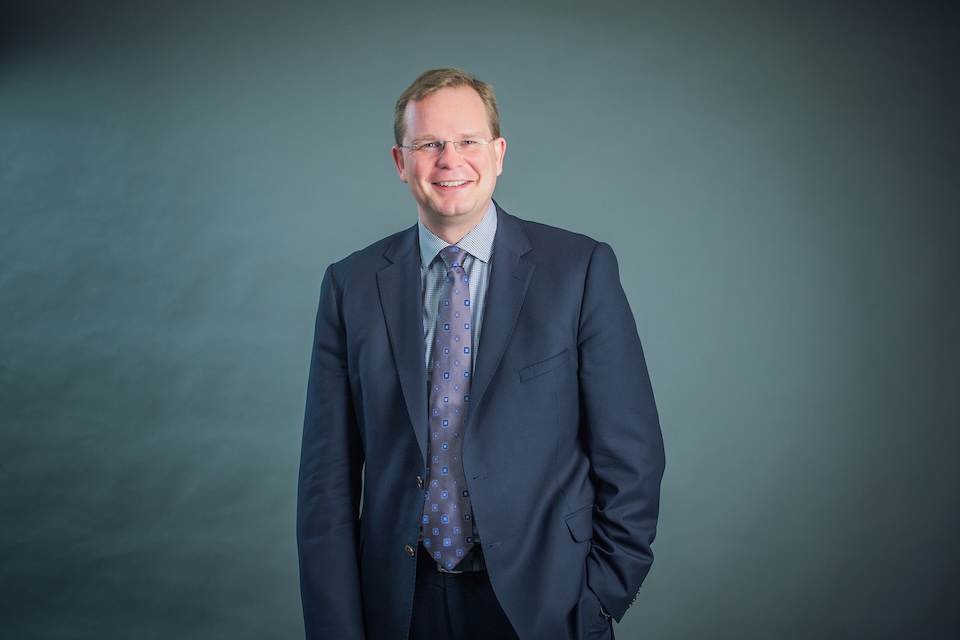
Dr Oliver Hartwich is the Executive Director of The New Zealand Initiative.
Asked about the lack of work-readiness of those just coming into the workforce, McDonald says work-readiness was seen as a major problem some years ago by 30% to 40% of EMA members. Now 60% of members see this lack of work-readiness of young workers as a major problem.
Oliver Hartwich, when asked about what SMEs want from the next government, points to many in business being frustrated dealing with government agencies.
He says there is frustration after any engagement with bureaucracy and government agencies, with the exception of IRD which has subject experts.
Hartwich say this frustration is across all ministries and most businesses he speaks to are feeling that way and some have given up on talking to their ministry.
He says government ministries are not building deep institutional knowledge. “Previously you still had people with 20-years-experience, but once they moved on, the agencies lost that institutional knowledge and employees now tend to move from department to department, across the public service.
He says it’s frustrating for businesses who try to engage with them.
One area he points to are plans to increase KiwiSaver contributions which he says is another cost for any employer, noting there is every indication compulsory saving has not lifted the saving rate in the past 20 years.
Hartwich says increased contributions may also come out of what may have been a pay increase for an employee.
Asked if political parties understand SME businesses, Hartwich says they claim to do so but asks how many politicians have run their own business or worked in a smaller business.
On Labour’s policy of a target for 15% of government contracts to go to New Zealand small businesses and start-ups, with large contracts broken into smaller, more accessible jobs, he’s not sure that when it comes to the cost of procurement, “surely it’s best for the government to get the best deal it can”.
Hartwich is also an exponent of smaller government sizes noting that in the comparably sized Norway there are 15-20 government departments. In NZ we have 39 (it was 43) and 82 ministerial portfolios with 27 Ministers.
Other useful changes Hartwich points to is the refocus of NCEA on vocational qualification training and he agrees there is a workforce-readiness issue. He says a better trained workforce is a real business benefit and will resonate with business.
This article was originally published in the October/November 2026 issue of NZBusiness. To read the issue, click here.