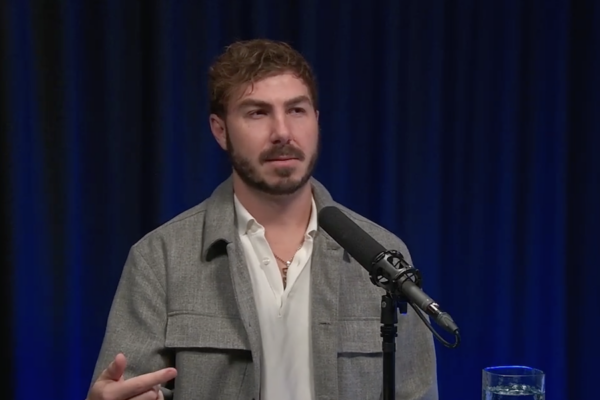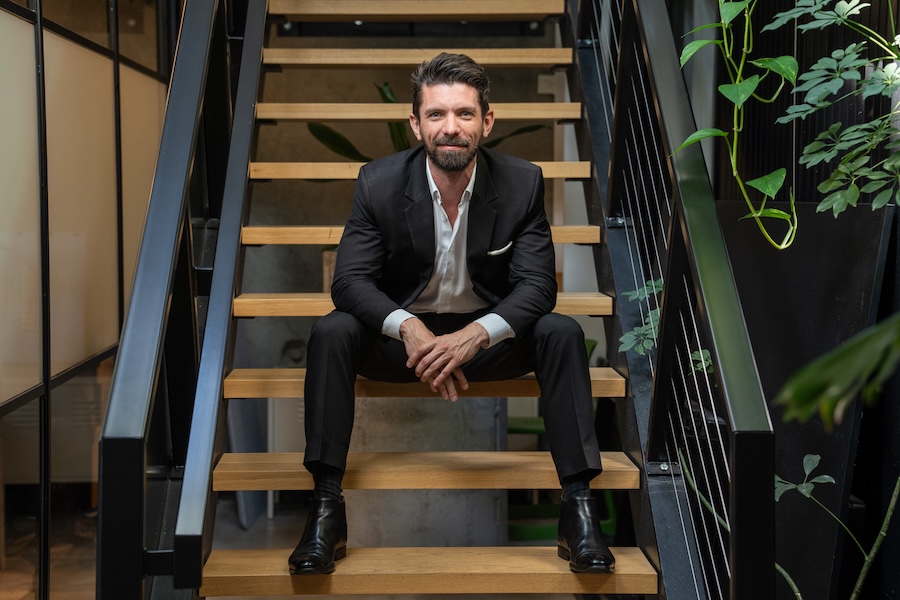
From army officer to money maker, a journey of building wealth
Joseph Darby is reshaping investment management and financial advice for goal-driven Kiwis, here’s what he believes it takes to achieve financial freedom.


Joseph Darby is reshaping investment management and financial advice for goal-driven Kiwis, here’s what he believes it takes to achieve financial freedom.

Payroll changes from 1 April 2026 will affect wages, KiwiSaver contributions, and ACC levies. Shannon Goodwin and Brendan Clough of Baker Tilly Staples Rodway explain what SME owners need to check now to stay compliant and avoid surprises.

A new $20 million fund and incubation initiative designed to address the high failure rate of New Zealand startups with a social or environmental purpose has launched. According to latest Government data, startup survival rates in New Zealand, including those with a social imperative, have declined by 45 percent over the past six years – a trend that began prior to the current pandemic.[1] Nous Labs, a new organisation which provides investment, mentoring, coaching and marketing support for environmentally and socially focused Kiwi enterprises in their early stages of growth, is the creation of Brianne West founder and CEO of the country’s largest regenerative beauty product exporter, Ethique. West (pictured) says it is critical Kiwi startups which are purpose-led be
SheEO NZ, an economic model created to support wāhine and non-binary entrepreneurs is already delivering strong results and is ready to support a new crop of start-ups. The selected New Zealand ventures that SheEO has backed to date have achieved remarkable growth, with an average revenue growth per venture of 684 percent since being selected. In total, the ventures now employ 134 people, averaging 15 employees per venture, and they collectively generated $20 million revenue, up from $11.9 million in 2020. SheEO was launched in Aotearoa New Zealand in 2017 by Theresa Gattung (pictured), a renowned advocate for women in business. Gattung is thrilled with the results and encouraged with the local success of the model. “Considering we were still reeling
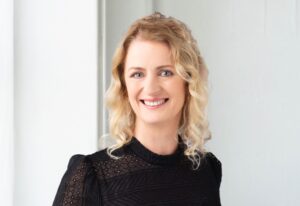
Research has found that almost 40 percent of Kiwi small businesses use personal savings to support operations. It’s a behaviour that can very quickly become problematic. Personal and business finance is becoming increasingly blurred for small business owners, which may lead to difficulty accessing business finance as the lending criteria tightens. Latest findings from a survey, commissioned by small business lending specialist Prospa, reveals that when a business needs money almost two in five (38 percent) of business owners will dip into their personal savings to support their business operations. It is a very common trend among businesses less than two-years old, with 64 percent of businesses stating that personal savings is their primary source of funding. “This behaviour can be problematic,” warns

Securing investor funding is the key to accelerating business growth, particularly for fledgling ventures. NZBusiness shares advice from three of New Zealand’s leading funding platforms. It was well-known US venture capitalist and author Richard Harroch who said, “It’s almost always harder to raise capital than you thought it would be, and it always takes longer. So plan for that.” It is true that raising venture capital can be daunting for fledgling businesses, but at the same time, investor funding has never been more available, accessible or flexible. And yes, with such a diversity of funds, boutique investment banks, angel groups and crowdfunding providers out there, it may not be easy. But planning, and seeking the best advice, is vital. Jack

Tristan Dakin explains what businesses can proactively do to manage their cashflow and stop wasting money in the new financial year. It’s hard to believe we’re beginning a new financial year. Over the past two years, business owners have had a lot of additional requirements and pressure added to their workload. And I’m not just talking about managing vaccine passports, capacity restrictions or staff shortages as staff are required to self-isolate, but there are other Covid-19 adjacent factors at play that are hurting Aotearoa’s business community. Supply chain issues and delays are causing costs to increase, resulting in high inflation and a rising cost of living. This is being compounded by talent shortages and the fear of the ‘great resignation’
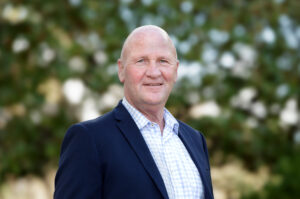
Keith McLaughlin discusses the credit lessons Kiwi businesses should take from the past few years – and what they should be doing to manage their credit scores going forward. After almost two years of on-again, off-again restrictions due to the pandemic, business owners need as much certainty as they can get. A crucial element of business sustainability is protecting cashflow and ensuring customers and suppliers are financially reliable. It has been a challenging period for businesses across all industries and regions of Aotearoa. As we begin to look towards the hopeful slowing of Omicron and a return to relative normality, there will be a need to take a step back and review what the future holds. With the new financial year

Wednesday 11 November 2026 | 7:00am – 9:30am
📍 New Zealand International Convention Centre, 101 Hobson Street, Auckland
One week after the election, Ready to Rise returns for ‘After the Result’ to help Kiwi SME owners plan ahead for their next bold move, and hard-won growth. Get your tickets for this must-attend business breakfast.
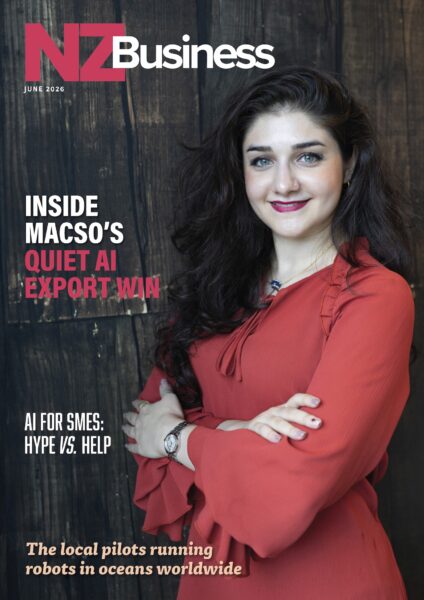
Practical AI insights, Kiwi tech innovators, and the tools helping Kiwi SMEs compete on a global stage. It’s all packed into this special tech issue of NZBusiness.