

Around three-quarters of New Zealand business owners believe tall poppy syndrome is real, according to Otago University research, and more than half of the entrepreneurs studied say they’ve responded to it by deliberately staying under the radar. Playing down success, avoiding attention, keeping the business smaller and quieter than it could be. Layer onto that New Zealand’s long-hours culture: Kiwis already work more hours on average than most of our OECD peers, and a striking number report doing that work alone, quietly compensating for goals they’ve already shrunk to fit what feels safe.
Rochelle Moffitt, Co-founder of Revved, has spent the past two years talking to hundreds of New Zealand founders, CEOs and senior leaders about what’s actually holding them back. Her conclusion isn’t a lack of capability, capital or even opportunity. It’s that same cultural reflex, one she believes SME owners in particular carry the heaviest cost of.
“Tall poppy was never really about resenting someone’s advantage. It’s about punishing visibility. ‘Who do you think you are’ is not a question about access. It’s a warning about daring to be seen,” says Moffitt.
For a country whose economy runs on small and medium businesses, that’s not a soft, feel-good problem. It’s a productivity problem, wearing the disguise of humility.
The isolation tax
Moffitt points to a second, compounding pressure: Loneliness at the top. She references research suggesting that more than half of CEOs globally experience significant bouts of loneliness in the role, and that of those who feel isolated, a majority say it actively hinders their performance. For an SME owner without a leadership team, a board, or peers doing the same job down the corridor, that isolation arrives even earlier and lands even harder.
Put the two trends together – leaders quietly shrinking their ambitions, and leaders doing it in isolation – and you get, in Moffitt’s words, “the most consequential work in New Zealand being done by isolated people with deliberately shrunken goals.”
It’s a diagnosis that lands differently depending on where you’re sitting. For a listed company, isolation might mean an under-used board. For the owner of a ten-person business, it can mean no one to sense-check a pricing decision, no one who’s been through a bad debtor before, no one to admit to that the last twelve months have been genuinely hard.
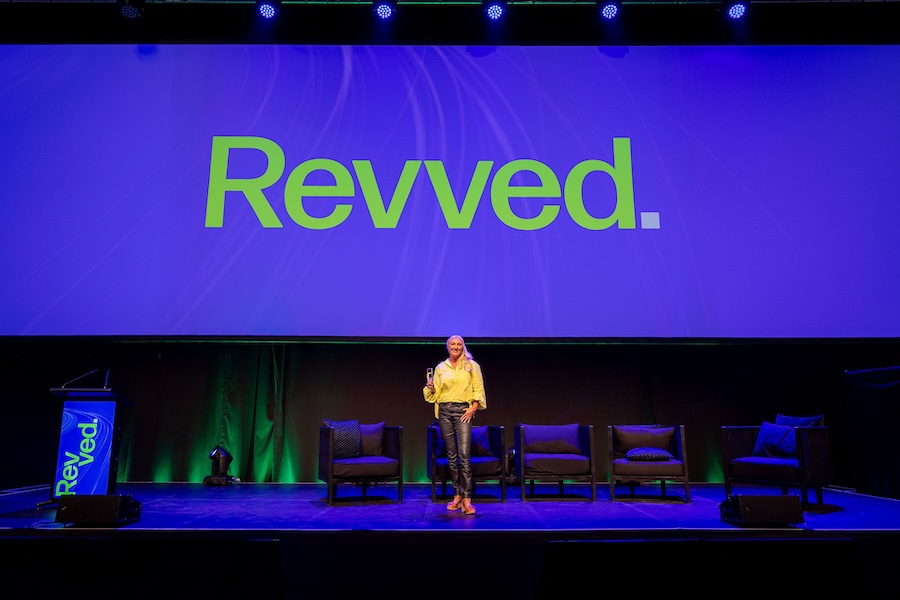
It’s this determination that shaped Revved, the business and leadership summit Moffitt Co-founded in 2025. Revved Summit 2026 returns on Thursday, August 6 at Auckland’s Viaduct Events Centre, bringing together founders, executives and decision-makers under the theme “Engineering Change.”
The lineup includes Sir Ian Taylor, One NZ CEO Jason Paris, Air New Zealand CEO Nikhil Ravishankar, education futurist Frances Valintine, Partners Life founder Naomi Ballantyne, and Dr Alia Bojilova, the crisis negotiator and psychologist who once talked her own way out of a hostage situation in Syria. The premise underpinning the day is the one Moffitt keeps returning to: That the antidote to tall poppy and to boardroom loneliness isn’t a pep talk, it’s proximity, putting people who are quietly carrying the same weight in the same room, so the isolation has somewhere to go.
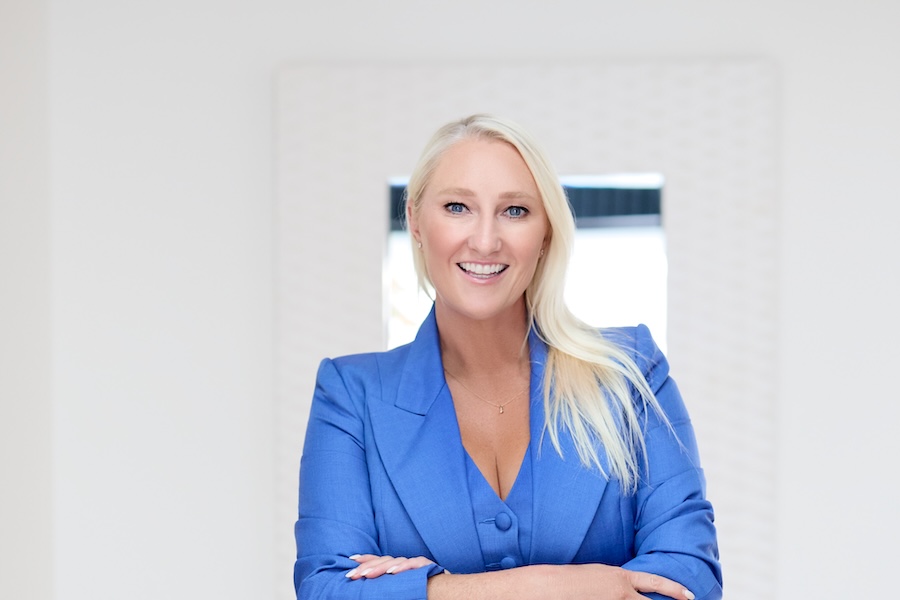
Revved owner, Rochelle Moffitt.
Built from her own dance floor
Moffitt didn’t arrive at this diagnosis and idea for Revved from a lecture hall. Before Revved, she built Decibel (formerly Tickled Pink), a personal branding agency, and ran Sip & Share, a networking series that started, she says, simply because “I created something I wanted for myself. I looked at what was out there and none of it was floating my boat, so I built rooms around community, conversations and a safe space.”
Those years taught her something more valuable than event logistics: Trust. When Revved launched it was, in her words, “a giant new business event with no history, in a really shitty financial time for many.” Moffitt had personally taken on a $300,000 loan to get it off the ground, and business confidence nationally was on the floor. What carried it through was the community she’d spent a decade building, people willing to bet on her before she’d proven anything with this particular venture. She’s also been candid that this isn’t her first rebuild, she describes having rebuilt her life from zero more than once, which is partly why she frames change as something a leader chooses to engineer, deliberately, rather than something that simply happens to them.
Revved, she says, itself began with a text message to Anna Mowbray who had spoken at a major international event in New Zealand and publicly called it out the next day, arguing Kiwis deserved better. Moffitt messaged her and told her to build that better event. Mowbray’s answer: “No, you should, and I’ll support you.”
The working title, tellingly, was The Dance Floor, borrowed from a favourite quote by H. Jackson Brown Jr: “Opportunity dances with those already on the dance floor.” The idea was simple, put leaders from completely unrelated sectors in the same room and let them collide. “I cannot make people converse,” Moffitt says, “but I can help them collide.”
That instinct – building a room you wish existed, then trusting the people in it – is a familiar one to plenty of SME founders. What’s less familiar is treating it as a deliberate growth strategy rather than a nice-to-have.
What’s notable about Moffitt’s approach is that she doesn’t treat a single event as the win. “Getting a room of people fired up for one day and then sending them on their way would be a waste of everything that day creates. The energy in that room is real, but energy without support has a shelf life of about a fortnight,” she says.
It’s a useful challenge for any SME owner weighing up whether a conference, mastermind or industry event is worth the time out of the business. The value isn’t just the keynote stage, Moffitt says, it’s whether the connections made in the room have anywhere to go afterwards. A day of inspiration that evaporates by the following Monday is expensive, however cheap the ticket.
Moffitt’s own evidence for what a well-built room can produce is a Northland founder, Amanda Bransgrove of WoolTraceNZ, who met a visiting academic at last year’s Revved Summit. That single conversation turned into an invitation to India, meetings with government and industry stakeholders, and her business’s move from proof of concept to a working product. “She is not a listed CEO, she is a founder who spent everything to build her vision. One room, one conversation, a door to an entire market.”
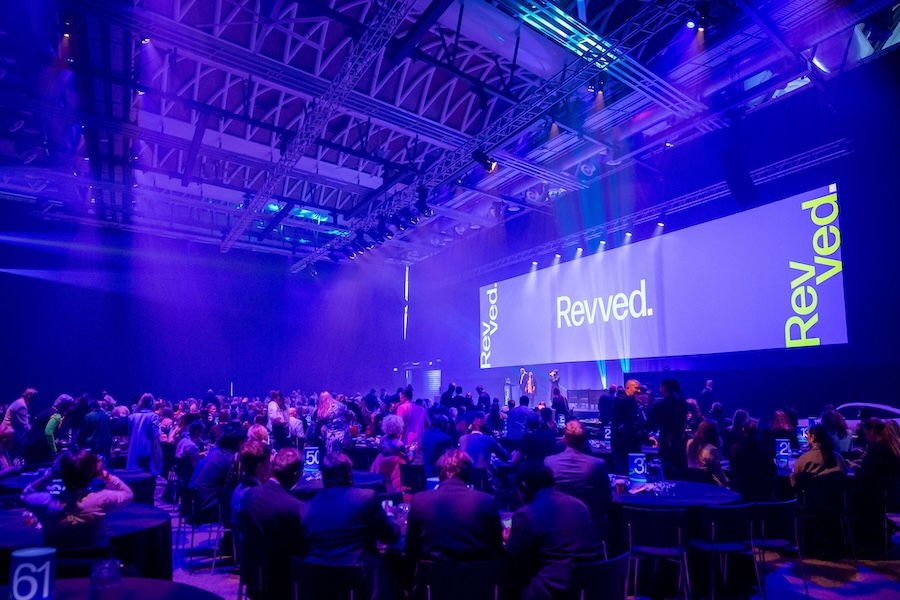
The Revved Summit 2026 takes place on August 6 in Auckland.
Engineering change, on purpose
This year’s Revved theme is “Engineering Change”, chosen well before the current wave of AI adoption, but one whose meaning, Moffitt says, has shifted for her. “It is no longer about the change out there. It is that the people in the room are the engineers of change.” Her point is that widely available AI tools have flattened capability across businesses of every size; what used to be a competitive edge is now table stakes. What remains genuinely differentiating, she says, is what leaders choose to do with it, and how deliberately they choose to change before circumstances force them to.
That framing matters more in an election year. Whatever policy settings the country lands on after this year’s vote, Moffitt is blunt that no government of any colour can legislate away a cultural reflex like tall poppy syndrome. “You cannot pass a law that makes it safe to be ambitious,” she says. Her argument is that the change business owners most need to engineer right now isn’t a strategic pivot or a new product line, it’s a willingness to be visible and to stay the course through a period of change with no obvious finish line, rather than absorbing that pressure alone. For SMEs navigating rising costs and tighter margins in 2026, that’s less about optimism and more about deciding, deliberately, not to shrink.
Change, on Moffitt’s telling, isn’t something that happens to a business. It’s something a leader has to actively engineer, ideally with other people who are wrestling with the same problem, rather than alone at 11pm with a spreadsheet.
None of this requires an expensive ticket or a big stage – something many SME owners frankly can’t afford right now. Moffitt’s underlying argument that isolated ambition is a measurable business liability, and that connection with the right peers is a legitimate growth lever, not a luxury applies just as well to a Tuesday morning industry meet-up as it does to a national summit.
For what it’s worth, Moffitt has built Revved so the summit itself isn’t a one-off. Every ticket includes twelve months’ membership to Revved Assembly, the community that runs between summits, along with access to resources like the Drivers Book and smaller gatherings such as the Write-Offs, where leaders talk openly about failure rather than highlight reels. The logic is the same one underpinning her advice to SME owners generally: “A single day of inspiration fades fast, so whatever room you invest in, the value is in what keeps you connected to it afterwards, not just the day itself.”
Moffitt’s own research, gathered from last year’s inaugural event, found 48 percent of attendees left more confident about the New Zealand business environment after a single day in the right room. Confidence isn’t a strategy. But for the SME owner who has spent the past year absorbing every cost increase and staffing headache largely on their own, it might be the precondition for one.
As Moffitt puts it: The measure of any room full of ambitious people was never who got into it. “It’s what comes out of it.”
The Revved Summit 2026 is happening on Thursday, August 6 at Viaduct Events Centre Auckland from 8:15am. NZBusiness readers can take advantage of a special $145 per ticket discount using the code NZBIZ145. Secure your seat here.